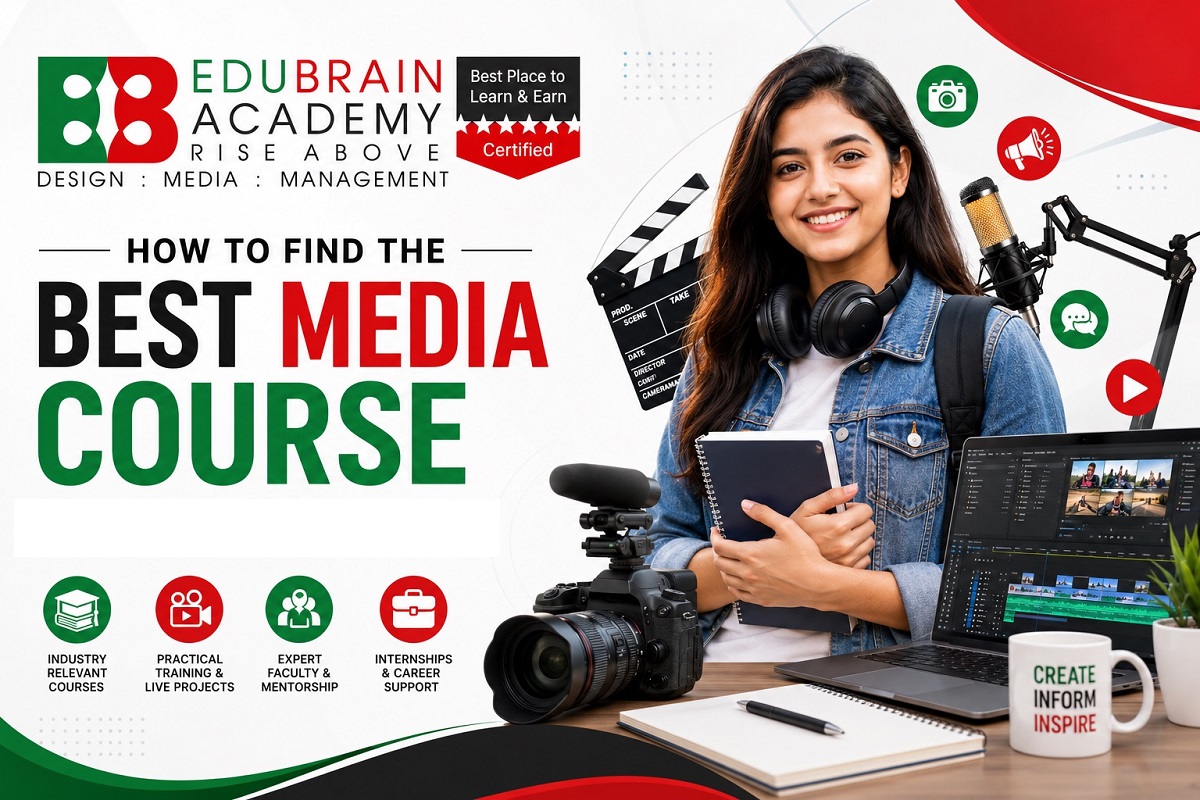
Finding the best media course in Delhi requires more than comparing course names and fees. Students should consider the curriculum, practical training, faculty expertise, industry exposure, internships, portfolio development, infrastructure, course duration, eligibility, and career opportunities before choosing a program.
Delhi and the wider Delhi NCR region offer students access to a diverse media environment covering journalism, digital media, broadcasting, advertising, public relations, content creation, and video production. A good media program should combine classroom learning with practical projects so students can develop skills that are relevant to the modern media industry.
For students exploring media education in India, the choice of course should also depend on their career interests. Someone interested in journalism may need stronger reporting and research training, while a student interested in digital media may benefit from content creation, video production, social media, and digital storytelling.
This guide explains how to evaluate a Media Course in Delhi, what to look for in a college, available course options, important subjects, fees, admission considerations, practical training, career opportunities, and the factors that can help you choose the right program.
What Is a Media Course?
A media course prepares students to communicate information, ideas, and stories through different platforms, including newspapers, television, radio, websites, social media, video platforms, and digital publications.
Modern media education is broader than traditional journalism. Depending on the program, students may learn:
-
Journalism and news reporting
-
Digital media
-
Content writing
-
Video production
-
Broadcasting
-
Public relations
-
Advertising
-
Social media communication
-
Photography
-
Video and audio editing
-
Digital storytelling
-
Media research
-
Communication strategies
A comprehensive media program can therefore prepare students for different areas of the media and communication industry.
How to Find the Best Media Course in Delhi
There is no single media course that is automatically the best for every student. The right choice depends on your interests, educational background, preferred specialization, learning goals, and career plans.
When comparing Media Courses in Delhi NCR, consider the following factors.
1. Check the Course Curriculum
The curriculum should reflect current requirements of the media industry.
Look for subjects covering both fundamental concepts and practical skills. Depending on the program, these may include journalism, digital media, advertising, public relations, television production, content creation, communication, and storytelling.
For example, the current media course information includes journalism, digital media, advertising, public relations, television production, content creation, and communication strategies.
Do not select a course based only on its title. Two courses with similar names can have very different curricula and practical components.
2. Look for Practical Training
Media is a practical field, so students should have opportunities to apply classroom knowledge through projects and assignments.
Practical activities may include:
-
News reporting
-
Interviewing
-
Video production
-
Digital storytelling
-
Photography
-
Script writing
-
Editing
-
Social media campaigns
-
Content production
-
Presentation and anchoring
The current program information from Edu Brain Academy highlights 5+ live media projects, including news reporting, video production, digital storytelling, and social media campaigns.
Practical projects can help students understand professional workflows and build work samples for their portfolios.
3. Evaluate Faculty and Mentorship
Faculty and mentors can have a significant influence on the learning experience.
When comparing a Media Course in Delhi, ask:
-
Who teaches the core subjects?
-
Do faculty members have professional media experience?
-
Are journalists or media professionals involved?
-
Is individual feedback provided?
-
Are students guided during practical projects?
-
Is career mentoring available?
The current program information states that students can learn from journalists, media professionals, editors, and industry experts.
Professional guidance can be particularly useful when students are developing reporting, writing, presentation, production, or portfolio skills.
4. Check Industry Exposure
Industry exposure helps students understand how professional media organizations operate.
Useful opportunities may include:
-
Industry workshops
-
Guest lectures
-
Live projects
-
Media events
-
Field visits
-
Industry interactions
-
Portfolio reviews
-
Professional mentoring
Students should ask whether industry exposure is an actual part of the course structure rather than relying only on promotional claims.
For students studying in Delhi NCR, exposure to the wider media ecosystem can also help them understand different career pathways across journalism, digital media, advertising, public relations, production, and corporate communication.
5. Compare Internship Opportunities
Internships can help students experience a professional work environment while they are studying.
Depending on the specialization, students may look for internship opportunities with:
-
News organizations
-
Digital media companies
-
Production houses
-
PR agencies
-
Advertising agencies
-
Digital marketing companies
-
Corporate communication teams
-
Social media agencies
Before admission, ask what kind of internship assistance is provided and whether students receive guidance with applications, interviews, and portfolio preparation.
6. Review Media Labs and Infrastructure
Practical media education requires suitable infrastructure.
Depending on the program, useful facilities may include:
-
Media production labs
-
Editing systems
-
Cameras
-
Photography equipment
-
Audio equipment
-
Computer labs
-
Recording facilities
-
Presentation spaces
-
Digital media tools
When comparing colleges in Delhi, don't simply look at whether a facility exists. Consider whether students actually use the equipment and facilities during their coursework.
Types of Media Courses in Delhi
Students can choose from different levels of media education depending on their academic background and career goals.
Bachelor of Journalism and Mass Communication
A Bachelor of Journalism and Mass Communication provides undergraduate-level education in journalism, mass communication, and related media fields.
According to the current course information, the program has:
-
Duration: 3 years
-
Type: Degree
-
Eligibility: 10+2
The program can cover areas such as journalism, digital media, broadcasting, public relations, advertising, content creation, and communication.
It can be suitable for students seeking comprehensive undergraduate media education.
Master's in Journalism and Mass Communication
A master's program is designed for students who already have an undergraduate qualification.
The current program information lists:
-
Duration: 2 years
-
Type: Degree
-
Eligibility: Undergraduate degree in any discipline with a minimum of 45%
Postgraduate study can allow students to develop deeper knowledge of journalism, communication, digital media, research, and related areas.
Diploma in Mass Communication
A Mass Communication diploma can provide a more focused route into media and communication.
The current course information lists:
-
Duration: 1 year
-
Type: Diploma
-
Eligibility: 10th / 10+2 or any graduate
Students should always confirm the latest eligibility requirements directly with the institute before applying. Also Read: Top 10 Media Colleges in India
Edu Brain Academy for Media & Journalism Education
Students looking for a career-focused Media Course in Delhi NCR can consider Edu Brain Academy's media and journalism programs. The academy offers programs designed around journalism, mass communication, digital media, content creation, and practical learning.
The available programs include Bachelor of Journalism and Mass Communication, Master's in Journalism and Mass Communication, and Mass Communication Diploma, giving students options based on their educational background and career goals.
The media curriculum focuses on developing practical and professional skills alongside theoretical knowledge. Areas covered include journalism, digital media, advertising, public relations, television production, content creation, and communication.
Students can also benefit from practical projects and industry-oriented learning, which can help them develop work samples and build a professional media portfolio.
Why Consider Edu Brain Academy?
When evaluating a media institute, students should consider factors such as:
-
Industry-relevant curriculum
-
Practical media projects
-
Journalism and mass communication training
-
Digital media learning
-
Content creation skills
-
Industry exposure
-
Portfolio development
-
Internship opportunities
-
Career and placement support
The important point is to compare these factors with your own career goals before choosing a program.
What Do You Learn in a Media Course?
The exact subjects vary between institutions and programs, but a comprehensive media course can cover several areas.
Journalism
Students can learn reporting, news gathering, interviewing, research, writing, editing, fact-checking, and media ethics.
Digital Media
Digital media can cover online publishing, social media, digital storytelling, content strategy, and communication through online platforms.
Video Production
Students can develop skills in planning, scripting, shooting, editing, and presenting video content.
Public Relations
PR introduces students to communication between organizations and their audiences, including media relations, campaigns, messaging, and reputation management.
Advertising
Advertising education can cover creative communication, campaign concepts, copywriting, audience research, and promotional strategies.
Content Creation
Content creation has become an important part of modern media. Students can develop skills in writing, video, photography, social media, and digital storytelling.
What Skills Should You Develop?
A media professional needs a combination of creative, technical, and communication skills.
Communication
Strong verbal and written communication is essential for journalists, content creators, presenters, PR professionals, and media managers.
Writing
Writing skills are useful for news reports, scripts, articles, social media posts, press releases, and digital content.
Research
Media professionals need to find reliable information, verify sources, understand context, and present information accurately.
Storytelling
Effective storytelling helps communicate information clearly and engagingly.
Video and Digital Skills
Understanding basic video production, editing, digital publishing, and social media can expand career opportunities.
Critical Thinking
Media professionals regularly evaluate information, sources, viewpoints, and audience needs, making critical thinking an important professional skill.
Career Opportunities After a Media Course
A media course can open career opportunities across traditional and digital platforms.
Journalist
Journalists research, report, write, and present news and information for media organizations.
News Anchor
News anchors present news programs and communicate information to television or digital audiences.
Broadcast Producer
Broadcast producers coordinate different elements of television, radio, or digital programs and help manage production workflows.
Digital Content Creator
Content creators produce articles, videos, social media content, graphics, and other digital formats.
Public Relations Specialist
PR professionals manage communication between organizations and their audiences and work on media relations and communication campaigns.
Social Media Manager
Social media professionals plan content, manage social platforms, monitor engagement, and support digital communication strategies.
Video Producer
Video producers work on planning and producing video content for media organizations, brands, agencies, and digital platforms.
Copywriter
Copywriters create written content for advertisements, websites, campaigns, social media, and other communication channels.
How Much Does a Media Course Cost in Delhi?
Media course fees vary according to factors such as:
-
Course level
-
Duration
-
Curriculum
-
Faculty
-
Infrastructure
-
Practical training
-
Industry exposure
-
Internship support
-
Certifications
Students should compare the overall value of a program rather than selecting a course only because it has a lower fee.
Before admission, request the complete fee structure and clarify whether additional charges apply for practical work, examinations, workshops, equipment, or other activities.
How to Compare Media Colleges in Delhi NCR
Create a simple comparison before making your final decision.
|
Factor |
What to Check |
|
Curriculum |
Does it cover your preferred specialization? |
|
Faculty |
Industry experience and academic expertise |
|
Practical training |
Live projects and hands-on assignments |
|
Infrastructure |
Media labs, equipment and editing facilities |
|
Industry exposure |
Workshops and professional interaction |
|
Internships |
Internship opportunities and guidance |
|
Portfolio |
Opportunities to create professional work |
|
Fees |
Total cost and included facilities |
|
Duration |
Course length and structure |
|
Career support |
Interview and placement assistance |
This approach allows students to compare institutes based on actual educational value.
Why Portfolio Development Matters
A media portfolio allows potential employers to see what you can actually create.
Depending on your specialization, a portfolio could include:
-
Published articles
-
News reports
-
Video projects
-
Short documentaries
-
Scripts
-
Photography
-
Social media campaigns
-
Digital stories
-
Advertising concepts
-
PR projects
Start developing your portfolio while studying instead of waiting until graduation.
A collection of well-executed projects can demonstrate your practical abilities more effectively than simply listing the subjects you studied.
Is Media a Good Career?
The media industry has expanded beyond traditional newspapers and television. Digital publishing, online video, streaming, social media, corporate communication, public relations, advertising, and content marketing have created additional opportunities.
Students who develop a combination of:
-
Journalism skills
-
Digital media knowledge
-
Writing
-
Video production
-
Communication
-
Social media skills
-
Research
-
Storytelling
can explore a wider range of career paths.
Career growth, however, depends on individual skills, professional experience, portfolio quality, specialization, and the ability to adapt to changes in the industry.
How to Choose the Right Media Specialization
Think about the type of work you enjoy.
Interested in current affairs and reporting?
Journalism may be suitable.
Enjoy presenting and speaking?
Broadcasting and anchoring may interest you.
Prefer creating videos?
Video production and digital content may be appropriate.
Enjoy writing and creative communication?
Content creation, copywriting, or advertising could be considered.
Interested in brands and communication?
Public relations and corporate communication may be suitable.
Enjoy social platforms and digital trends?
Digital media and social media management could be explored.
Choosing a specialization based on your interests can make it easier to develop relevant skills and build a focused portfolio.
Admission Checklist for a Media Course
Before submitting an application, check:
-
Course eligibility
-
Course duration
-
Curriculum
-
Total fees
-
Practical training
-
Faculty experience
-
Media laboratories
-
Industry exposure
-
Internship opportunities
-
Portfolio development
-
Career guidance
-
Placement assistance
-
Course certification
-
Admission requirements
Students should also confirm the latest course structure because eligibility, fees, and program details can change. Read More: Best Journalism Institute in South Delhi
Final Thoughts
Finding the best media course in Delhi is ultimately about finding a program that matches your interests, skills, and career goals. Instead of choosing an institute based only on its name, location, or promotional claims, compare its curriculum, practical training, faculty, facilities, industry exposure, internships, portfolio development, fees, and career support.
For students exploring options across Delhi NCR, practical exposure can be particularly valuable because modern media careers span journalism, digital content, broadcasting, public relations, advertising, video production, social media, and corporate communication.
A strong educational foundation combined with practical projects and a professional portfolio can help students prepare for these opportunities in India's evolving media industry.
Before taking admission, review the latest eligibility criteria, course duration, fee structure, curriculum, and practical components. Most importantly, choose a program that gives you opportunities to learn, create, practise, build a portfolio, and gain industry exposure.
Frequently Asked Questions (FAQs)
1. What is a Media Course?
A media course prepares students for careers in journalism, broadcasting, digital media, advertising, public relations, content creation, and communication through theoretical and practical learning.
2. How do I choose the best Media Course in Delhi?
Compare the curriculum, practical training, faculty, infrastructure, industry exposure, internships, portfolio development, fees, duration, and career support before selecting a program.
3. What subjects are included in a Media Course?
Subjects may include journalism, digital media, broadcasting, video production, advertising, public relations, content creation, media research, communication, and storytelling.
4. What career options are available after a Media Course?
Career options can include journalist, news anchor, broadcast producer, digital content creator, PR specialist, social media manager, video producer, copywriter, and communication professional.
5. Is practical training important in media education?
Yes. Practical training allows students to apply classroom concepts through reporting, video production, digital storytelling, content creation, editing, and other projects.
6. What should I check before taking admission to a media institute?
Check the curriculum, faculty, practical facilities, industry exposure, internship opportunities, portfolio development, fees, course duration, and career support.
7. What is the difference between Journalism and Mass Communication?
Journalism focuses strongly on researching, reporting, and presenting news, while mass communication covers a broader range of communication areas such as journalism, advertising, public relations, broadcasting, and digital media.
8. Does a Media Course include internships?
Internship opportunities depend on the institute and program. Students should ask about internship assistance, industry connections, and professional exposure before admission.
9. Is a Media Course useful for a career in digital media?
Yes. Programs that include digital storytelling, content creation, social media, video production, and online communication can help students develop relevant skills for digital media careers.
10. What makes a good media college?
A good media college should offer a relevant curriculum, experienced faculty, practical learning, appropriate infrastructure, industry exposure, portfolio development, internships, and career guidance.