
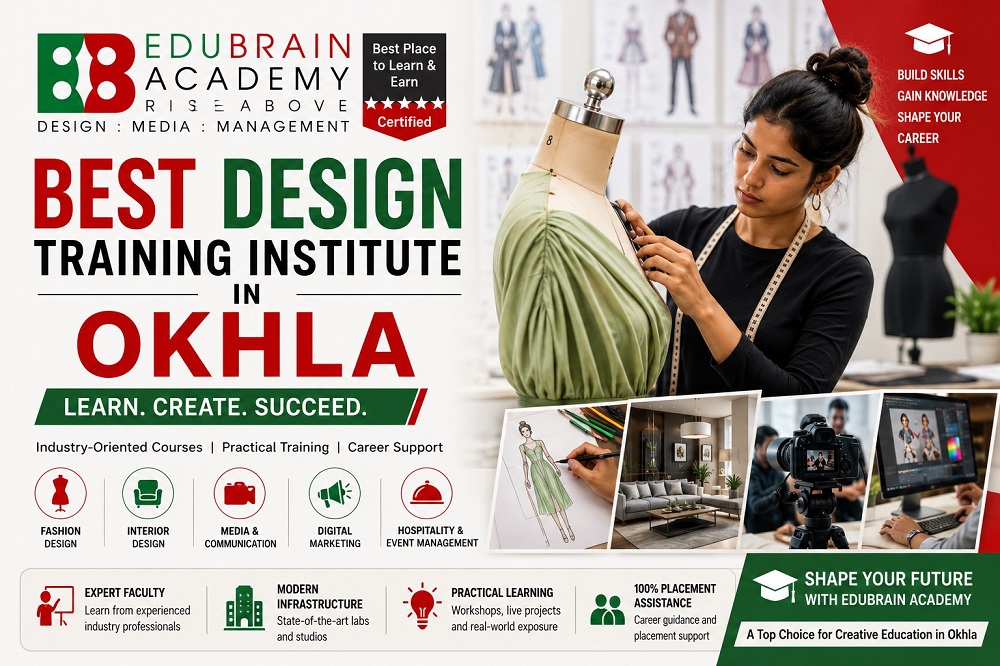
Students interested in creative careers often look for a Best Design Training Institute in Okhla that offers relevant courses, practical learning and a clear understanding of the design industry. Design education covers more than creative ideas; it also involves technical knowledge, visual communication, project development and the ability to turn concepts into practical outcomes.
In Okhla and nearby areas of South Delhi, students can explore professional training in fields such as Fashion Design and Interior Design. These disciplines involve different skills, subjects and career paths. Understanding the course curriculum, practical assignments, faculty experience, available facilities and programme duration can help students assess which type of design education suits their interests.
What Does Design Training Include?
Design training introduces students to the creative process, technical methods and practical applications used in different industries. The subjects depend on the specialisation and level of the course.
Two major areas of design education are Fashion Design and Interior Design.
Fashion Design Training
Fashion Design focuses on clothing, textiles, garment development and personal styling. Students learn how a design concept develops into a finished garment or fashion product.
Common learning areas include:
-
Fashion Illustration: Drawing garment concepts, understanding proportions and presenting clothing designs.
-
Textile Studies: Learning about fabric types, fibres, textures, prints and their uses.
-
Pattern Making: Developing patterns that are used to create garment components.
-
Garment Construction: Understanding fabric cutting, stitching, fitting and finishing.
-
Colour Theory: Studying colour combinations, contrast and visual balance.
-
Fashion Styling: Understanding clothing coordination, accessories and styling concepts.
-
Portfolio Development: Presenting sketches, design experiments and completed projects.
The exact subjects and practical components depend on the programme syllabus.
Interior Design Training
Interior Design involves planning indoor environments according to their function, appearance and the needs of the people using them. It combines creative thinking with technical drawing, space planning and material knowledge.
Common subjects include:
-
Space Planning: Arranging areas to support movement, comfort and practical use.
-
Furniture Layout: Understanding furniture dimensions, placement and functionality.
-
Colour and Material Selection: Studying surface finishes, textures, colour schemes and material combinations.
-
Lighting Concepts: Understanding natural and artificial lighting in different interiors.
-
Technical Drawing: Preparing layouts, elevations and other design drawings.
-
Computer-Aided Design: Learning relevant digital tools, such as AutoCAD, where included in the curriculum.
-
3D Visualisation: Presenting interior concepts through digital models and visual representations.
-
Design Projects: Developing concepts for residential or commercial spaces.
Best Design Training Institute in Okhla: What Should Students Compare?
The Best Design Institute in Okhla should be assessed through its course structure, teaching methods and the practical learning opportunities available to students. An institute's name or promotional claims alone do not explain the quality of its training.
Before taking admission, students should examine the following factors.
1. Course Curriculum
Check whether the syllabus covers the subjects required for the chosen specialisation. A Fashion Design programme should explain its approach to textiles, illustration, pattern making and garment construction. An Interior Design programme should include relevant topics such as space planning, materials, technical drawings and visualisation.
Ask for the latest syllabus and confirm which subjects are included in the specific course.
2. Practical Assignments and Projects
Design education requires more than classroom theory. Practical assignments help students apply concepts and understand how design work is developed.
For example:
-
Fashion students can work on garment sketches, fabric studies and design concepts.
-
Interior Design students can prepare floor plans, furniture layouts and material boards.
-
Project work can help students document their progress and understand design presentation.
Ask how practical sessions are organised and whether students receive individual feedback.
3. Faculty and Teaching Experience
The background of instructors can influence how technical and creative subjects are taught. Students should ask about faculty qualifications, relevant professional experience and the subjects each instructor handles.
It is also useful to understand the class format, student-to-teacher interaction and assessment process.
4. Software and Learning Facilities
Some design subjects require specialised equipment or digital tools. Fashion courses may include garment construction facilities, while Interior Design programmes may involve drafting and 3D visualisation software.
Students should confirm which facilities and software are available, whether they are included in the course and how frequently learners can use them.
5. Portfolio Development
A portfolio is a collection of work that demonstrates a student's creative ideas, technical ability and project experience.
Depending on the specialisation, it may include:
-
Fashion sketches and garment concepts
-
Fabric and textile experiments
-
Completed clothing projects
-
Interior floor plans and layouts
-
Material and colour boards
-
3D interior visualisations
-
Project descriptions and design presentations
Ask whether portfolio development is part of the course and how students receive guidance while preparing their work.
6. Course Duration, Eligibility and Fees
Course duration and admission requirements vary according to the qualification and specialisation. Certificate, diploma, undergraduate and postgraduate programmes may have different academic requirements and fee structures.
Before applying, request written information about:
-
Minimum educational qualification
-
Course duration and class schedule
-
Total tuition fees
-
Registration or examination charges
-
Materials and software expenses
-
Assessment and certification requirements
Compare the complete cost and course structure rather than relying only on an advertised starting fee.
Design Education and Practical Skills Students Can Develop
Professional design training can help students develop a combination of creative, technical and workplace skills.
Creative Thinking
Students learn to develop ideas, explore visual references and create concepts for different design requirements. This can involve sketching, research, mood boards and design experimentation.
Technical Knowledge
Each specialisation has its own technical requirements. Fashion students work with fabrics, patterns and garment construction, while Interior Design students study measurements, layouts, materials and technical drawings.
Visual Communication
Designers need to explain their ideas through sketches, drawings, presentations, samples and digital visualisations. These methods help communicate a concept to clients, teams and other professionals.
Problem-Solving
Design projects often involve practical limitations such as measurements, budgets, material availability and user requirements. Students learn to consider these factors while developing design solutions.
Project Management
Assignments can introduce students to planning, deadlines, revisions and project presentation. These skills are useful when working independently or as part of a professional team.
Why Is Okhla Relevant for Students Looking for Design Courses?
Okhla is a commercial and industrial area in South East Delhi. Its location makes it accessible to students travelling from different parts of South Delhi and nearby localities.
Students living in or around the following areas may consider the travel distance when researching design courses:
-
Okhla Phase I, Phase II and Phase III
-
Govindpuri
-
Kalkaji
-
Tuklakabad
-
Jamia Nagar
-
Nehru Place
-
Jasola
-
New Friends Colony
-
CR Park
-
Sarita Vihar
Metro and road connectivity can make daily travel more manageable, although the actual journey depends on the student's starting point, route and class timings. Before admission, students should check the campus address, nearest metro station, walking distance and available transport options. A campus visit can also help them understand the classroom environment and facilities.
Career Opportunities After Fashion and Interior Design Training
Career options depend on a student's qualification, practical ability, portfolio, work experience and specialisation. Completing a course does not automatically guarantee employment, but relevant training can provide a foundation for entry-level roles and further professional development.
Career Options in Fashion Design
Fashion Design students may explore roles such as:
-
Fashion Design Assistant
-
Fashion Stylist
-
Apparel Design Assistant
-
Textile Design Assistant
-
Fashion Merchandising Assistant
-
Garment Production Assistant
-
Fashion Illustrator
-
Boutique or Fashion Business Owner
Some roles require additional experience, specialised skills or advanced qualifications. Read More: How to Become a Fashion Designer After 12th
Career Options in Interior Design
Interior Design students may explore opportunities such as:
-
Interior Design Assistant
-
Junior Interior Designer
-
Space Planning Assistant
-
Furniture Design Assistant
-
Interior Styling Assistant
-
CAD Drafting Assistant
-
3D Visualisation Assistant
-
Residential or Commercial Design Project Assistant
Practical project experience, software knowledge and a well-organised portfolio can help demonstrate suitability for these roles.
How to Review a Design Course Before Admission
A structured review can help students understand whether a programme meets their learning requirements.
-
Identify the specialisation: Decide whether the course relates to Fashion Design, Interior Design or another creative field.
-
Read the syllabus: Check the subjects, practical modules and project requirements.
-
Confirm eligibility: Review the academic qualifications needed for admission.
-
Understand the fees: Ask for a complete fee breakdown, including additional expenses.
-
Review practical facilities: Find out which equipment, software and workspaces are available.
-
Ask about assessments: Understand how assignments, examinations and projects are evaluated.
-
Review student work: Where possible, look at completed projects or portfolios from previous students.
-
Visit the campus: Check the location, classroom environment and facilities before making a decision.
These checks provide a clearer basis for comparing design institutes in Okhla and other parts of Delhi.
Design Courses at Edu Brain Academy, Okhla
Edu Brain Academy lists Fashion Design and Interior Design programmes through its respective course sections. Students researching these subjects can review the programme pages to understand the course options and available information.
Students should contact the institute to confirm the current course availability, eligibility criteria, fees, duration, class schedule and admission requirements before applying.
Students can view Edu Brain Academy's Okhla campus location on Google Maps to check directions and plan their visit.
Conclusion
Finding the Best Design Training Institute in Okhla requires more than comparing institute names. Students should understand the course syllabus, practical assignments, faculty experience, learning facilities, portfolio development and total programme cost before making an admission decision. Fashion Design and Interior Design offer different learning experiences and professional pathways. Reviewing the course details, visiting the campus and understanding the practical requirements can help students make an informed decision about design education in Okhla.
Frequently Asked Questions (FAQs)
1. What should I look for in the Best Design Training Institute in Okhla?
Compare the course curriculum, faculty experience, practical training, learning facilities, portfolio development, fees and admission requirements. Ask for the latest course details before enrolling.
2. Which design courses can students study in Okhla?
Students can explore specialisations such as Fashion Design and Interior Design. Other creative fields may also be available at different institutions, depending on their course offerings.
3. What do students learn in a Fashion Design course?
Common subjects include fashion illustration, textile studies, pattern making, garment construction, colour theory, styling and portfolio development. The exact syllabus varies by programme.
4. What subjects are covered in Interior Design training?
Interior Design programmes commonly cover space planning, furniture layouts, colour concepts, materials, lighting, technical drawings and 3D visualisation. Software training depends on the course curriculum.
5. Can students pursue design courses after Class 12?
Yes. Many certificate, diploma and undergraduate design programmes accept students after Class 12. Eligibility requirements vary, so students should check the criteria for each programme.
6. How long does a design training course take?
Duration depends on the subject and qualification. Certificate programmes may be shorter, while diploma and degree courses generally require a longer period of study. Confirm the duration with the institute.
7. Are practical projects important in design education?
Yes. Projects allow students to apply classroom concepts, develop technical skills and document their work. They can also contribute to a portfolio that demonstrates a student's abilities.
8. What career opportunities are available after design training?
Fashion Design students may explore garment design, styling, textiles and merchandising. Interior Design students may work towards roles in space planning, design assistance, furniture design and visualisation. Career progression depends on skills and experience.
9. What is the address of Edu Brain Academy in Okhla?
The listed Okhla address is A-13, FIEE Complex, Okhla Phase II, New Delhi, Delhi 110020. Confirm the current campus details before visiting.
10. What should students confirm before taking admission?
Students should confirm the syllabus, eligibility, course duration, complete fees, class schedule, practical facilities, assessment method and certification details.