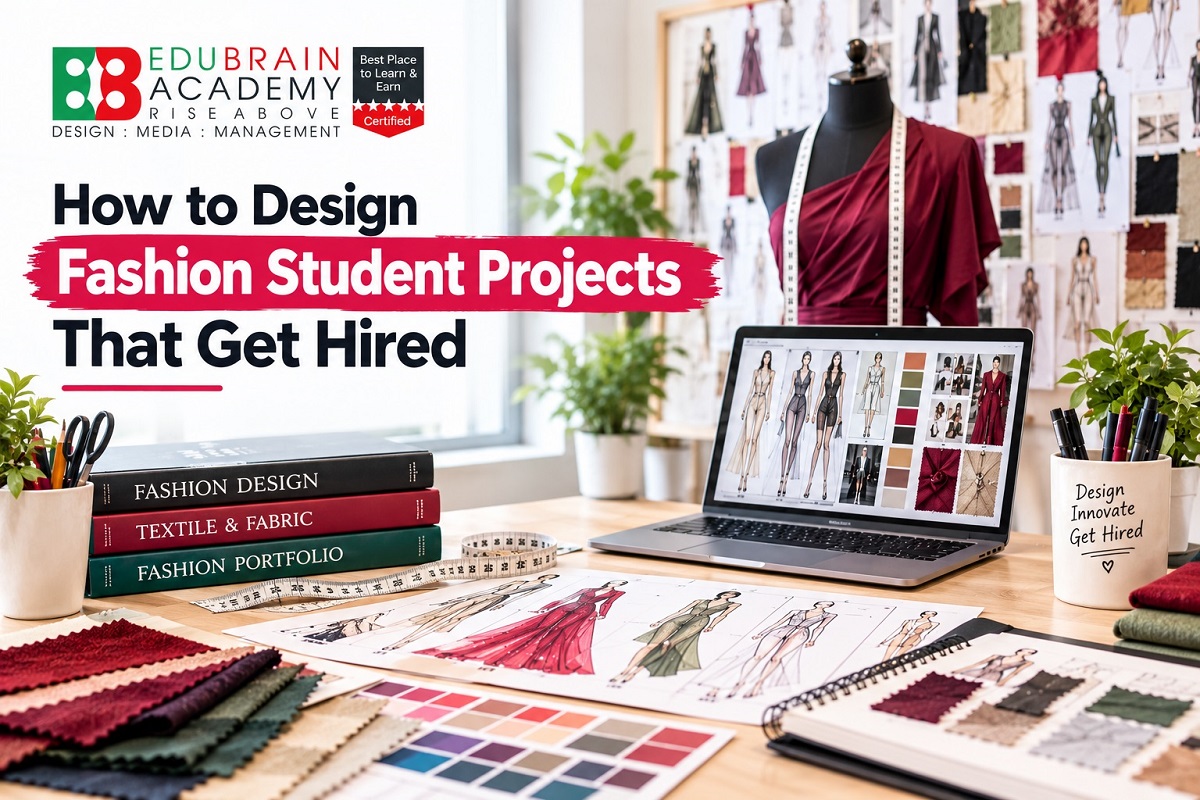
A fashion portfolio should do more than display polished sketches, garments or final photographs. It should help recruiters understand how you research, develop ideas, solve design problems, make design decisions and turn a concept into a finished result.
For students applying for internships, entry-level jobs, freelance projects or fashion-related programmes, strong project work can make a portfolio much more convincing. The most effective work combines creativity, technical ability, commercial awareness and professional presentation.
Whether you are interested in apparel design, styling, textiles, fashion communication, merchandising or sustainable fashion, your projects should show employers what you can contribute in a professional fashion environment.
What Makes a Fashion Student Project Stand Out?
A hiring-focused fashion project should answer three important questions:
-
What was the idea or design problem?
-
How did you develop the concept?
-
What did you create as the final outcome?
Recruiters do not only want to see a finished garment. They also want evidence of research, experimentation, design development and practical decision-making.
For example, instead of showing one final outfit without context, include selected stages of your development:
Brief → Research → Mood Board → Colour Palette → Fabric Selection → Sketches → Design Development → Technical Drawings → Prototype → Final Look
This gives employers a clearer view of your creative process and your ability to work like a professional designer.
1. Start With a Clear Design Brief
Every strong project starts with a clear purpose. Before you begin designing, decide what you are creating, who it is for and what need it addresses.
A useful fashion design brief can include:
-
Target customer
-
Product category
-
Occasion or use
-
Inspiration or concept
-
Colour direction
-
Fabrics and materials
-
Price or market positioning
-
Sustainability goal
-
Final deliverables
A clear brief prevents your project from becoming a collection of unrelated ideas. It also demonstrates that you understand fashion as both a creative discipline and a commercial industry.
For example, instead of selecting a broad theme such as “nature,” create a more specific brief:
Develop a contemporary occasion-wear collection inspired by desert textures and colours for young urban consumers looking for expressive garments for social events.
This gives your project a defined audience, visual direction and purpose.
Students who want to compare learning environments, practical exposure and portfolio support can explore a fashion designing institute in Delhi before selecting a programme.
2. Choose Projects That Show Different Skills
Your portfolio should show range without becoming repetitive. Avoid including several projects that all demonstrate the same type of garment, design aesthetic or visual style.
Choose projects that reveal different areas of fashion practice.
Concept Development
Show how you transform research, cultural references, art, architecture, photography or personal experiences into a fashion concept.
Fashion Illustration
Include sketches that demonstrate proportion, silhouette development, garment details, colour use and presentation skills.
Textile Exploration
Experiment with print development, embroidery, fabric manipulation, dyeing, surface decoration, weaving or unexpected material combinations.
Garment Development
Show how an initial sketch becomes a wearable garment through sampling, construction, fitting, pattern work and refinement.
Styling
Create projects that combine garments, accessories, hair, makeup, photography, models and location choices.
Sustainable Design
Explore practical approaches such as upcycling, modular garments, repairable design, responsible material choices, reduced-waste cutting or longer-lasting clothing.
The aim is to demonstrate versatility while maintaining a clear personal design identity.
3. Show the Design Process, Not Only Final Images
One of the most common student-portfolio mistakes is showing only polished final photographs. Final outcomes matter, but they do not always prove how you reached them.
A recruiter should be able to see the thinking behind your work. Include selected pages that reveal your process, such as:
-
Initial research
-
Inspiration sources
-
Mood boards
-
Colour and fabric development
-
Thumbnail sketches
-
Design variations
-
Technical flats
-
Prototype images
-
Fitting changes
-
Final styling or photography
You do not need to document every stage of every project. Select the steps that best explain your design decisions and demonstrate your strongest abilities.
For a garment-design project, technical drawings and construction details may be essential. For a styling project, stronger evidence may come from visual references, look development, shoot planning and final imagery.
4. Create Mood Boards That Guide Decisions
A mood board should communicate the atmosphere, research direction and visual language of a collection. It should not simply be a page of attractive but unrelated images.
A useful mood board may include:
-
Architecture
-
Art and photography
-
Historical references
-
Cultural influences
-
Natural forms
-
Textures
-
Colour references
-
Fabric ideas
-
Silhouettes
-
Typography or graphic elements
Choose references that work together and support your concept. Then explain how the research influenced your work.
For example:
The weathered stone surfaces in the research inspired layered fabric panels, while muted sand and clay tones informed the final colour palette.
This shows that you can turn visual research into clear design decisions.
5. Develop More Than One Direction
Professional fashion design rarely moves directly from one first sketch to a finished garment. Employers want to see that you can explore options, compare ideas and improve your work.
Develop multiple possibilities before choosing the final direction. You might test:
-
Different silhouettes
-
Neckline options
-
Sleeve variations
-
Colourways
-
Fabric combinations
-
Print placements
-
Surface treatments
-
Styling approaches
A simple development sequence could be:
Initial concept → 6–10 design ideas → shortlist → refinement → final design
This demonstrates that you can evaluate your own work instead of relying on the first idea you create.
6. Include Technical Fashion Skills
Creative ideas are important, but fashion employers also need people who understand how an idea becomes a product.
Depending on your intended role, include evidence of technical ability such as:
-
Technical flats
-
Garment measurements
-
Construction details
-
Pattern development
-
Fabric specifications
-
Print-placement plans
-
Embroidery details
-
Digital fashion illustrations
-
CAD work
-
3D garment visualisations
-
Samples and prototype photographs
Do not simply list software names on a CV or portfolio page. Show what you created with those tools.
For example, instead of writing “Adobe Illustrator,” include a technical drawing, garment specification sheet or repeat-print design that demonstrates your skills.
7. Design for a Specific Customer
A project becomes more commercially relevant when it is designed for a real customer rather than a vague audience.
Think about:
-
Age group
-
Lifestyle
-
Occupation
-
Budget
-
Fashion preferences
-
Occasion
-
Location
-
Cultural influences
-
Shopping habits
Designing for “young people” is too broad. A stronger customer profile could be:
Young professionals looking for versatile workwear that can move from office meetings to evening events.
A clear customer helps you make better decisions about garment function, comfort, fabric, styling, colour and price.
8. Show Market Awareness
Fashion is a creative industry, but it also operates in a commercial market. A strong student project should show that you understand where your idea could exist.
Ask yourself:
-
Who would buy this?
-
What need does it meet?
-
What makes the concept different?
-
Which brands already serve this customer?
-
What price point is appropriate?
-
Is the garment practical to produce?
-
Are the fabrics suitable for the intended market?
-
Could the idea grow into a wider collection?
This does not mean copying commercial brands. It means showing that you understand the connection between creativity, customers and market realities.
A useful starting point for students comparing programme options is the guide Which College in Delhi Is the Best for Fashion Designing.
9. Use Sustainability With Purpose
Make sustainability a practical part of the project rather than a label. Show how your fabric choices, pattern cutting, garment construction, durability or end-of-life planning reduce waste or improve the product’s impact.
You could explore:
-
Deadstock fabrics
-
Upcycled garments
-
Recycled materials
-
Natural dyes
-
Zero-waste pattern cutting
-
Modular clothing
-
Repairable design
-
Multi-functional garments
-
Reduced fabric waste
-
Longer-lasting construction
For example:
This outerwear piece uses detachable sleeves so the wearer can adapt it across seasons, reducing the need to purchase separate garments. This demonstrates practical design thinking rather than using sustainability only as a label.
10. Photograph the Final Work Professionally
Even a well-designed garment can look weak if it is poorly photographed. Treat final presentation as part of the project.
Pay attention to:
-
Lighting
-
Background
-
Styling
-
Model direction
-
Colour accuracy
-
Image quality
-
Composition
-
Front, back and side views
-
Detail photographs
Include close-up images when construction, draping, embroidery, print, textile treatment or finishing is important to the design. If you have created a collection, include individual looks as well as one image that communicates the complete collection direction.
11. Explain Your Key Design Decisions
Do not make recruiters guess why you made important choices. Add short, clear explanations next to selected visuals.
For example:
The structured shoulder line was developed to create a stronger silhouette, while the softer lower section maintained comfort and movement.
This is more useful than writing only:
Inspired by modern architecture.
The strongest explanations connect:
Research → Design decision → Final outcome
They help employers see that your work is intentional and well considered.
12. Match Projects to the Job You Want
Different fashion roles require different portfolio evidence. Choose portfolio projects that reflect the skills and type of work required in your intended fashion role.
For Fashion Designer Roles
Show:
-
Concept development
-
Fashion sketches
-
Collection development
-
Fabric knowledge
-
Garment construction
-
Pattern development
-
Technical drawings
For Fashion Styling Roles
Show:
-
Styling concepts
-
Editorial shoots
-
Look development
-
Trend interpretation
-
Accessories
-
Visual storytelling
For Textile Design Roles
Show:
-
Print development
-
Surface design
-
Colour exploration
-
Material experiments
-
Repeat patterns
-
Textile sampling
For Fashion Merchandising Roles
Show:
-
Market research
-
Customer analysis
-
Product selection
-
Trend research
-
Collection planning
-
Commercial thinking
For Fashion Communication Roles
Show:
-
Campaign concepts
-
Editorial layouts
-
Photography
-
Brand storytelling
-
Visual merchandising
-
Social media ideas
The closer your projects are to the job you want, the easier it is for a recruiter to understand your suitability.
Students can also read How Edu Brain Academy Is Shaping Fashion Design Careers in Delhi NCR to understand how structured learning, practical projects and career preparation can support long-term professional development.
13. Build Portfolio Case Studies
A focused selection of well-developed case studies can create more impact than a large collection of brief or unfinished projects. A smaller number of detailed case studies is often more effective.
A complete fashion project case study can include:
-
Project title
-
Design brief
-
Target customer
-
Research
-
Concept development
-
Mood board
-
Colour palette
-
Material exploration
-
Initial sketches
-
Selected designs
-
Technical development
-
Prototype or sampling
-
Final outcome
-
Short reflection
This format demonstrates both creative ability and organised professional thinking.
14. Add a Short Reflection
After completing a project, include a short reflection on what you learned.
You could explain:
-
What worked well
-
What changed during development
-
What challenge you faced
-
How you solved it
-
What you would improve
-
Which skills you developed
Reflection shows that you can assess your own work, learn from challenges and improve with experience.
15. Keep Your Portfolio Focused
Portfolio strength comes from relevance, quality and clear presentation—not from adding extra pages. A focused portfolio is usually more effective than one filled with repetitive, unfinished or unrelated work.
Before including a project, ask:
Does this project demonstrate a skill, idea or strength that is not already visible elsewhere?
If the answer is no, consider leaving it out.
Place your strongest and most relevant work near the beginning. Recruiters may spend only a short time reviewing each portfolio, so your opening projects should make a clear impression.
For students evaluating course options, checking the curriculum, studio practice and portfolio guidance offered by a fashion design college in Delhi can help them make a more informed academic decision.
What Should a Fashion Student Portfolio Include?
|
Portfolio element |
What it demonstrates |
|
Mood boards |
Research and visual direction |
|
Fashion sketches |
Illustration and design development |
|
Colour palettes |
Colour understanding |
|
Textile experiments |
Material and surface knowledge |
|
Technical drawings |
Technical communication |
|
Garment samples |
Construction and making skills |
|
Final photographs |
Finished execution |
|
Styling projects |
Visual storytelling |
|
Research pages |
Analytical thinking |
|
Case studies |
Full design process |
|
Project reflections |
Self-evaluation and learning |
Common Mistakes to Avoid
Showing Only Finished Garments
A final garment does not always explain your design process. Include selected research, development and technical stages.
Using Too Many Similar Projects
Several projects with identical aesthetics can make your portfolio feel limited. Show different abilities where possible.
Ignoring Presentation
Poor typography, inconsistent layouts and low-quality images can distract from good work. Keep pages clean, readable and visually consistent.
Copying Existing Designs
Research is important, but your final work must show your own interpretation and decision-making.
Adding Too Much Text
Fashion portfolios are visual documents. Use concise explanations rather than long paragraphs.
Including Everything You Have Created
Be selective. A weak project can reduce the impact of your strongest work.
How Many Projects Should a Fashion Student Have?
There is no universal number that guarantees a successful portfolio. For most students, four to eight well-developed projects can demonstrate different strengths without making the portfolio unnecessarily long.
Quality, relevance and presentation matter more than the number of pages.
If you have fewer projects, develop them more deeply. Three strong case studies with research, experimentation, technical work and final outcomes are better than ten incomplete or repetitive projects.
How Can Students Make Their Projects More Recruiter-Friendly?
Think from a recruiter’s perspective. Within a few seconds, they should understand:
-
What the project is about
-
What your role was
-
Who it was designed for
-
What skills you used
-
How the idea developed
-
What the final outcome was
-
What makes the work distinctive
Use clear project titles, consistent layouts, readable typography and strong images. Every project should have a clear reason for being in your portfolio.
Before enrolling, prospective students may find it useful to consider is a fashion designing course in Delhi worth it when assessing course outcomes, practical learning and long-term career value.
Build Skills That Create Career Opportunities
A strong portfolio begins with strong project work. Students can improve their career readiness through practical experience in fashion illustration, design development, textiles, garment construction, styling, fashion communication and portfolio presentation.
A structured learning environment can help students receive feedback, work on practical briefs, improve technical skills and develop portfolio projects with greater confidence.
Explore the Fashion Design Course at Edu Brain Academy to learn more about the programme, curriculum and admission options.
Frequently Asked Questions (FAQs)
What makes a fashion student project attractive to employers?
A strong fashion project combines creativity with research, development, technical skills and practical decision-making. Employers should be able to see the final result and the process behind it.
Should fashion students include unfinished projects in a portfolio?
Usually, completed and well-presented work should take priority. However, unfinished work can be included when it shows a particularly strong design process, useful technical skill or valuable experimentation.
How can I make my fashion portfolio stand out?
Develop a clear visual identity, choose projects relevant to your target role, show your process, explain important decisions and present final work professionally. A distinctive point of view is often more valuable than simply following trends.
Should I include digital fashion projects?
Yes. Digital illustration, CAD, 3D garment development, digital prints and other technology-based projects can demonstrate valuable skills, particularly when they are relevant to the role you are targeting.
Is garment construction important in a fashion design portfolio?
For many fashion design roles, yes. Construction samples, technical drawings, prototypes and garment details show that you understand how a design develops from an idea into a finished product.
How can students gain better project experience?
Students can build experience through coursework, independent design challenges, internships, collaborations, competitions, live briefs and personal collections. The key is to document the process and present the work professionally.
Final Thoughts
Fashion student projects become more valuable when they show how you think, research, create and solve design problems—not simply when they show attractive final images. Start with a clear brief, research your concept, explore different directions, develop the strongest ideas, document your process and present the outcome professionally. Build projects around the type of role you want and choose work that demonstrates complementary skills.A well-developed project can become more than an academic assignment. It can become a portfolio case study that gives recruiters a clear view of your creativity, technical ability, design thinking and potential to contribute in the fashion industry.