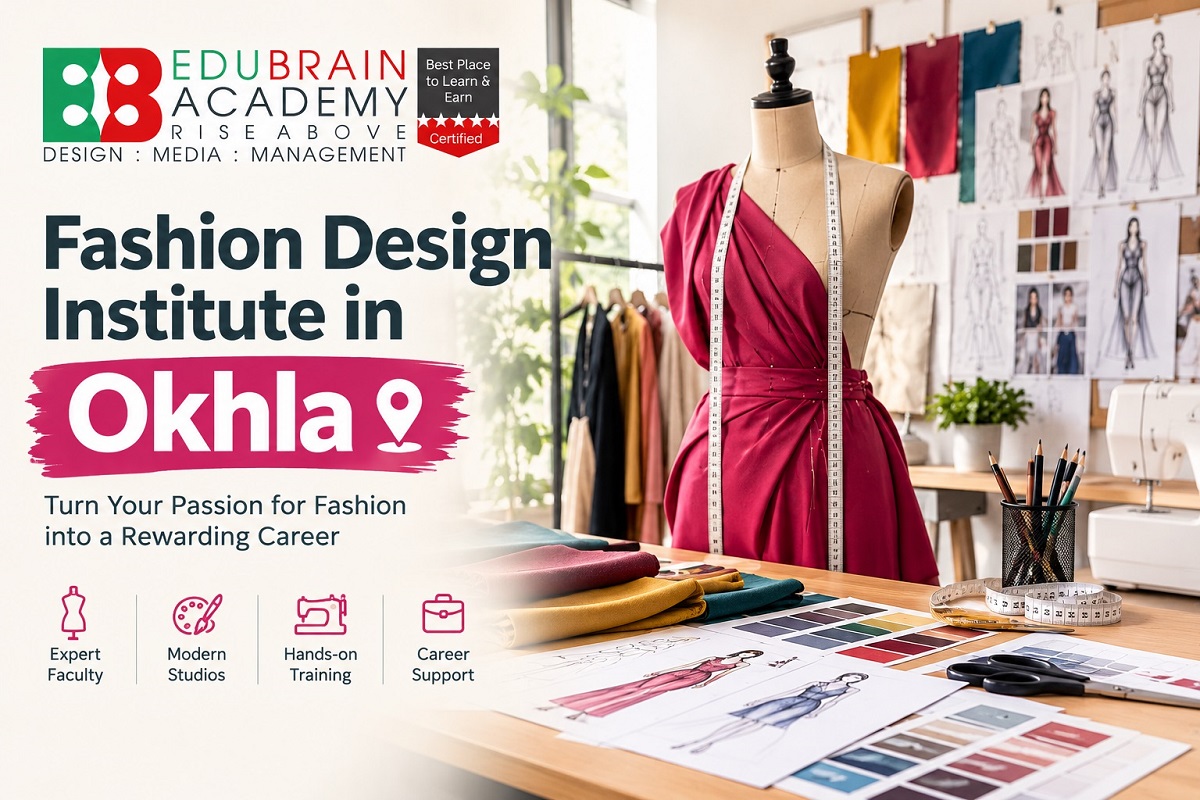
A fashion design institute in Okhla can provide a starting point for students who want to turn their interest in clothing, colours and creative styling into a professional career. Fashion design extends beyond fabrics and trends, covering garment construction, textile knowledge, pattern making, fashion illustration and the design of clothing for different people and occasions.
For students in Okhla and nearby areas of South Delhi, fashion design courses offer different pathways into the industry, from short-term certificates to diploma and degree programmes. Understanding the curriculum, practical training, course duration, reasonable fees and eligibility requirements helps students find a programme that aligns with their creative interests, educational background and long-term career goals.
Why Choose a Fashion Design Training Institute in Okhla?
Okhla is a recognised industrial and commercial area in South East Delhi. Its location can be convenient for students travelling from nearby residential and educational areas. Before enrolling, students should consider the institute's actual campus location, travel time, class schedule and available learning facilities.
A structured fashion design course in Delhi can help beginners understand how an initial idea develops into a finished garment. Students gradually learn to combine design concepts with fabric selection, measurements, construction techniques and presentation.
Some important benefits of studying fashion design include:
-
Creative development: Learn to turn ideas, sketches and visual references into design concepts.
-
Practical skills: Understand garment construction, pattern making, stitching and fabric handling.
-
Industry awareness: Explore fashion trends, consumer preferences and different segments of the apparel industry.
-
Portfolio development: Build a collection of design projects that demonstrates your skills and creative approach.
-
Career exploration: Understand possible opportunities in fashion design, styling, merchandising and related fields.
When comparing a fashion design course in Okhla, look beyond the course title. Review the subjects taught, practical assignments, teaching approach and opportunities to develop a portfolio.
What Do You Learn at a Fashion Design Institute?
A well-planned fashion design curriculum introduces students to the creative and technical aspects of the fashion industry. The exact subjects depend on the program level and its syllabus, so check the course details before applying.
1. Fashion Illustration and Design Concepts
Fashion illustration helps students communicate their ideas visually. Beginners learn to sketch garments, understand proportions, develop silhouettes and present design concepts.
Students may also explore mood boards, theme development, trend research and the process of creating a collection around a particular inspiration.
2. Textile Knowledge and Fabric Selection
Fabric plays an important role in the appearance, comfort and construction of a garment. Learning about textiles helps students understand different fibres, fabric structures, textures, prints and finishes.
Students can explore how fabric choice affects draping, garment shape, movement and suitability for different occasions.
3. Pattern Making and Garment Construction
Pattern making involves creating the templates used to cut fabric into garment components. Garment construction brings those components together through cutting, stitching, fitting and finishing.
These practical skills help students understand how a design moves from a drawing to a wearable product.
4. Colour Theory and Fashion Styling
Colour theory helps designers understand colour combinations, contrast, balance and visual impact. Fashion styling introduces students to outfit coordination, accessories, personal style and the relationship between clothing and different occasions.
Depending on the curriculum, students may also explore fashion forecasting, visual merchandising and contemporary design trends.
5. Digital Tools and Portfolio Development
Digital tools can support fashion illustration, design presentation and creative research. Students may learn relevant software and digital techniques according to the course syllabus.
Portfolio development is equally important. Design sketches, fabric experiments, garment samples and completed projects can help demonstrate a student's abilities to prospective employers or clients.
How to Choose the Right Fashion Design Institute in Okhla
Not every course provides the same learning experience. Before making a decision, compare the following factors.
Course Curriculum
Check whether the syllabus covers the subjects you want to learn, including illustration, textiles, pattern making, garment construction and styling. If you are interested in digital fashion tools, confirm whether these are included.
Practical Training and Projects
Ask how much time is allocated to studio work, assignments and garment-making practice. Review examples of student projects, where available, to understand the type of work you could produce.
Faculty and Learning Facilities
Find out about the instructors' relevant experience and the facilities available for practical learning. If the course includes sewing or pattern-making sessions, check whether students can access the necessary equipment.
Course Duration and Eligibility
Fashion design programs can range from short certificate courses to longer diploma and degree programs. Eligibility requirements also vary. Choose a course that fits your current qualifications and intended career path.
Fees and Additional Costs
Ask for a current fee breakdown before enrolling. In addition to tuition, consider possible costs for fabrics, tools, portfolio preparation, examinations and other course materials.
Student Support and Career Guidance
Ask whether the institute provides portfolio reviews, career counselling, internship guidance or placement assistance. Understand what each service includes, and request verified information rather than relying only on general promotional claims.
Fashion Design Courses at Edu Brain Academy
Students exploring fashion design education can review the programs listed by Edu Brain Academy and compare them with their goals.
Visit the School of Fashion course page to explore available programs, then review each course's eligibility requirements, curriculum and duration before deciding which one suits you.
When comparing programs, consider whether you want to begin with foundational skills or pursue more specialised study. Your previous education, preferred area of fashion and available study time can all influence the right choice.
Before enrolling, confirm the current campus or learning-mode availability, course reasonable fees, admission requirements and practical facilities directly with the academy. This is particularly important if you are specifically looking for an institute located in Okhla.
Fashion Design Course Fees and Duration
The fees and duration of a fashion design course depend on the qualification level, programme structure and specialisation. Students exploring a fashion design training institute in Okhla can compare certificate, diploma, undergraduate and postgraduate programmes to find an option that matches their educational background, interests and career goals.
Edu Brain Academy offers fashion design programmes with different durations and affordable fee structures. The following table provides an overview of selected courses.
Students who want to understand the different study pathways can also explore Which Is the Best Course to Become a Fashion Designer to compare course types, learning options and potential career paths.
|
Fashion Design Course |
Duration |
Listed Fees |
|
Advanced Diploma in Fashion Design & Apparel |
2 years |
₹1,30,000 per year |
|
4 years |
₹1,80,000 per year |
|
|
Bachelor in Fashion Design |
3 years |
₹1,50,000 per year |
|
Certificate in Fashion Styling |
3 months |
₹50,000 |
|
Diploma in Fashion Design & AI |
1 year |
₹1,30,000 |
|
1 year |
₹1,30,000 |
|
|
Diploma in Fashion Design & Merchandising |
1 year |
₹1,20,000 |
|
Diploma in Garment Construction & Embroidery |
1 year |
₹1,30,000 |
|
Diploma in Textile Designing |
1 year |
₹90,000 |
|
Master Diploma in Fashion Design |
2 years |
₹1,30,000 per year |
|
Master in Fashion Design |
2 years |
₹1,30,000 per year |
|
Professional Diploma in Fashion Design |
1 year |
₹80,000 |
Note: Fees are indicative figures taken from previously reviewed course listings and should be confirmed with the academy before admission. Annual fees are identified where specified; for other programmes, confirm whether the listed amount is the total course fee or an annual fee. Additional charges, if applicable, should also be checked.
Career Opportunities After a Fashion Design Course
Fashion design education can lead to several career paths. Your opportunities will depend on your training, portfolio, practical ability, experience and the requirements of individual employers.
Potential career options include:
-
Fashion Designer: Develop clothing concepts and garment collections.
-
Fashion Stylist: Coordinate outfits, accessories and looks for clients, editorial projects or commercial shoots.
-
Textile Designer: Create patterns, prints and surface designs for fabrics.
-
Fashion Illustrator: Produce visual representations of garments and design concepts.
-
Pattern Maker: Develop patterns used in garment production.
-
Fashion Merchandiser: Support product planning, sourcing, coordination and merchandising activities.
-
Fashion Entrepreneur: Develop an independent clothing label or fashion-related business after gaining relevant skills and market knowledge.
Some graduates may also explore costume design, fashion communication, visual merchandising or roles in apparel production. Building a strong portfolio and gaining practical experience can help students prepare for these opportunities.
Who Should Consider Studying Fashion Design?
Fashion design may suit students who enjoy creativity, clothing, textiles and visual problem-solving. It can also appeal to people who want to understand how garments are developed and produced.
You do not necessarily need to be an expert at drawing before beginning a foundation-level course. However, you should be willing to practise, experiment with ideas, learn technical processes and accept feedback on your work.
Before choosing a program, consider these questions:
-
Do you enjoy sketching, styling or experimenting with colours and fabrics?
-
Are you interested in learning how garments are constructed?
-
Would you enjoy developing original design projects?
-
Are you prepared to practise technical skills as well as creative ones?
-
Does the course match your educational background and career plans?
Your answers can help you decide whether fashion design is a suitable direction and which type of program to investigate.
Admission Process for Fashion Courses
Admission procedures vary by course, so students should confirm the current process with the institute. In general, the steps may include:
-
Explore the courses: Compare the available programs and their specialisations.
-
Check eligibility: Review the academic qualifications and other entry requirements.
-
Understand the fees: Request the current fee structure and ask about any additional expenses.
-
Submit an enquiry or application: Provide the information and documents requested by the institute.
-
Confirm the details: Check the course schedule, learning mode, campus location and admission terms before paying fees.
Students can visit the Edu Brain Academy online application page to enquire about admissions and obtain information about currently available programs.
Why Choose Edu Brain Academy for Fashion Design?
Choosing a fashion design institute involves more than comparing course fees. Students should consider the curriculum, practical learning opportunities, course duration, faculty guidance, portfolio development and career-related skills before making an admission decision.
Edu Brain Academy offers a range of fashion design programmes, from short-term styling courses to diploma and degree-level options. Students can explore subjects related to fashion illustration, garment construction, textile design, styling and other areas of the fashion industry, depending on the selected programme.
Before enrolling, review the course-specific syllabus, eligibility criteria, fees and duration to identify the programme that best matches your education level and career goals.
How to Reach Edu Brain Academy
Edu Brain Academy is located in the Okhla Phase II area of New Delhi, making it an option for students exploring fashion design education in South Delhi and nearby areas.
Nearest metro: Govind Puri Metro Station near Kalka Mandir is one station on the Violet Line; check when planning your journey. Confirm the current route, metro exit, and walking distance using a navigation app before travelling, as the most convenient route may vary.
Students travelling from Okhla, Jasola, Jamia Nagar, Kalkaji, CR Park, Govindpuri, Nehru Place and other nearby areas can check the route and travel time before visiting the campus.
Contact Edu Brain Academy for Fashion Design Course Details
If you are planning to pursue fashion design, contact the academy to confirm the latest course fees, programme duration, admission requirements and available learning options.
-
Phone: +91 93193 36333
-
Email: eduinfo@edubrain.in
-
Address: A-13, FIEE Complex, Okhla Phase II, near C Lal Chowk, New Delhi, Delhi 110020
-
Website: Edu Brain Academy
Ready to explore fashion design as a career? Review the available programmes, compare their curriculum and fees, and contact the academy to find a course that suits your interests and career plans.
Conclusion
Fashion design offers diverse career opportunities in garment design, fashion styling, textile development, fashion merchandising and other creative fields. For students exploring a fashion design institute in Okhla, factors such as course curriculum, practical training, fees, duration and eligibility can help them understand the learning opportunities available.
Edu Brain Academy offers a range of fashion design programmes for different educational backgrounds and career interests. Developing practical skills, understanding industry trends and building a strong portfolio can help students prepare for opportunities in the fashion industry. The right programme depends on each student's creative interests, learning goals and long-term career plans.
Frequently Asked Questions (FAQs)
1. Can I pursue fashion design after Class 12?
Yes, many fashion design programs are designed for students who have completed Class 12, although eligibility varies by course. Review the admission requirements before selecting a certificate, diploma or degree program.
2. What qualifications are required for a fashion design course?
Eligibility depends on the course. Some certificate or foundation programs may accept beginners, while advanced diploma and degree programs can have specific academic requirements. Check the eligibility criteria for the particular program before applying.
3. How long does a fashion designing course take?
Course duration varies by qualification and specialisation. Short certificate programs may take less time than diploma or degree programs. Confirm the duration and class schedule with the institute offering your chosen course.
4. What is the fee for a fashion design course in Okhla?
Fees depend on the program, duration, facilities and course structure. Request the latest fee schedule directly from the institute and check whether materials, examinations and other expenses are charged separately.
5. How do I choose the best fashion design institute in Okhla?
Compare the curriculum, practical training, faculty, studio facilities, course fees, duration and career support. Visit the campus if possible and confirm that the institute offers the program and learning arrangements you need.