Fashion is no longer limited to traditional garment design. Today, students can build careers across fashion design, styling, textile design, merchandising, apparel development, boutique management, and other creative fields. Delhi NCR, including Delhi, Noida, Gurugram, Faridabad and Ghaziabad, has developed into an important education and career environment for students who want to enter the fashion industry, offering access to creative learning, practical exposure and opportunities to understand how the industry works.
For students, however, studying fashion is not only about learning design concepts. Building a strong portfolio, developing technical skills, working on practical projects and understanding current industry expectations can make a significant difference in career preparation. This is where a career-focused fashion education approach becomes valuable.
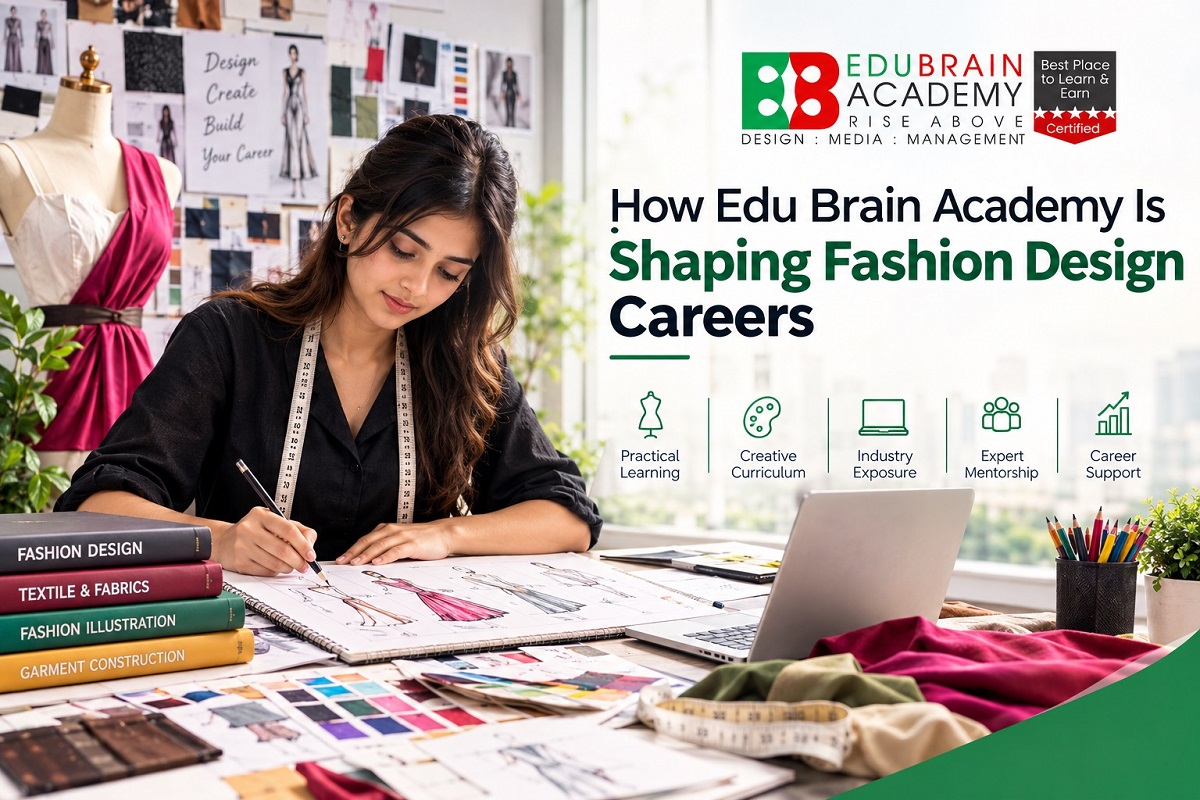
Edu Brain Academy is shaping fashion design careers in Delhi NCR by combining structured fashion education with practical learning, portfolio development, specialised programmes and exposure to different areas of the fashion industry.
Why Delhi NCR Matters for Fashion Education and Careers
Delhi NCR offers students access to a broad creative and commercial environment connected with apparel, retail, styling, textiles, events and entrepreneurship. This makes the region relevant for students who want to understand fashion beyond classroom theory.
For an aspiring designer, the advantage is not simply being located in a major city. The bigger benefit comes from learning through practical assignments, developing a professional portfolio, and understanding how design ideas move from concept to execution.
Students from Delhi as well as nearby NCR areas can therefore look for fashion programmes that combine creative development with technical knowledge and career-oriented learning.
Edu Brain Academy's programmes include activities such as workshops, industry-relevant projects, market research, industrial visits and interactions with visiting professionals. These elements are designed to complement classroom learning with practical exposure.
Fashion Education Across Delhi NCR
Students interested in fashion education come from different parts of the National Capital Region. Delhi, Noida, Gurugram, Faridabad and Ghaziabad are among the major NCR areas where students may explore fashion design courses, styling programmes, textile education and other creative career pathways.
Location is one factor when comparing institutes, but students should also evaluate curriculum, practical training, portfolio development, faculty, studio facilities, course duration, fees and career support. A convenient location can make regular classroom attendance easier, while a strong programme structure can help students build relevant skills for long-term career development.
Learning Fashion Through Practical Work
Fashion is a highly practical field. A student may understand colour theory or garment construction conceptually, but professional development requires opportunities to apply those concepts.
A practical fashion education can involve several interconnected areas:
-
Fashion illustration: Developing ideas visually and communicating design concepts.
-
Pattern making: Understanding measurements, shapes and garment structures.
-
Garment construction: Learning how designs are translated into wearable garments.
-
Textile studies: Understanding fabric characteristics, textures, prints and surface treatments.
-
Draping: Exploring how fabric behaves on a form and how silhouettes are developed.
-
Styling: Combining garments, accessories, colours and visual elements to create a complete look.
-
Portfolio development: Presenting design work professionally for further study, internships, freelance opportunities or employment.
-
Digital design: Using appropriate digital tools to support contemporary fashion workflows.
Edu Brain's current fashion course information highlights practical learning, workshops, live projects, portfolio development and industry-oriented assignments across its programmes.
This approach is particularly useful for students because fashion portfolios are often an important part of demonstrating what they can actually create.
Building a Portfolio Instead of Collecting Only Certificates
A certificate confirms that a student has completed a course, but a portfolio can demonstrate the student's creative thinking and technical development.
A strong fashion portfolio can include original sketches, mood boards, colour stories, fabric exploration, garment concepts, technical drawings, completed outfits, styling projects, textile experiments and photographs of finished work.
Students should gradually build their portfolio throughout the course instead of waiting until graduation. Each project can demonstrate a different skill or design direction.
For example, one project may focus on sustainable materials, another on traditional textiles, while another may explore contemporary streetwear or occasion wear. The objective is not simply to produce a large number of pages but to show how an idea develops from research to concept and finally into a finished design.
Fashion Education Is Becoming More Digital
Fashion design is no longer limited to pencil sketches, fabric samples and physical garments. Digital technology increasingly supports design development, presentation, communication, marketing and business operations.
This is reflected in newer fashion education options as well. Edu Brain currently offers a Diploma in Fashion Design & AI, combining fashion fundamentals with digital and AI-oriented learning. The programme covers areas such as fashion illustration, fabric selection, pattern making, garment construction and digital design tools.
The inclusion of technology can help students understand how traditional creative skills can work alongside modern digital workflows.
For aspiring designers, the objective should not be to replace creativity with technology. Instead, digital tools can be used to develop ideas faster, experiment with visual concepts and communicate design directions more effectively.
Choosing a Programme Based on Career Goals
Students across Delhi NCR have different career goals within the fashion industry, so selecting a programme should depend on the skills and career direction they want to develop rather than choosing a course only by its duration.
Not every fashion student needs the same type of programme. Someone interested in styling may require a different learning path from someone who wants to work in apparel production or build a fashion label.
Fashion Design Courses and Current Fee Structure
Edu Brain Academy currently offers fashion programmes ranging from short-term certificate courses to diploma, advanced diploma, bachelor’s and master-level programmes. The duration and currently displayed annual fee vary according to the programme.
|
Programme |
Duration |
Currently Listed Fee |
|
Certificate in Fashion Styling |
3 Months |
₹50,000 |
|
Diploma in Textile Designing |
1 Year |
₹90,000 PA |
|
Diploma in Fashion Design & Merchandising |
1 Year |
₹1,20,000 PA |
|
Diploma in Fashion Design & AI |
1 Year |
₹1,30,000 PA |
|
Diploma in Fashion Design & Boutique Management |
1 Year |
₹1,30,000 PA |
|
Diploma in Garment Construction & Embroidery |
1 Year |
₹1,30,000 PA |
|
Advanced Diploma in Fashion Design & Apparel |
2 Years |
₹1,30,000 PA |
|
Master Diploma in Fashion Design |
2 Years |
₹1,30,000 PA |
|
Master in Fashion Design |
2 Years |
₹1,30,000 PA |
|
Bachelor in Fashion Design |
3 Years |
₹1,50,000 PA |
|
B.Des in Fashion Design |
4 Years |
₹1,80,000 PA |
Specialised Learning Can Open Different Career Paths
Fashion is a broad industry, and students can develop specialised interests during their education.
Fashion Design
Students interested in creating apparel collections can focus on illustration, textiles, pattern development, garment construction, draping and collection development.
Fashion Styling
Styling involves visual coordination, trend interpretation, colour selection, personal styling and creating complete looks. Edu Brain's three-month Certificate in Fashion Styling is designed around styling, visual presentation, trends, colour theory and practical projects.
Textile Design
Textile-focused students can explore fabric design, surface ornamentation, printing, dyeing, weaving concepts, colour theory and digital textile design.
Merchandising
Students interested in the commercial side of fashion can explore product planning, retail, buying, merchandising and communication between creative and business teams.
Boutique Management
For students who want to establish an independent label or boutique, understanding fashion design alongside business operations can be valuable. A specialised programme can introduce areas related to boutique management and fashion entrepreneurship.
Garment Construction and Embroidery
Students who prefer technical apparel development can build skills in stitching, pattern development, garment construction, embroidery and finishing techniques.
Industry Exposure Can Connect Classroom Learning With Reality
One of the important differences between theoretical learning and professional preparation is exposure to real situations.
Students can learn about the industry through workshops, industrial visits, market research, project-based assignments and interactions with visiting professionals. These experiences can help them understand how fashion businesses operate and what standards are expected in professional environments.
Edu Brain's current course pages mention industry workshops, research-based assignments, industry-relevant projects, visiting professionals, industrial visits and market research as components of its fashion programmes.
Internships can also be valuable because they allow students to observe professional workflows and workplace expectations. However, students should always check the specific internship terms and availability for their selected programme rather than assuming that every course provides the same opportunity.
Career Opportunities After Fashion Education
Fashion education can lead to different career directions depending on a student's skills, specialisation, portfolio, and professional interests. In Delhi NCR, students can explore opportunities connected with apparel, styling, textiles, merchandising, retail, visual presentation and independent fashion businesses.
Potential roles include:
-
Fashion Designer
-
Apparel Designer
-
Fashion Stylist
-
Textile Designer
-
Fashion Illustrator
-
Pattern Maker
-
Fashion Merchandiser
-
Visual Merchandiser
-
Retail Buyer
-
Costume Designer
-
Fashion Consultant
-
Boutique Professional
-
Fashion Entrepreneur
-
Brand or Product Professional
Some students may also choose freelancing or develop their own fashion label after gaining sufficient design and business knowledge.
The career outcome is influenced by more than the institute name. A student's portfolio, practical ability, communication skills, software knowledge, internship experience and willingness to keep learning can all affect professional opportunities.
Why Portfolio and Practical Skills Matter for Employers
Fashion employers generally need people who can contribute to actual design and production processes. This makes demonstrable skills important.
A student who can explain a collection concept, create a mood board, understand fabric behaviour, develop patterns, construct garments and present finished work has tangible evidence of their capabilities.
This is why students should ask potential institutes questions such as:
-
How much practical work is included?
-
What type of projects will students complete?
-
How is portfolio development handled?
-
Are workshops conducted?
-
Are students exposed to industry professionals?
-
Are industrial visits or market research activities included?
-
What digital tools are taught?
-
What are the eligibility requirements?
-
What is included in the published course fee?
-
What career or placement assistance is available?
These questions provide a more useful basis for comparison than simply choosing an institute because it appears frequently in search results.
How Edu Brain Academy Supports Fashion Learning
Edu Brain Academy positions its fashion education around practical learning, project-based activities, workshops and career-oriented skill development. Its current School of Fashion portfolio includes short-term, diploma, undergraduate and advanced programmes, giving students multiple routes into fashion education.
Students researching a fashion design training institute in Delhi as well as nearby NCR areas can evaluate Edu Brain alongside other options by comparing curriculum, practical exposure, faculty support, portfolio opportunities, course duration, fees and career assistance.
The academy's fashion programmes cover different areas, including fashion design, styling, textile design, merchandising, boutique management, garment construction and fashion technology. This broader selection can be useful for students who are still deciding which part of the fashion industry matches their interests.
A More Career-Focused Approach to Fashion Education
The fashion industry continues to change with digital technology, e-commerce, social media, changing consumer behaviour and new approaches to sustainable design. Students therefore need an education that helps them adapt rather than simply memorise traditional concepts.
A strong learning experience should encourage students to experiment, create, receive feedback and improve their work. It should also help them understand the relationship between creativity and commercial requirements.
For students in Delhi and Delhi NCR, studying within a major fashion and business environment can provide additional opportunities to observe the industry. Combining that environment with structured education, practical projects, portfolio development and professional guidance can create a stronger foundation for a long-term career.
Explore Fashion Design Career Options
If you are planning to build a career in fashion and want to understand which programme fits your interests, Edu Brain Academy can help you explore available fashion design, styling, textile, merchandising and related programmes. Students can review course duration, fees, eligibility and programme structure before choosing the right pathway.
For course details and admission guidance:
📞 Phone Number: +91 9319338333
✉️ Email: eduinfo@edubrain.in
Frequently Asked Questions (FAQs)
1. Is fashion design a good career option in Delhi NCR?
Fashion can offer career opportunities across design, styling, textiles, merchandising, apparel, retail and entrepreneurship. Delhi NCR's broader fashion and retail ecosystem also gives students access to different types of industry exposure.
2. What should students look for in a fashion design academy?
Students should compare curriculum, practical training, faculty experience, studio facilities, portfolio development, industry exposure, software learning, course duration, fees and career support.
3. Does Edu Brain offer different fashion courses?
Yes. Edu Brain currently offers certificate, diploma, advanced diploma, bachelor's and master's-level fashion programmes, along with specialised options in styling, textile design, merchandising, boutique management, garment construction and fashion design with AI.
4. What can students learn in a fashion design course?
Depending on the programme, students may study fashion illustration, textile studies, pattern making, garment construction, draping, styling, merchandising, digital design, portfolio development and practical projects.
5. Can fashion students start their own business?
Yes. Students interested in entrepreneurship can develop skills related to design, product development, branding, merchandising, boutique operations and customer understanding. Business success, however, depends on factors beyond the course itself, including market research, financial planning, product quality and business execution.
6. How is Edu Brain Academy supporting fashion design careers?
Edu Brain Academy focuses on fashion education through practical learning, portfolio development, specialised programmes and career-oriented skill development. Students can choose programmes based on their interests in fashion design, styling, textiles, merchandising and related areas.
7. What career options are available after studying fashion design?
Career options can include fashion designer, fashion stylist, textile designer, apparel merchandiser, fashion illustrator, costume designer, visual merchandiser, retail buyer, fashion consultant and fashion entrepreneur.
8. Which fashion design programmes are available at Edu Brain?
The academy currently offers certificate, diploma, advanced diploma, bachelor's and master's-level fashion programmes, including options related to fashion design, styling, textile designing, merchandising, boutique management and garment construction.
Conclusion
Fashion careers are becoming increasingly diverse, with opportunities extending beyond traditional fashion design into styling, textiles, merchandising, garment construction, retail and entrepreneurship. For students in Delhi NCR, choosing the right educational pathway can help them develop the creative and technical skills required to explore these different directions.
Edu Brain Academy's focus on practical learning, portfolio development and specialised fashion programmes provides students with multiple pathways to develop their skills. Rather than choosing a fashion designing course in Delhi NCR based only on its name or duration, students should consider factors such as curriculum, practical exposure, portfolio development, fees, faculty expertise and their individual career goals.
For aspiring fashion professionals, a career-focused approach to fashion education can provide a stronger foundation for entering and growing within the industry across Delhi NCR and beyond.