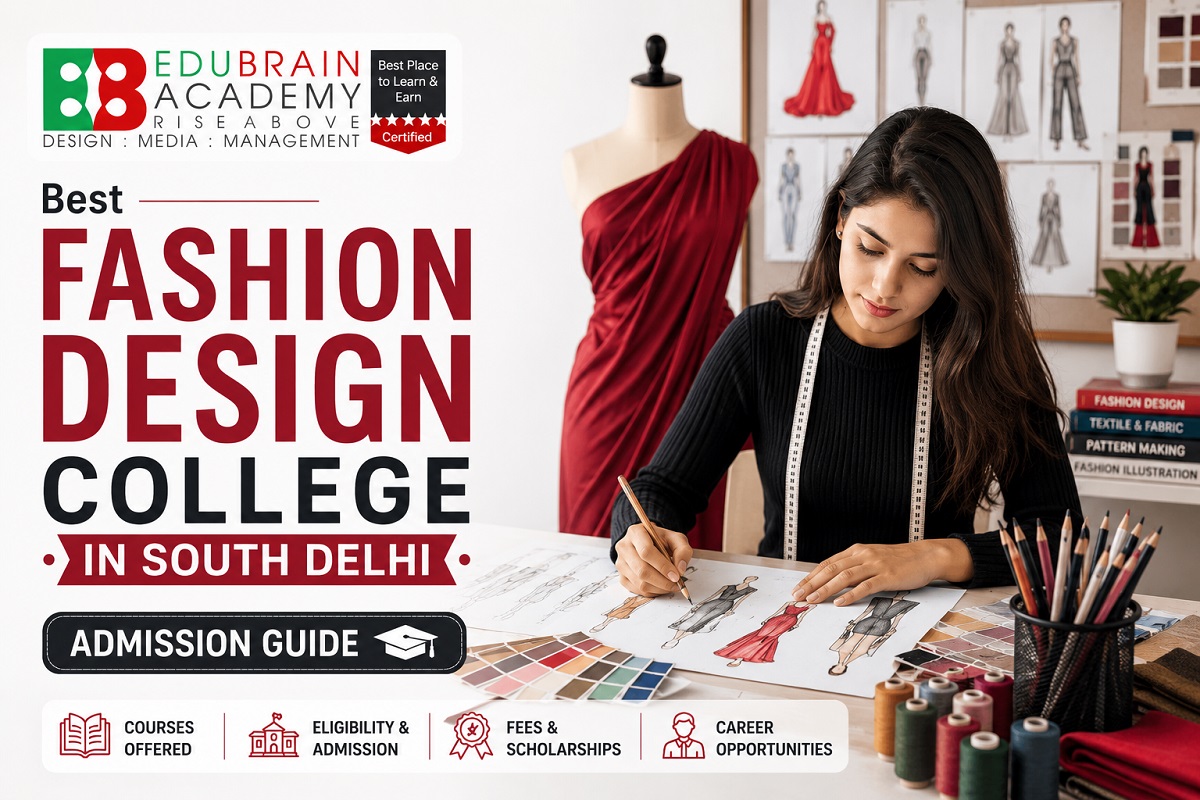
Students searching for a fashion design college in South Delhi generally want to understand which courses are available, how much they cost, what qualifications are required and what career opportunities they can explore after completing their education. Comparing these factors helps students understand the differences between certificate, diploma and degree programmes before applying.
Fashion design education covers several areas, including fashion illustration, textile knowledge, garment construction, pattern making, styling and digital design. The course structure and practical training can differ between institutions, so students should review the curriculum, duration, eligibility and learning facilities carefully.
This guide explains the important aspects of fashion design education for students in South Delhi, including course options, subjects, fees, admission requirements and career possibilities.
What Should Students Look for in a Fashion Design College in South Delhi?
A fashion designing college in Delhi should provide a curriculum that develops both creative understanding and technical knowledge. Before applying, students should examine the following factors.
Course Curriculum
Review the subjects included in the programme. A comprehensive fashion design curriculum may cover fashion illustration, textile science, pattern making, garment construction, fashion styling and digital design.
Students should also check whether the syllabus progresses from basic concepts to more advanced design assignments.
Practical Training
Fashion design involves applying ideas through sketches, fabric work and garment development. Practical sessions help students understand how design concepts are translated into finished products.
Check whether the programme includes studio assignments, sewing practice, fabric experimentation, garment construction and design projects.
Faculty and Academic Guidance
Faculty guidance is important when students are developing technical skills and working on design assignments. Review faculty qualifications, relevant professional experience and the academic support available during the programme.
Design Software and Facilities
Digital tools are used in different areas of fashion design, including illustration, technical drawings and visual presentations.
Students should check which software applications are taught and whether the institution provides access to suitable computer laboratories, design equipment and practical facilities.
Portfolio Development
A fashion portfolio presents a student's design ideas, sketches, fabric experiments and completed projects. It can be useful when applying for internships, jobs or further education.
Check whether portfolio development is part of the course curriculum and whether students receive feedback on their work.
Internship and Career Guidance
Some programmes provide internship guidance, industry interaction or career preparation. Students should understand what support is actually available and whether internship opportunities are part of the formal course structure.
Types of Fashion Design Courses Available After Class 12
Students can explore different types of fashion design programmes depending on their educational qualifications, learning objectives and preferred course duration.
Certificate Courses
Certificate programmes generally focus on specific areas of fashion education. These may include fashion styling, illustration, garment-related skills or other specialised subjects.
They may be suitable for learners who want introductory or focused training in a particular area.
Diploma Courses
Diploma programmes generally cover a combination of creative and technical subjects. Depending on the syllabus, students may study fashion illustration, textile knowledge, pattern making, garment construction and design development.
Advanced Diploma Courses
Advanced diploma programmes may offer more extensive training in fashion design and apparel-related subjects. Their curriculum and duration depend on the institution.
Students should check the qualification awarded and the subjects covered before admission.
Bachelor's Degree Courses
Students interested in an undergraduate qualification can explore a Bachelor in Fashion Design programme to understand its curriculum, duration, eligibility and academic structure.
Eligibility and admission requirements depend on the specific degree programme and its awarding institution.
Fashion Design Course Duration and Fees
The duration and cost of fashion design education depend on the qualification, curriculum, practical facilities and course structure.
|
Course type |
General duration |
|
Certificate course |
A few months |
|
Diploma course |
Around 1–2 years |
|
Advanced diploma |
Around 1–2 years or more |
|
Bachelor's degree |
Generally 3–4 years |
These are broad educational categories, not fixed durations for every institution. Students should check the official programme details before applying.
Where to Find Fashion Design Course Details
Students interested in understanding fashion design programmes can contact Edu Brain Academy for information about available courses, curriculum, duration, eligibility and fee structure. Reviewing these details can help applicants understand the academic requirements and practical learning components before applying.
-
Phone: +91 9319338333
- Course Information: https://www.edubrain.in/course/school-of-fashion
What Factors Affect Fashion Design Course Fees?
Fashion design course fees may vary due to:
-
Course duration and academic level
-
Number of practical sessions
-
Design studio and laboratory facilities
-
Fabric and project materials
-
Software access and computer facilities
-
Examination and registration charges
-
Portfolio and project requirements
Before admission, request a written fee breakdown. Confirm whether the quoted amount covers the entire programme or is charged annually, semester-wise or separately for additional facilities.
What Subjects Are Taught in Fashion Design Courses?
Fashion design programmes combine artistic development with knowledge of fabrics, clothing construction and design processes. The exact subjects depend on the course level and curriculum.
Fashion Illustration
Fashion illustration teaches students how to communicate clothing concepts through drawings. Topics may include figure proportions, garment details, colour combinations, rendering and design presentation.
Textile Science and Fabric Knowledge
Textile studies introduce different fibres, fabrics, textures and material properties. Students learn how fabric characteristics influence garment design, comfort, appearance and construction.
Pattern Making
Pattern making involves developing garment patterns based on measurements and design specifications. Students learn how different pattern components are prepared before garment construction.
Draping
Draping involves arranging fabric on a dress form to develop garment shapes and understand fabric behaviour. It helps connect three-dimensional garment development with design concepts.
Garment Construction
This subject covers sewing techniques, garment assembly, finishing methods and construction processes. Practical exercises help students understand how individual garment components are put together.
Fashion CAD and Digital Design
Computer-aided design tools support fashion illustration, technical drawings and digital presentations. The applications taught depend on the programme and available facilities.
Fashion Styling and Merchandising
Fashion styling introduces clothing coordination, accessories and visual presentation. Fashion merchandising covers product presentation, retail concepts and aspects of fashion business operations.
Why Practical Training Matters in Fashion Design Education
Practical training helps students apply the concepts they study in the classroom. It also develops an understanding of the steps involved in taking a design idea from an initial sketch to a finished garment.
Common practical activities may include:
-
Developing fashion sketches and illustrations
-
Identifying and experimenting with fabrics
-
Preparing basic garment patterns
-
Practising sewing and garment construction
-
Creating clothing and styling concepts
-
Working on digital design assignments
-
Preparing design presentations
-
Developing a portfolio of completed projects
Students should review the practical components of a course rather than relying only on the subjects listed in its syllabus.
Importance of a Fashion Portfolio
A fashion design portfolio brings together a student's sketches, creative concepts and completed projects, showing how their ideas develop into practical designs.
A student portfolio may include:
- Design Sketches: Fashion illustrations and initial clothing concepts show how students communicate design ideas.
- Mood Boards: Mood boards present the inspiration, colours, textures and visual direction behind a design project.
- Fabric and Material Experiments: Samples and material studies demonstrate how students understand fabric properties and their applications.
- Garment Development Projects: Completed garments and construction details provide examples of practical skills and technical understanding.
- Digital Design Presentations: Digital illustrations and technical drawings show how students use design software to communicate clothing concepts.
Portfolio requirements may vary according to the institution, programme and intended career path.
Career Opportunities After Fashion Design Education
Fashion design education can lead to different career paths across apparel, textiles, styling, retail and creative industries. Career opportunities depend on individual skills, practical experience, portfolio quality and employer requirements.
- Fashion Designer: Fashion designers develop clothing concepts, prepare sketches and contribute to garment collections. They may work with fashion labels, apparel businesses or independent design projects.
- Fashion Stylist: Fashion stylists coordinate clothing, accessories and overall looks for individuals, advertisements, fashion photography and media productions.
- Textile Designer: Textile designers work with fabric patterns, prints, colours and surface designs for clothing, furnishings and other textile products.
- Apparel Merchandiser: Apparel merchandisers coordinate product requirements, production schedules, quality checks and communication between buyers and manufacturers.
- Costume Designer: Costume designers develop clothing concepts for films, television programmes, theatre productions and other creative projects.
- Fashion Illustrator: Fashion illustrators create drawings and visual presentations that communicate clothing concepts and design details.
- Visual Merchandiser: Visual merchandisers plan product displays and retail presentations to organise clothing and accessories in commercial spaces.
- Fashion Entrepreneur: With relevant design and business knowledge, individuals may develop independent clothing labels, boutiques or online fashion businesses.
Fashion Design Education Options for Students in South Delhi
South Delhi includes several residential and commercial areas where students may explore fashion design education. These include Saket, Malviya Nagar, Greater Kailash, Lajpat Nagar, Kalkaji, Nehru Place, Green Park, Hauz Khas, South Extension and Okhla.
When researching nearby institutions, students should consider more than the locality mentioned in a college's name.
Important location-related factors include:
-
Complete campus address
-
Distance from the student's residential area
-
Availability of metro and public transport connections
-
Class timings and attendance requirements
-
Location of design studios and practical classes
-
Availability of required facilities at the stated campus
Students should verify the actual teaching location before admission. A college serving students from South Delhi may have its campus in a different locality.
Eligibility and Admission Requirements for Fashion Design Courses
Eligibility varies according to the academic level and specific programme.
Certificate and Diploma Programmes
Entry requirements depend on the course. Some programmes may accept students with basic educational qualifications, while others may specify particular academic requirements.
Bachelor's Degree Programmes
Undergraduate fashion design courses generally require completion of Class 12 or an equivalent qualification. Specific subject requirements, minimum marks and admission procedures depend on the institution.
Documents Commonly Required
During the application process, applicants generally need to submit some basic academic and personal documents, such as:
-
Class 10 marksheet or certificate
-
Class 12 marksheet or certificate
-
Identity proof
-
Recent photographs
-
Previous academic records, where applicable
-
Other documents specified by the institution
Students should confirm the current eligibility criteria, application deadlines and document requirements directly with the relevant institution.
How to Compare Fashion Design Colleges Before Admission
Before comparing institutions, students should understand the learning opportunities and career prospects available through fashion education. Read Is a Fashion Designing Course in Delhi Worth It? to explore the practical exposure, educational benefits and career scope associated with fashion design programmes in Delhi.
|
Comparison factor |
What to check |
|
Qualification |
Certificate, diploma or degree awarded |
|
Recognition |
Awarding body, affiliation or approval, where applicable |
|
Curriculum |
Subjects and academic structure |
|
Practical learning |
Studio sessions and garment-making assignments |
|
Faculty |
Qualifications and relevant experience |
|
Facilities |
Design studios, equipment and software |
|
Portfolio |
Student projects and portfolio guidance |
|
Internship |
Availability of internship guidance |
|
Fees |
Complete written fee structure |
|
Location |
Actual campus and practical-class address |
Students should rely on official programme information, verified documents and actual student work when making comparisons. Claims about rankings, placements and recognition should be checked against reliable evidence.
Conclusion
Fashion design education involves creative development, technical skills and practical understanding of clothing and textiles. Students researching a fashion design college in South Delhi should compare course qualifications, duration, fees, curriculum, practical training, portfolio development and admission requirements. Understanding these factors can help students identify a programme that matches their academic background and career interests. Reviewing the actual syllabus, facilities, campus location and qualification details before admission can also help avoid confusion later.
Frequently Asked Questions (FAQs)
1. How can students find a suitable fashion design college in South Delhi?
Students should compare course qualifications, curriculum, practical training, faculty, facilities, fees, portfolio development and campus location. They should also verify the recognition and qualification awarded by the institution.
2. Can students study fashion design after Class 12?
Yes. Students who have completed Class 12 can explore eligible diploma and undergraduate programmes. Admission requirements vary depending on the course and institution.
3. What is the duration of a fashion design course?
Certificate programmes may last a few months, diploma programmes may take one or more years, and bachelor's degree programmes generally take three to four years. The exact duration depends on the specific course.
4. How much do fashion design courses cost in South Delhi?
Course fees vary according to academic level, duration, curriculum and practical facilities. Students should request the latest written fee structure and check for additional charges before admission.
5. Which subjects are included in fashion design courses?
Common subjects include fashion illustration, textile science, pattern making, draping, garment construction, fashion CAD, styling and merchandising. The syllabus varies between programmes.
6. Is a portfolio necessary for fashion design students?
A portfolio is useful because it presents a student's sketches, design concepts, practical projects and completed work. It can support applications for internships, employment and further education.
7. What jobs can students pursue after fashion design education?
Possible career paths include fashion designer, fashion stylist, textile designer, apparel merchandiser, costume designer, fashion illustrator and visual merchandiser. Career opportunities depend on skills, experience and portfolio quality.
8. What should students check before paying fashion design course fees in South Delhi?
Students should confirm the total programme fee, payment schedule, registration and examination charges, material costs, course duration, qualification awarded and refund policy before making a payment.