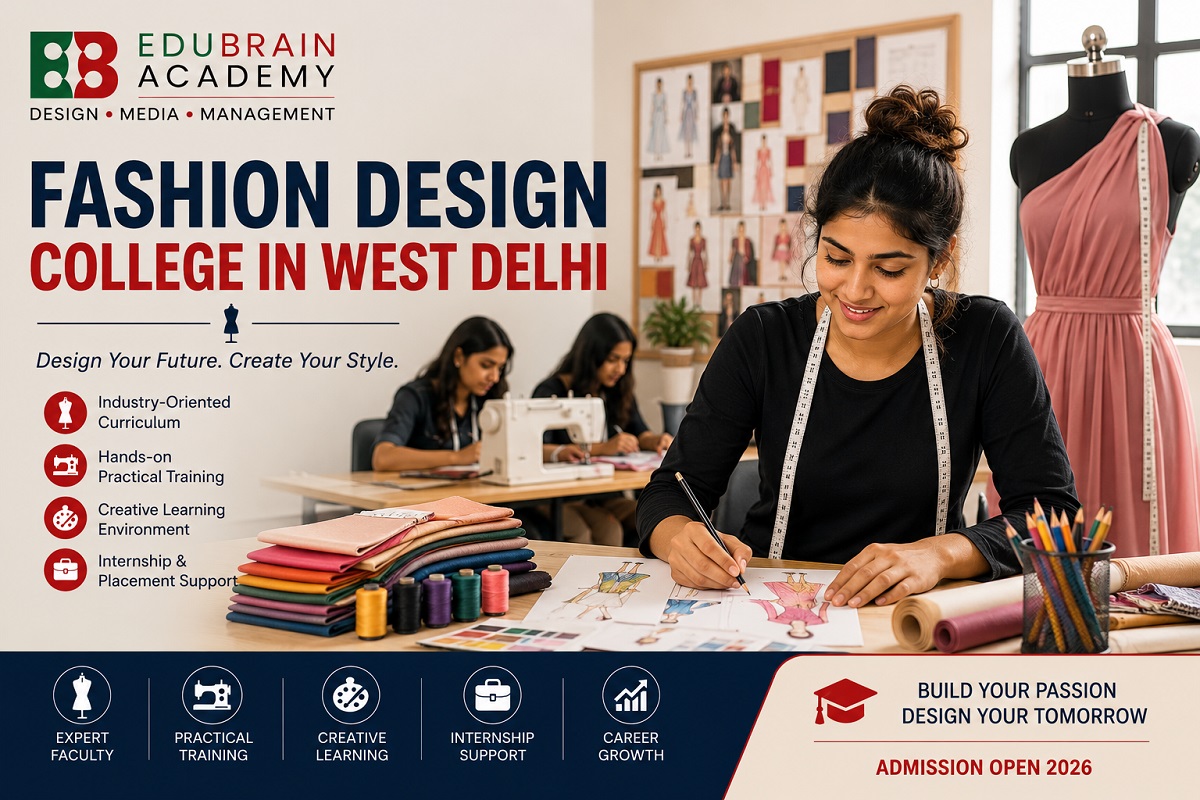
A Fashion Design College in West Delhi provides students with an opportunity to develop creative and technical skills in clothing design, textiles, garment construction and fashion styling. West Delhi locations such as Rajouri Garden, Janakpuri, Ramesh Nagar, Punjabi Bagh, Tilak Nagar, Paschim Vihar and Kirti Nagar are convenient for students looking for fashion education within their local area. Fashion education combines design concepts with practical skills. Students learn how to develop clothing ideas, understand fabrics, prepare patterns, construct garments and present their designs through professional portfolios.
Why West Delhi Is a Convenient Location for Fashion Education
West Delhi has established residential and commercial areas, shopping destinations, garment retailers and local businesses. These surroundings make the region accessible to students interested in apparel, fashion retail and styling. Students living in Ramesh Nagar, Rajouri Garden, Janakpuri, Vikaspuri, Moti Nagar, Punjabi Bagh, Patel Nagar and nearby areas can explore institutes without necessarily travelling to other parts of Delhi. When comparing fashion colleges, students should consider the campus location, transport connectivity, course curriculum, practical facilities and learning environment.
Fashion Design Courses Offered by Colleges in West Delhi
Students can choose from different programs depending on their educational qualification and career goals. Those comparing a Fashion Designing Course in Delhi should consider the course duration, curriculum, practical training, portfolio development, and career opportunities before selecting a program.
Diploma in Fashion Design
A diploma in fashion design can be suitable for students who want to develop practical fashion skills within a focused course structure.
Depending on the curriculum, students may study:
-
Fashion illustration
-
Textile fundamentals
-
Pattern making
-
Garment construction
-
Fashion styling
-
Basic draping
-
Fashion merchandising
-
Portfolio development
This type of program can help students establish foundational skills before entering the fashion industry or pursuing further education.
Advanced Diploma in Fashion Design
An advanced diploma generally provides more extensive training in fashion and apparel design.
Students may work on:
-
Fashion collections
-
Advanced garment construction
-
Pattern development
-
Draping techniques
-
Textile exploration
-
Fashion styling
-
Digital fashion design
-
Industry projects
-
Portfolio development
Students who want a stronger practical foundation can consider an advanced diploma after checking the course duration and eligibility criteria.
Bachelor's Degree in Fashion Design
A bachelor's degree offers a broader academic and practical approach to fashion education. The curriculum can cover design concepts, technical development, fashion communication, textiles, garment production, research, and industry-oriented projects.
A fashion design degree may be suitable for students who want to pursue a longer academic pathway and explore a wider range of fashion careers.
What Do You Learn in a Fashion Design Course?
Fashion design education involves much more than drawing clothing designs. Students need to understand how a concept is developed, planned, constructed, presented, and eventually transformed into a marketable fashion product.
Fashion Illustration
Students learn to communicate their creative ideas through fashion sketches, silhouettes, poses, garment details, and colour concepts.
Textile Studies
Understanding fabrics is essential for fashion designers. Students learn about different fibres, fabric structures, textures, prints, surface treatments, and their suitability for different garments.
Pattern Making
Pattern making teaches students how measurements and design concepts are converted into patterns that can be used to construct garments.
Garment Construction
Students gain practical knowledge of stitching, garment assembly, finishing techniques, measurements, and construction methods.
Draping
Draping involves developing garment forms directly on a dress form. It helps students understand shape, volume, proportion, and fabric behaviour.
Fashion Styling
Styling introduces students to the combination of clothing, accessories, colours, silhouettes, and presentation to create a complete visual concept.
Fashion Merchandising
Students learn about fashion products, consumer preferences, product planning, retail environments, market trends, and brand requirements.
Digital Fashion Design
Modern fashion education increasingly includes digital tools for creating illustrations, technical drawings, presentations, mood boards, and other design materials.
Why Practical Training Matters
Fashion is a practical profession. A student may have excellent creative ideas, but professional work also requires the ability to execute those ideas.
Practical training can help students understand:
-
How fabrics behave
-
How patterns are developed
-
How garments are constructed
-
How measurements affect fit
-
How colours work together
-
How designs are presented
-
How to solve construction problems
-
How to work within project deadlines
Students should therefore ask about the practical component of a course before taking admission.
A strong program should provide opportunities to work on assignments, collections, garments, design projects, presentations, and portfolio pieces.
Know About Fashion Design Fees in West Delhi
Fashion design fees in West Delhi can vary depending on the course, duration, curriculum, practical training, facilities, and level of specialization. Students should compare the complete course structure rather than choosing a college based only on the total fee.
At Edu Brain Academy, students can choose from fashion design programs at different levels, including undergraduate degrees, advanced diplomas, diplomas and certificate courses. The course fee depends on the program selected.
Know About Fashion Design Fees in West Delhi
|
Fashion Design Course |
Duration |
Fee |
|
Advanced Diploma in Fashion Design & Apparel |
2 Years |
₹1,30,000 PA |
|
B.Des in Fashion Design |
4 Years |
₹1,80,000 PA |
|
Bachelor in Fashion Design |
3 Years |
₹1,50,000 PA |
|
Certificate in Fashion Styling |
3 Months |
₹50,000 PA |
|
Diploma in Fashion Design & AI |
1 Year |
₹1,30,000 PA |
|
Diploma in Fashion Design & Boutique Management |
1 Year |
₹1,30,000 PA |
|
Diploma in Fashion Design & Merchandising |
1 Year |
₹1,20,000 PA |
|
Diploma in Garment Construction & Embroidery |
1 Year |
₹1,30,000 PA |
|
Diploma in Textile Designing |
1 Year |
₹90,000 PA |
|
Master Diploma in Fashion Design |
2 Years |
₹1,30,000 PA |
|
Master in Fashion Design |
2 Years |
₹1,30,000 PA |
Students should confirm the applicable fee structure, payment schedule, and admission requirements before enrolling, as course details and fees may change.
What Should You Check Before Paying the Course Fee?
Before taking admission, students should understand what is covered within the course fee. Important points to discuss with the institute include:
-
Practical training and studio work
-
Fashion design software training
-
Workshops and industry-oriented activities
-
Portfolio development
-
Examination or assessment charges
-
Learning materials and other applicable expenses
-
Payment schedule and available admission support
A clear understanding of these factors makes it easier to compare fashion design colleges in West Delhi and to select a course that aligns with your educational and career goals.
Fashion Design Admission Process
The admission process for a fashion design course depends on the program and the eligibility requirements. Students can follow a simple process to select the right course, confirm eligibility and complete their admission.
Step 1: Choose the Right Fashion Design Course
Start by selecting a program that matches your educational qualification, career objective, preferred course duration, and area of interest.
Students can consider options such as:
-
Bachelor's degree programs
-
B.Des in Fashion Design
-
Advanced Diploma in Fashion Design
-
Diploma programs
-
Certificate courses
-
Specialized fashion programs
Choosing the right course at the beginning can help students build the skills and portfolio required for their preferred career path.
Step 2: Check the Eligibility Requirements
Review the eligibility criteria for the selected program before applying. Requirements can vary according to the course.
For example, undergraduate fashion design programs generally require completion of 10+2, while some diploma and certificate programs may have different academic requirements.
Step 3: Submit the Admission Application
Complete the admission application with the required academic and personal information. Students should provide accurate details and make sure the required information is submitted correctly.
Step 4: Attend Counselling or Course Discussion
Students can discuss the course structure, curriculum, practical learning, career opportunities, duration and other admission-related details with the institute.
This step can help students understand whether the selected fashion design course matches their career plans.
Step 5: Complete Document Verification
Students may need to provide documents such as:
-
Academic certificates and marksheets
-
Identity proof
-
Recent photographs
-
Required application documents
-
Other documents requested by the institute
The exact document requirements may vary depending on the course.
Step 6: Complete Admission Formalities
After eligibility and document verification, students can complete the required admission formalities and proceed with enrollment.
Before making the final payment, students should confirm the course duration, fee structure, payment terms, academic schedule, and other applicable requirements with the institute.
Need Help With Fashion Design Admission?
If you are planning to enroll in a fashion design course, Edu Brain Academy can provide guidance on course options, eligibility, fees, and admissions.
Call or WhatsApp: 9319336333
Email: eduinfo@edubrain.in
How to Choose the Right Fashion Design College in West Delhi
Choosing a college is an important decision, so students should compare more than just the course name.
1. Check the Curriculum
Review the complete syllabus and make sure it includes both creative and technical subjects.
Look for areas such as:
-
Fashion Illustration
-
Textile Studies
-
Pattern Making
-
Garment Construction
-
Draping
-
Fashion Styling
-
Fashion Merchandising
-
Digital Design
-
Portfolio Development
2. Evaluate Practical Facilities
Fashion students need access to appropriate facilities for developing technical skills.
Check whether the college provides:
-
Fashion studios
-
Sewing equipment
-
Pattern-making facilities
-
Computer labs
-
Design software
-
Workshop facilities
-
Material resources
3. Consider Faculty Experience
Experienced faculty can help students improve their creative thinking, technical execution, design presentation, and portfolio quality.
4. Ask About Industry Exposure
Industry interaction can help students understand professional expectations and current fashion practices.
Look for opportunities such as:
-
Workshops
-
Guest sessions
-
Live projects
-
Fashion events
-
Industry visits
-
Design competitions
-
Portfolio reviews
Portfolio Development for Fashion Design Students
A portfolio is one of the most important professional tools for a fashion design student.
It can demonstrate:
-
Original concepts
-
Fashion illustrations
-
Mood boards
-
Colour palettes
-
Textile experiments
-
Pattern development
-
Garment construction
-
Styling projects
-
Completed collections
-
Digital design work
Students should build their portfolio throughout the course rather than creating everything at the end.
A strong portfolio should show not only the final garment but also the design process behind it.
For example, a project can include:
Research → Inspiration → Mood Board → Sketches → Fabric Selection → Development → Final Garment
This demonstrates how the student thinks and solves design problems. Read More: Is a Fashion Designing Course in Delhi Worth It
Industry Exposure and Internships
Classroom education provides the foundation, while industry exposure can help students understand professional workflows.
Internships may allow students to experience:
-
Design development
-
Production processes
-
Fashion styling
-
Apparel businesses
-
Retail operations
-
Merchandising
-
Client communication
-
Professional deadlines
Students should ask prospective colleges whether internship guidance or industry exposure is included in the program.
Career Opportunities After Studying Fashion Design in West Delhi
Fashion design graduates can explore different career paths depending on their skills and interests.
Fashion Designer
Develop clothing concepts, collections, silhouettes, and apparel designs.
Apparel Designer
Work on garments and collections for fashion brands and apparel businesses.
Fashion Stylist
Create complete looks for individuals, brands, fashion shoots, media, or events.
Fashion Illustrator
Create visual fashion concepts and illustrations for designers, brands, publications, or presentations.
Textile Designer
Develop prints, patterns, textures, and surface designs for fabrics.
Fashion Merchandiser
Work with fashion products, consumer trends, retail planning, product selection, and market requirements.
Costume Designer
Develop clothing and costumes for films, television, theatre, events, and other creative productions.
Fashion Entrepreneur
Students with business interests can eventually establish their own fashion label, boutique, design studio, or online fashion business.
Skills That Can Improve Your Fashion Design Career
A successful fashion professional needs a combination of creative, technical, and professional skills.
Important skills include:
-
Creativity
-
Fashion illustration
-
Pattern making
-
Garment construction
-
Textile knowledge
-
Draping
-
Colour theory
-
Trend research
-
Digital design
-
Styling
-
Communication
-
Presentation
-
Portfolio development
-
Time management
-
Problem-solving
Students should continue developing these skills even after completing their formal education.
Why Consider Edu Brain Academy?
When comparing options for a fashion design college in West Delhi, students can consider Edu Brain Academy's fashion-focused education, which combines creative learning with practical design development and career-oriented skills.
The program approach includes areas such as fashion design, apparel development, practical assignments, design software, portfolio development, workshops, industry exposure, internship guidance, and career support.
Students should still compare the curriculum, fees, facilities, practical training, faculty, and admission requirements before making their final decision.
What Should You Check Before Admission?
Before selecting a fashion design program, ask the admission team:
- What is the complete course duration?
- What is the eligibility requirement?
- What subjects are included?
- How much practical training is provided?
- Which design software is taught?
- Are workshops included?
- Are live projects available?
- Is portfolio development part of the course?
- Is internship guidance provided?
- What career support is available?
- What is the complete fee structure?
- Are there any additional charges?
Getting clear answers to these questions can help you make a more informed decision.
How to Build a Strong Fashion Design Portfolio
Your portfolio can become one of the most important parts of your professional profile.
A well-organised portfolio should demonstrate your:
-
Creativity
-
Design thinking
-
Research ability
-
Fashion illustration
-
Colour selection
-
Textile experimentation
-
Pattern development
-
Garment construction
-
Styling skills
-
Digital design skills
A Good Portfolio Structure
A student portfolio can follow this structure:
1. Cover Page: Introduce yourself and your design interests.
2. Design Research: Show references, inspiration, and research.
3. Mood Board: Present colours, textures, images, and visual references.
4. Fashion Illustrations: Include original sketches and design concepts.
5. Design Development: Show how initial ideas were developed and refined.
6. Fabric & Material Selection: Explain the fabrics and materials selected for the project.
7. Final Designs: Show completed garments or final design presentations.
8. Project Explanation: Briefly explain the concept, process, and outcome.
This approach helps employers or clients understand not only what you designed but also how you developed the idea.
How to Prepare Before Joining a Fashion Design Course
Students can start developing their creative abilities even before admission.
Practise Fashion Sketching
Regular sketching can improve your ability to communicate clothing ideas visually.
Explore Different Fabrics
Learn how different materials behave, including their texture, weight, fall, stretch, and suitability for garments.
Observe Fashion Trends
Follow fashion collections, designers, retail brands, styling trends, and changing consumer preferences.
Create Mood Boards
Experiment with colours, textures, photographs, patterns, and visual references to develop design concepts.
Learn Basic Digital Tools
Basic familiarity with design software can help students transition more comfortably into digital fashion education.
Start a Small Portfolio
Keep your best sketches, design experiments, mood boards, and creative projects in one place.
Admission Checklist for Fashion Design Students
Before taking admission, use this checklist:
- Check course eligibility
- Compare course duration
- Review the complete curriculum
- Understand the fee structure
- Check practical training
- Review fashion studio facilities
- Ask about sewing and garment construction facilities
- Check design software training
- Ask about workshops and industry sessions
- Check internship opportunities
- Ask about portfolio development
- Review career and placement support
- Visit the campus if possible
- Speak with the admission counsellor
This checklist can help you compare courses based on actual educational value rather than promotional claims.
Final Thoughts
Choosing a Fashion Design College in West Delhi should be a well-researched decision. Students should look beyond advertisements and compare the actual curriculum, practical training, faculty, facilities, software education, industry exposure, internships, portfolio development, and career support.
A strong fashion design education can help students develop the creative and technical skills required to work across apparel, styling, textiles, merchandising, retail, media, and entrepreneurship.
Your portfolio, practical abilities, communication skills, and industry experience can become important factors as you progress from student projects to professional opportunities.
Before submitting an application, understand the eligibility requirements, course structure, fees, practical facilities, and career support offered by the college. Choosing a program that matches your interests and long-term goals can provide a stronger foundation for a career in the fashion industry.
Frequently Asked Questions (FAQs)
1. Which is the best Fashion Designing College in West Delhi?
Edu Brain Academy is a preferred choice for students looking for fashion design education, with a focus on practical learning, design projects, portfolio development, industry-oriented skills, and career preparation.
2. What should I check before choosing a Fashion Design College in West Delhi?
Students should compare the course curriculum, faculty, practical training, fashion studios, equipment, industry exposure, internships, portfolio development, fees, and career support before selecting a college.
3. What Fashion Design courses are available in West Delhi?
Fashion design colleges may offer Diploma, Advanced Diploma, Bachelor's, and other specialised fashion design programs. Course availability, duration, eligibility, and curriculum vary by college.
4. How much does a Fashion Design course cost in West Delhi?
The cost depends on the course level, duration, curriculum, practical training, facilities, and college. Students should check the latest fee structure and understand whether practical materials, workshops, and other charges are included.
5. What is the admission process for a Fashion Design College?
The admission process generally involves course selection, eligibility verification, application submission, counselling, document verification, and completion of admission formalities. The exact process may vary by institution.
6. Does a Fashion Design College provide practical training?
A professional fashion design program should include practical learning through activities such as fashion illustration, pattern making, garment construction, draping, textile work, design projects, and portfolio development.
7. How important is a portfolio when studying Fashion Design?
A portfolio is important because it demonstrates a student's creativity, design thinking, technical skills, research, and completed projects. It can support applications for internships, employment, freelance opportunities, and further education.
8. What facilities should a good Fashion College have?
Students should look for facilities such as fashion design studios, sewing equipment, pattern-making areas, computer labs, design software, textile resources, workshops, and spaces for practical projects.
9. Does a Fashion Design course provide internship or industry exposure?
Industry exposure can include internships, workshops, live projects, guest sessions, fashion events, industry interactions, and portfolio reviews. Students should check what opportunities are actually included in the selected program.
10. What are the career options after completing a Fashion Design course?
Graduates can explore careers as Fashion Designers, Apparel Designers, Fashion Stylists, Fashion Illustrators, Textile Designers, Fashion Merchandisers, Costume Designers, Fashion Consultants, and Fashion Entrepreneurs.