Fashion designing is a creative and skill-based field that combines design thinking with practical knowledge of fabrics, colours, patterns, garment construction, styling, and fashion technology. A structured fashion design course can help students turn creative ideas into professional design work while developing the technical skills required by the apparel and fashion industry.
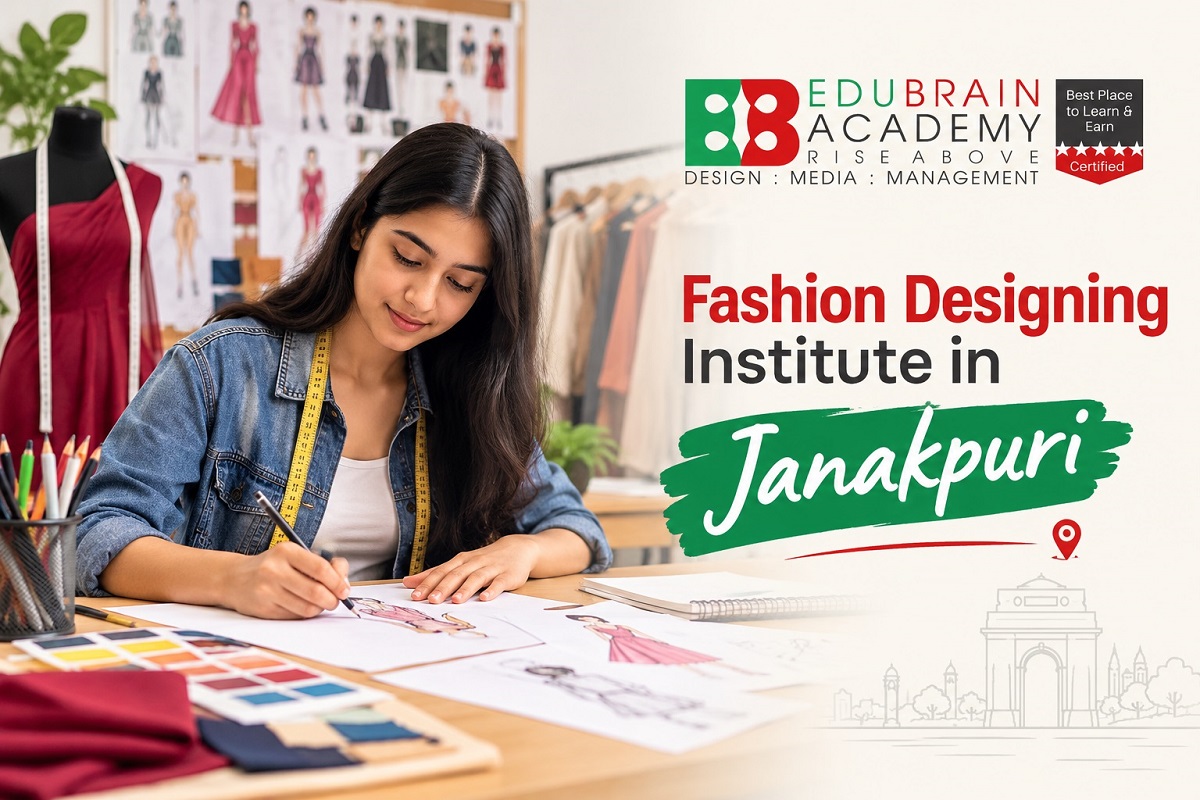
Students searching for a fashion designing institute in Janakpuri often want more than a convenient location. They may be looking for the right course duration, practical training, experienced faculty, studio facilities, digital design tools, portfolio development, and career-oriented learning. These factors can make a significant difference when comparing fashion education options.
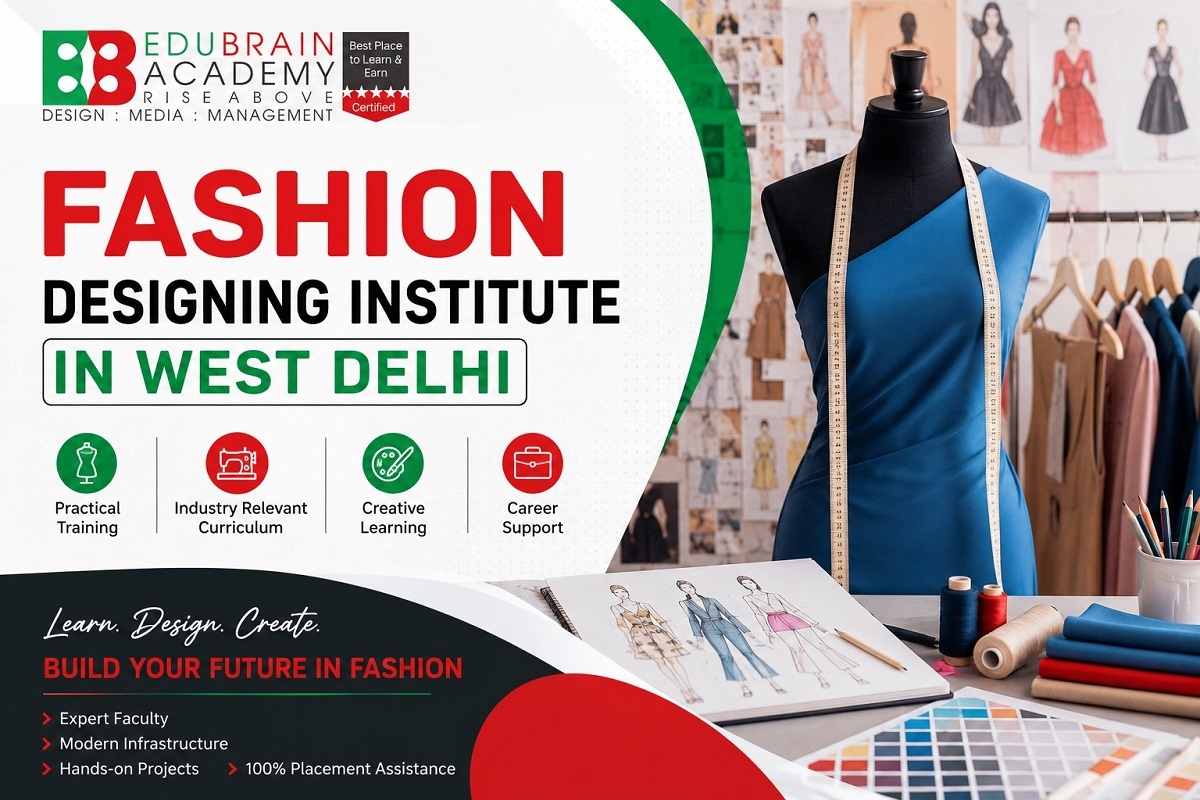
For students exploring options beyond Janakpuri, a fashion design institute in West Delhi can also provide access to different course formats and specialisations. The right program may range from a short-term styling course to a diploma, advanced diploma, bachelor's degree, or B.Des program, depending on the student's educational background and career plans.
This guide explains the fashion designing courses, fees, duration, eligibility, practical training, skills, career opportunities, and admission factors students should consider before enrolling in a fashion design program in and around Janakpuri.
Fashion Education Around Janakpuri
Janakpuri is a well-connected part of West Delhi, and students travelling for education often consider accessibility along with academic quality. A fashion course usually involves regular classes, practical assignments and project work, so daily travel can have a direct impact on the student's learning routine.
Students based in Janakpuri can also explore fashion education options in nearby areas such as Vikaspuri, Uttam Nagar, Tilak Nagar, Hari Nagar, Subhash Nagar, Tagore Garden, Rajouri Garden, Dwarka and Paschim Vihar.
Rather than relying only on distance, students should evaluate the curriculum, practical facilities, faculty, course duration, fees and portfolio opportunities available at an institute.
What Makes Fashion Education Different?
Fashion education involves both creative thinking and technical execution.
A student may begin with a sketch or concept, but professional fashion work can require several additional stages:
Idea → Research → Illustration → Fabric Selection → Pattern Development → Garment Construction → Styling → Presentation
Understanding this complete process is one of the important benefits of structured fashion education.
Fashion Designing Courses for Different Career Goals
There is no single course structure that works for every student. Someone interested in becoming a fashion designer may need broader training, while a student interested in styling, merchandising or textiles may benefit from a specialised programme.
Undergraduate Fashion Design Courses
Undergraduate programmes are suitable for students who want comprehensive fashion education after Class 12.
The curriculum can cover:
-
Fashion illustration
-
Pattern making
-
Garment construction
-
Textile studies
-
Draping
-
Styling
-
Fashion merchandising
-
Fashion marketing
-
Portfolio development
-
Entrepreneurship
These programmes provide students with more time to develop both creative and technical abilities.
Diploma in Fashion Design
Diploma programmes are generally shorter than degree programmes and can provide focused professional training.
Depending on the specialisation, students can study fashion design along with areas such as:
-
Artificial intelligence
-
Boutique management
-
Fashion merchandising
-
Textile designing
-
Garment construction
-
Embroidery
Diploma education can be suitable for students who want to enter the fashion field within a shorter academic period.
Fashion Styling Course
Students interested primarily in styling can consider a short-term fashion styling programme.
Topics can include:
-
Fashion trends
-
Colour theory
-
Body types
-
Personal styling
-
Commercial photoshoots
-
Styling consultancy
-
Brand projects
This route can be useful for students who are more interested in image creation, fashion presentation and styling than garment production.
Advanced Fashion Design Courses
Advanced programmes provide additional time for technical development and professional projects.
An advanced fashion programme may include CAD, AI, textile studies, trend research, fashion marketing, garment construction, pattern making and business fundamentals.
These courses can be appropriate for students who want more extensive fashion training before entering professional work or developing their own fashion business.
Fashion Designing Course Fees and Duration
Fashion design fees depend on the level of study, duration, specialisation, practical components and facilities available at the fashion designing institute in Janakpuri.
For reference, Edu Brain Academy's current School of Fashion programmes include the following fee structure:
|
Fashion Design Course |
Duration |
Course Fee |
|
Certificate in Fashion Styling |
3 Months |
₹50,000 |
|
Diploma in Textile Designing |
1 Year |
₹90,000 per year |
|
Diploma in Fashion Design & Merchandising |
1 Year |
₹1,20,000 per year |
|
Diploma in Fashion Design & AI |
1 Year |
₹1,30,000 per year |
|
Diploma in Fashion Design & Boutique Management |
1 Year |
₹1,30,000 per year |
|
Diploma in Garment Construction & Embroidery |
1 Year |
₹1,30,000 per year |
|
Advanced Diploma in Fashion Design & Apparel |
2 Years |
₹1,30,000 per year |
|
Master Diploma in Fashion Design |
2 Years |
₹1,30,000 per year |
|
Master in Fashion Design |
2 Years |
₹1,30,000 per year |
|
Bachelor in Fashion Design |
3 Years |
₹1,50,000 per year |
|
B.Des in Fashion Design |
4 Years |
₹1,80,000 per year |
Students should confirm the latest fee structure and applicable additional charges with the institute before admission.
Understanding the Total Course Cost
Tuition is only one part of the financial planning involved in fashion education. Depending on the programme, students may also need to account for admission or registration charges, examinations, assessments, certification, degree or diploma charges and other applicable expenses.
For example, Edu Brain's individual course pages provide separate information for tuition and applicable admission, examination, assessment and certification charges.
Therefore, students should ask for the complete fee structure before admission rather than comparing institutes only on the annual tuition amount.
What Do Students Learn in Fashion Designing?
A structured fashion design curriculum develops skills progressively. Students usually move from basic design concepts towards technical execution and professional presentation.
Fashion Illustration
Fashion illustration teaches students how to communicate clothing concepts visually. Students work with figures, poses, silhouettes, colours, proportions and design details.
Pattern Making
Pattern making converts a design concept into components that can be used to construct a garment. Students learn measurements, shapes, proportions and pattern development.
Garment Construction
This area focuses on the practical side of clothing production. Students learn cutting, stitching, garment assembly, finishing and construction techniques.
Textile Designing
Textile studies introduce students to different fabrics, their characteristics and their use in fashion.
Specialised textile programmes can also cover printing, dyeing, weaving concepts, surface development and digital textile design.
Draping
Draping helps students understand how fabric behaves on a dress form. It is particularly useful for understanding volume, structure, silhouette and garment development.
Fashion Styling
Styling teaches students how clothing, accessories, colours, silhouettes and presentation work together to create a complete fashion look.
Fashion Merchandising
Merchandising introduces the business side of fashion, including consumer preferences, product planning, retail, market trends and brand requirements.
Digital Fashion Design and AI
Digital tools are increasingly relevant to fashion education. Depending on the programme, students may work with CAD, digital design applications and AI-related tools for developing and presenting fashion concepts.
Portfolio Development
A fashion portfolio brings together a student's strongest creative and technical work. It can include sketches, mood boards, design research, textile experiments, garment projects and final presentations.
A well-developed portfolio can be useful when applying for internships, jobs, freelance projects or further education.
Why Practical Training Matters in Fashion Education
Fashion is a hands-on profession. Understanding theory is important, but students also need opportunities to apply what they learn.
Practical training may involve:
-
Fashion design assignments
-
Pattern-making exercises
-
Garment construction
-
Draping practice
-
Textile work
-
Styling projects
-
Workshops
-
Live projects
-
Fashion shows
-
Industry-oriented assignments
-
Portfolio development
Practical work helps students understand issues that are difficult to learn from textbooks alone, such as fabric behaviour, garment fitting, measurements, construction problems and finishing techniques.
It also gives students an opportunity to learn from mistakes and improve their design process.
Fashion Designing Institute Near Janakpuri Metro
For students attending classes regularly, transportation can be an important part of the admission decision.
Metro Connectivity and Daily Travel
A convenient commute can make it easier to maintain attendance and participate in practical sessions, workshops and project activities.
Students should calculate the complete travel time from home to the campus, including the journey to the metro station and the final distance from the station to the institute.
Why Attendance Matters
Fashion courses often involve practical work that cannot always be completed independently. Missing studio sessions, construction classes or project reviews may affect a student's progress.
A manageable daily commute can therefore contribute to a more consistent learning experience.
Career Opportunities After Fashion Designing
Fashion education can open opportunities across design, apparel, textiles, styling, merchandising and fashion business.
Fashion Designer
Fashion designers develop clothing concepts, collections and design directions according to customer, market or brand requirements.
Assistant Fashion Designer
Assistant designers support senior designers with research, sketches, sampling, garment development and project work.
Fashion Stylist
Fashion stylists work with clothing, accessories and visual presentation for individuals, brands, photoshoots, campaigns and other projects.
Textile Designer
Textile designers develop prints, patterns, surface designs and fabric concepts for fashion and related industries.
Fashion Merchandiser
Fashion merchandisers work around product planning, market requirements, retail, sourcing and coordination between different stages of the fashion business.
Apparel Designer
Apparel designers focus on developing clothing products for fashion brands, manufacturers, boutiques and other businesses.
Pattern Maker
Pattern makers translate design concepts into patterns used for garment production.
Boutique Manager
Students with an interest in fashion retail can work in boutique operations, customer handling, merchandising and product management.
Fashion Entrepreneur
With suitable design, production and business knowledge, graduates can also explore independent work, boutique businesses, fashion labels or styling services.
Career development depends on factors such as technical ability, portfolio quality, practical experience, communication and industry exposure.
Skills Fashion Students Should Develop
A successful fashion career requires more than creative ideas. Students should gradually build a combination of artistic, technical and professional abilities.
Important skills include:
-
Fashion illustration
-
Creativity
-
Colour understanding
-
Fabric knowledge
-
Pattern making
-
Garment construction
-
Draping
-
Styling
-
Trend research
-
Digital design
-
Communication
-
Presentation
-
Attention to detail
-
Time management
-
Portfolio development
Students who practise these skills consistently can become more confident when working on independent projects.
Eligibility for Fashion Designing Courses
Eligibility varies according to the level and type of programme.
After Class 10
Some diploma and specialised programmes accept students after Class 10.
After Class 12
Students who have completed Class 12 can apply for undergraduate programmes as well as several diploma courses, subject to the individual eligibility criteria.
After Graduation
Graduates can explore advanced or master's-level fashion programmes where the course requires an undergraduate qualification.
For example, Edu Brain's current Bachelor in Fashion Design and B.Des in Fashion Design programmes specify 10+2 with a minimum of 45%, while eligibility for diploma programmes varies by course.
Students should verify the specific eligibility criteria before applying because requirements differ between programmes.
How to Evaluate a Fashion Designing Institute in Janakpuri
A course should be assessed from an educational perspective rather than by its promotional material alone.
Review the Curriculum
Read the syllabus carefully. Check whether it includes both creative subjects and technical training.
Look at Practical Components
Find out how much of the programme involves studio work, garment construction, pattern making, textile activities and projects.
Examine Faculty Experience
Faculty members play an important role in helping students understand design concepts and improve technical skills. Look at their teaching experience and industry exposure where available.
Check Portfolio Opportunities
Ask what type of projects students complete and whether these projects can contribute towards a professional portfolio.
Understand Digital Training
If you are interested in modern fashion design, check whether the course includes CAD, digital design tools or AI-related learning.
Ask About Industry Exposure
Workshops, live projects, internships, fashion shows, industry sessions and guest interactions can provide valuable exposure beyond regular classroom teaching.
Understand All Fees
Ask for tuition, admission, examination, assessment, certification and other applicable charges before completing admission.
Consider the Commute
A course may involve frequent practical sessions, so daily travel should be realistic for the entire duration of the programme.
Students searching for the best fashion design institute in Delhi should look beyond brand recognition and compare the actual learning experience. Course curriculum, practical assignments, faculty, studio facilities, software exposure, portfolio development, industry interaction, fees, and career support are more useful factors when evaluating an institute.
Students should also consider how convenient the institute is for regular classes. Checking the institute's location, nearby transport options, and expected travel time can make the overall learning experience easier. Students interested in visiting Edu Brain Academy can Find Edu Brain Academy on Google Maps to check the location and plan their visit.
Fashion Design Courses at Edu Brain Academy
Edu Brain Academy's School of Fashion offers programmes across undergraduate, diploma, advanced and specialised categories.
Bachelor in Fashion Design
The Bachelor in Fashion Design is a three-year undergraduate programme. The curriculum includes fashion illustration, garment construction, textile design and fashion marketing.
Students also receive exposure to workshops, live projects, internships and portfolio development.
B.Des in Fashion Design
The B.Des in Fashion Design is a four-year undergraduate programme covering areas such as colour theory, fabric selection, styling, garment construction, ornamentation, pattern making, draping, textile studies, fashion illustration, merchandising, quality control and entrepreneurship.
Diploma in Fashion Design & AI
This one-year programme combines core fashion subjects with digital design tools and AI. Students study areas such as fashion illustration, fabric selection, pattern making and garment construction alongside technology-based learning.
Advanced Diploma in Fashion Designing and Apparel
The two-year Advanced Diploma in Fashion Design & Apparel covers fashion illustration, fabric identification, pattern making, garment construction, CAD, AI, textile studies, trend research, fashion marketing and business fundamentals.
Specialised Fashion Programmes
Students can also explore programmes focused on:
-
Fashion Styling
-
Textile Designing
-
Fashion Merchandising
-
Boutique Management
-
Garment Construction and Embroidery
-
Master-level Fashion Design
This range gives students the opportunity to focus their education according to their preferred area of the fashion industry.
Interested in a Fashion Designing Course?
If you are researching a fashion designing institute in Janakpuri, compare the academic structure, practical training, course duration, eligibility, complete fees, portfolio opportunities and career relevance before making an admission decision.
For course details, eligibility and admission guidance, contact Edu Brain Academy:
Phone: +91 9319338333
Email: eduinfo@edubrain.in
Frequently Asked Questions (FAQs)
Which fashion designing course is suitable after 12th?
Students who have completed Class 12 can consider undergraduate programmes such as Bachelor in Fashion Design or B.Des in Fashion Design. Diploma programmes are another option for students who prefer a shorter course.
What is the fee for a fashion designing course?
Fashion course fees vary by institute, programme and duration. At Edu Brain Academy, current programmes range from ₹50,000 for the three-month Certificate in Fashion Styling to ₹1,80,000 per year for B.Des in Fashion Design.
Can I study fashion designing after 10th?
Yes. Some diploma and specialised fashion programmes accept students after Class 10. Eligibility depends on the individual course.
How long does a fashion designing course take?
Fashion courses can range from three months to four years. Short-term styling programmes may take three months, diploma programmes generally take one year, advanced programmes can take two years, and undergraduate degrees can take three or four years.
How do I find a fashion designing institute in Janakpuri?
Students can compare a fashion institute based on course options, eligibility, curriculum, practical training, faculty, studio facilities, portfolio work, fees, and daily travel convenience.
What can I do after a fashion designing course?
Graduates can explore roles such as fashion designer, assistant designer, fashion stylist, textile designer, fashion merchandiser, apparel designer, pattern maker, boutique manager or fashion entrepreneur.
Is practical training important in fashion designing?
Yes. Practical work helps students understand garment construction, fabric behaviour, pattern development, fitting, styling and design execution.
What should I check before taking admission?
Review the curriculum, practical training, faculty, facilities, digital tools, portfolio opportunities, industry exposure, eligibility, complete fee structure and daily travel requirements.
Final Thoughts
A fashion course can provide students with a foundation for careers in design, styling, textiles, apparel, merchandising and fashion business. The quality of that foundation depends largely on the course structure, practical exposure and opportunities available during the programme.
For students researching a fashion designing institute in Janakpuri, it is useful to start with the career direction they have in mind and then compare courses that develop the relevant skills. A strong combination of design knowledge, technical ability, practical experience and portfolio work can help students move more confidently from education into the professional fashion industry.