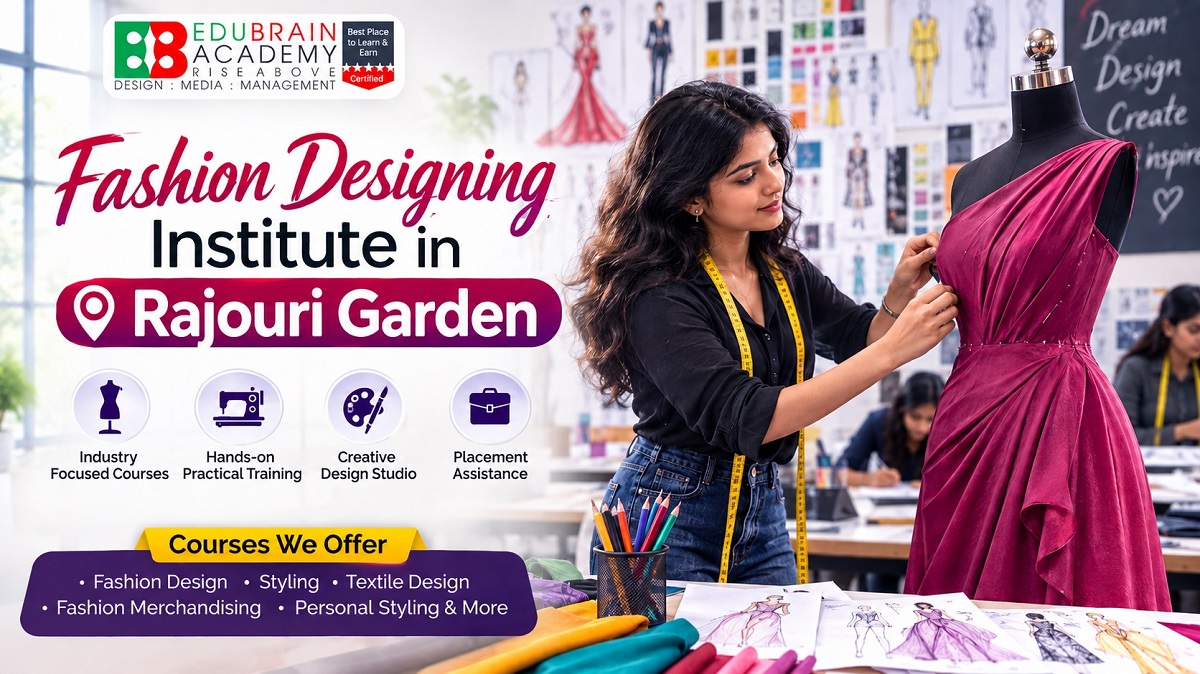
Fashion designing is a creative profession that combines art, technology, textiles, clothing, styling and an understanding of changing consumer preferences. For students who want to turn their interest in fashion into a professional career, choosing the right Fashion Designing Institute in Rajouri Garden can provide a convenient starting point for developing essential creative and technical skills.
A professional fashion education goes far beyond learning how to sketch clothes. Students need to understand fabrics, colours, silhouettes, garment construction, pattern making, fashion illustration, styling, trend research and apparel development. Modern fashion education can also introduce students to digital tools and emerging technologies that are changing the way fashion products are designed and presented.
Edu Brain Academy provides fashion design education through its West Delhi campus, giving students an opportunity to develop practical and creative skills relevant to the fashion and apparel industry.
Why Fashion Designing Is a Popular Career Choice
Fashion is closely connected with culture, lifestyle, entertainment, retail and consumer behaviour. As the industry continues to evolve, professionals are required across many areas beyond traditional garment designing.
Fashion design can lead to opportunities in:
-
Apparel design
-
Textile design
-
Fashion styling
-
Fashion illustration
-
Pattern making
-
Garment production
-
Fashion merchandising
-
Costume design
-
Fashion communication
-
Fashion marketing
-
Visual merchandising
-
Fashion entrepreneurship
-
Digital fashion
This diversity allows students to identify a specialization that matches their creative interests and professional goals.
Someone who enjoys creating garments may choose apparel design, while a student interested in fabrics and patterns may prefer textile design. Those who enjoy creating complete visual looks can explore styling, while students with an interest in business may move toward merchandising or fashion entrepreneurship.
What Makes a Fashion Design Course Career-Oriented?
A career-focused fashion program should help students understand the complete journey of a fashion product, from the initial idea to the final garment.
The learning process can involve:
Research and Inspiration: Understanding fashion trends, consumer preferences, cultural influences and design references.
- Concept Development: Creating themes, mood boards, colour stories and design directions.
- Fashion Illustration: Communicating garment ideas through sketches and visual representations.
- Fabric Selection: Choosing materials according to the design, season, silhouette, functionality and target customer.
- Pattern Making: Developing patterns that translate design concepts into garment components.
- Garment Construction: Understanding cutting, stitching, finishing and construction techniques.
- Fitting and Sampling: Testing garments, identifying problems and making necessary adjustments.
- Collection Development: Bringing individual designs together into a coordinated fashion collection.
This combination of creative and technical learning can help students understand how professional fashion products are developed.
What You Can Learn at a Fashion DesignTraining Institute
Students considering a Fashion Designing Institute in Rajouri Garden should look for a curriculum that develops both creative thinking and practical ability.
Fashion Design Fundamentals
Students learn the basic principles that influence the appearance and functionality of a garment. Elements such as line, shape, proportion, balance, rhythm, texture and colour form the foundation of fashion design.
Fashion Illustration
Fashion illustration helps designers communicate their ideas visually. Students can develop skills in figure drawing, garment rendering, fabric representation, poses and presentation techniques.
Textile and Fabric Studies
Understanding textiles is essential because different fabrics behave differently when cut, stitched, draped or structured. Students can study fibres, yarns, weaves, knits, textures, prints, surface treatments and fabric applications.
Pattern Making
Pattern making is the technical process of converting design concepts into patterns used for garment construction. Students can learn measurements, proportions, garment shapes and pattern development techniques.
Garment Construction
Students gain practical knowledge of how garments are assembled. Sewing, cutting, finishing and construction techniques help transform design concepts into wearable products.
Colour and Design
Colour plays an important role in creating the visual identity of a garment or collection. Students can explore colour combinations, colour psychology, seasonal palettes and design coordination.
Fashion Styling
Styling involves combining clothing, accessories, footwear, hair, makeup and other visual elements to create a particular fashion identity.
Trend Research
Fashion changes continuously. Students can learn how to research trends, analyse consumer preferences and develop concepts that respond to changing market requirements.
Fashion Design Courses for Different Career Goals
There is no single route into the fashion industry. Students can select the best institute for fashion designing course in Rajouri Garden according to their academic qualification, career objective and preferred level of specialization.
Certificate Courses
Certificate programs can be suitable for beginners or students who want to develop specific fashion-related skills within a shorter period.
Depending on the program, subjects may include fashion styling, illustration, garment construction, fashion fundamentals or other specialized areas.
Diploma in Fashion Design
A fashion design diploma in Delhi provides more structured and comprehensive training. Students can explore design fundamentals, textiles, illustration, pattern making, garment construction and collection development.
This type of program can be useful for students who want practical, career-focused education.
Advanced Diploma in Fashion Design
An advanced diploma can provide deeper exposure to fashion design and apparel development. Students may work on more extensive projects and develop stronger technical and creative capabilities.
Bachelor-Level Programs
A Bachelor of Fashion Design in Delhi program provides a longer academic pathway and can offer broader exposure to fashion design, textiles, apparel, fashion communication, professional practice and related subjects.
Students planning a long-term career in the fashion industry can consider undergraduate education after meeting the required eligibility criteria.
Fashion Designing Institute in Rajouri Garden: What Should Students Compare?
Edu Brain Academy of Design, Media & Management is one of the best institutes in West Delhi, conveniently located near the Ramesh Nagar (Blue Line) and Rajouri Garden (Pink Line) metro stations. It offers career-focused Fashion Designing courses, where students can pursue a Fashion Design Diploma, Bachelor of Fashion Design, B.Des, and professional Fashion Designing Courses with practical, industry-oriented learning. With hands-on training, industry exposure, practical projects, fashion shows, exhibitions, and international internship opportunities, the academy provides a complete platform for students to launch their creative careers.
Important Factors to Consider Include:
-
Course curriculum and specialization – Ensuring the syllabus covers modern industry standards.
-
Practical fashion design training – Hands-on experience with pattern-making and garment construction.
-
Faculty expertise and guidance – Learning from seasoned mentors and industry veterans.
-
Design studio and classroom facilities – Access to advanced, well-equipped workspaces.
-
Textile and garment resources – Exposure to materials, fabrics, and production tools.
-
Fashion software and digital tools – Training in modern digital design applications (like CAD and AI).
-
Industry exposure and practical projects – Real-world assignments, live briefs, and design exhibitions.
-
Portfolio development – Building a professional-grade portfolio to present to prospective employers.
-
Project-based learning – Focusing on active creation rather than just theoretical exams.
-
Course duration – Finding a program timeline that fits your career roadmap.
-
Eligibility requirements – Matching course prerequisites with your academic background.
-
Internship and career guidance – Securing local placement assistance and global training pathways.
A well-structured fashion design program should combine creative exploration with technical training, allowing students to develop skills in areas such as fashion illustration, textiles, pattern making, garment construction, styling, and collection development. Comparing these factors can help students choose a program that aligns with their academic background and long-term career goals.
The Importance of Practical Training
Fashion designing is a practical discipline. Students improve their abilities by drawing, cutting, stitching, experimenting with fabrics, developing patterns and constructing garments.
Practical assignments may include:
-
Fashion illustration projects
-
Garment construction
-
Pattern-making exercises
-
Textile experiments
-
Styling projects
-
Collection development
-
Mood boards
-
Colour stories
-
Fabric studies
-
Trend research
-
Portfolio presentations
Working on different types of projects also helps students discover their individual design strengths.
For example, a student who enjoys fabric manipulation may develop an interest in textile or surface design, while someone who enjoys visual presentation may be more suited to styling or fashion communication.
Building a Professional Fashion Portfolio
A fashion portfolio is one of the most important tools for demonstrating creative and technical ability.
A strong portfolio can include:
-
Fashion illustrations
-
Concept boards
-
Mood boards
-
Colour palettes
-
Textile experiments
-
Fabric swatches
-
Technical drawings
-
Pattern development
-
Garment photographs
-
Styling projects
-
Collection development
-
Final presentations
The portfolio should show the development of an idea rather than only displaying finished garments. Including research, experimentation and design development can help communicate the designer's creative process.
Students should continuously update their portfolios as their skills improve.
Fashion Design and Digital Technology
Technology is becoming an increasingly important part of the fashion industry. Digital illustration, computer-aided design, 3D visualization, digital pattern development and online collaboration are changing traditional workflows.
Artificial intelligence is also beginning to influence areas such as trend research, visual concept generation, product development, customer analysis and digital presentations.
Students who want to understand these changes can explore the Future of Fashion Design with AI and learn how emerging technology may influence creative processes and professional opportunities.
However, digital tools should complement rather than replace fundamental fashion skills. Knowledge of fabrics, garment construction, proportion, colour, fit and design principles remains essential.
Career Opportunities After Fashion Designing
Fashion education can open doors to a wide range of professional roles.
Depending on their specialization and experience, students can pursue careers such as:
Fashion Designer
Fashion designers develop concepts and collections for clothing and apparel brands.
Apparel Designer
Apparel designers focus on developing garments according to market requirements, customer preferences and production considerations.
Textile Designer
Textile designers create patterns, prints, textures and surface designs for fabrics used in fashion and other industries.
Fashion Stylist
Stylists create complete visual looks for individuals, fashion shoots, advertising campaigns, events and media productions.
Fashion Illustrator
Fashion illustrators communicate clothing concepts through professional drawings and digital illustrations.
Pattern Maker
Pattern makers translate design concepts into patterns that can be used to construct garments.
Fashion Merchandiser
Merchandisers connect design and business by analysing products, customers, markets and sales requirements.
Costume Designer
Costume designers create clothing concepts for films, television, theatre, advertising and entertainment productions.
Fashion Entrepreneur
Designers with business interests can establish their own clothing labels, boutiques, online fashion businesses or specialized creative services.
Career Opportunities Beyond Clothing Design
Fashion education can also provide a foundation for careers outside traditional apparel design.
Professionals can explore:
- Retail: Fashion merchandising, product development, styling and visual merchandising.
- E-commerce: Product styling, fashion content, apparel development and digital fashion presentation.
- Entertainment: Costume design, styling and fashion coordination.
- Textiles: Print development, surface design, fabric development and textile research.
- Fashion Media: Fashion illustration, content creation, trend research and communication.
- Entrepreneurship: Independent fashion labels, boutiques, styling services and custom clothing businesses.
- This broad career ecosystem allows students to move between related areas as they gain experience.
Is Rajouri Garden a Suitable Location for Fashion Education?
For students living in West Delhi, Rajouri Garden can be a convenient location for pursuing fashion education. Students from nearby areas such as Ramesh Nagar, Tagore Garden, Punjabi Bagh, Janakpuri and Paschim Vihar can consider institutes located in or around Rajouri Garden based on accessibility and course suitability.
When comparing options for the Best Fashion Design College in West Delhi, students should look beyond proximity and evaluate the curriculum, practical facilities, faculty, portfolio opportunities and career-oriented training.
Location is useful, but the quality and relevance of education should remain the primary consideration.
How to Select the Right Fashion Design Institute
Students researching the Best Fashion Design Institute in Delhi should evaluate several aspects before enrolling.
Check the Curriculum
Make sure the program covers the subjects required for your career goal. A fashion design student may need training in illustration, textiles, pattern making, garment construction and collection development.
Review Practical Exposure
Find out how much time students spend on practical assignments, garment development, textile experiments and design projects.
Evaluate Portfolio Support
A strong portfolio can be valuable when applying for internships, jobs, freelance projects or further education.
Look at Digital Skills
Modern fashion professionals can benefit from knowledge of relevant digital tools, visualization techniques and emerging technologies.
Consider Faculty and Mentorship
Experienced teachers can help students improve their creative concepts, technical skills and professional presentation.
Compare Course Duration
Choose a course that matches your educational background, career objective and preferred learning duration.
Understand Career Support
Students can also consider whether the fashion designing institute in Rajouri Garden provides guidance related to internships, employment, portfolio development and professional opportunities.
Fashion Education and the Future of the Industry
The fashion industry is moving toward greater integration of technology, sustainability and personalization.
Designers are increasingly expected to understand:
-
Sustainable materials
-
Responsible production
-
Digital fashion
-
3D visualization
-
AI-assisted design
-
Consumer analytics
-
E-commerce
-
Digital marketing
-
New textile technologies
At the same time, creativity remains at the centre of fashion. Technology can help designers explore more possibilities, but the ability to develop meaningful concepts and understand people, culture and aesthetics remains essential.
Students who combine traditional fashion skills with digital knowledge can be better prepared for an industry that continues to change.
Why Consider Edu Brain Academy for Fashion Design in Rajouri Garden?
Edu Brain Academy provides fashion design education through its West Delhi campus near Rajouri Garden. The learning approach focuses on developing creative understanding alongside practical and technical fashion skills.
Students can explore different fashion-related programs according to their educational background and career objectives. Areas of learning can include fashion design, apparel development, textiles, styling, illustration and other related creative disciplines.
The combination of classroom learning, practical assignments and portfolio development can help students prepare for further education, employment, freelance opportunities or entrepreneurial ventures.
Conclusion
Choosing a Fashion Designing Institute in Rajouri Garden is an important first step for students who want to develop a career in India's fashion and creative industries. However, the institute's location should not be the only factor considered when selecting a program.
Students should look for education that combines fashion fundamentals with practical garment development, textile knowledge, pattern making, illustration, styling, digital skills and portfolio building. Exposure to current industry developments, including technology, sustainability and AI-assisted design, can also help learners prepare for changing professional expectations.
With consistent practice, creative exploration and strong technical knowledge, aspiring fashion professionals can build opportunities across apparel design, textiles, styling, merchandising, fashion media, retail, entertainment and entrepreneurship in Delhi NCR and across India.
Frequently Asked Questions (FAQs)
Can I study fashion designing after Class 12?
Yes. Students who have completed Class 12 can explore eligible certificate, diploma and bachelor's-level fashion design programs. Eligibility varies according to the course.
What subjects are taught in fashion designing?
Fashion design programs can include fashion illustration, design fundamentals, textiles, colour theory, pattern making, garment construction, styling, trend research, apparel development and portfolio presentation.
How long does a fashion design course take?
Course duration depends on the program. Certificate courses can be short-term, while diploma programs may take one year or longer and bachelor's programs generally require several years of study.
Which is a good Fashion Designing Institute in Rajouri Garden?
The best choice depends on the student's career goals and the quality of the program. Compare curriculum, practical training, faculty, facilities, portfolio development, digital skills, course duration and career support before taking admission.
Is fashion designing a good career in India?
Fashion designing can provide opportunities in apparel, textiles, styling, merchandising, retail, entertainment, e-commerce, fashion media and entrepreneurship. Career growth depends on skills, experience, specialization and portfolio quality.
What skills are important for a fashion designer?
Creativity, fashion illustration, textile knowledge, garment construction, pattern making, colour understanding, trend research, communication, problem-solving and digital skills are valuable for fashion professionals.
Does Edu Brain Academy offer fashion design course in Rajouri Garden?
Yes. Edu Brain Academy has a West Delhi campus near Rajouri Garden and offers fashion-related programs for students with different educational backgrounds and career goals. Students should check the latest course details, eligibility and admission requirements before applying.
Can fashion designers work independently?
Yes. After gaining sufficient skills and professional experience, designers can work as freelancers, consultants, stylists or entrepreneurs and can develop their own fashion labels or creative businesses.