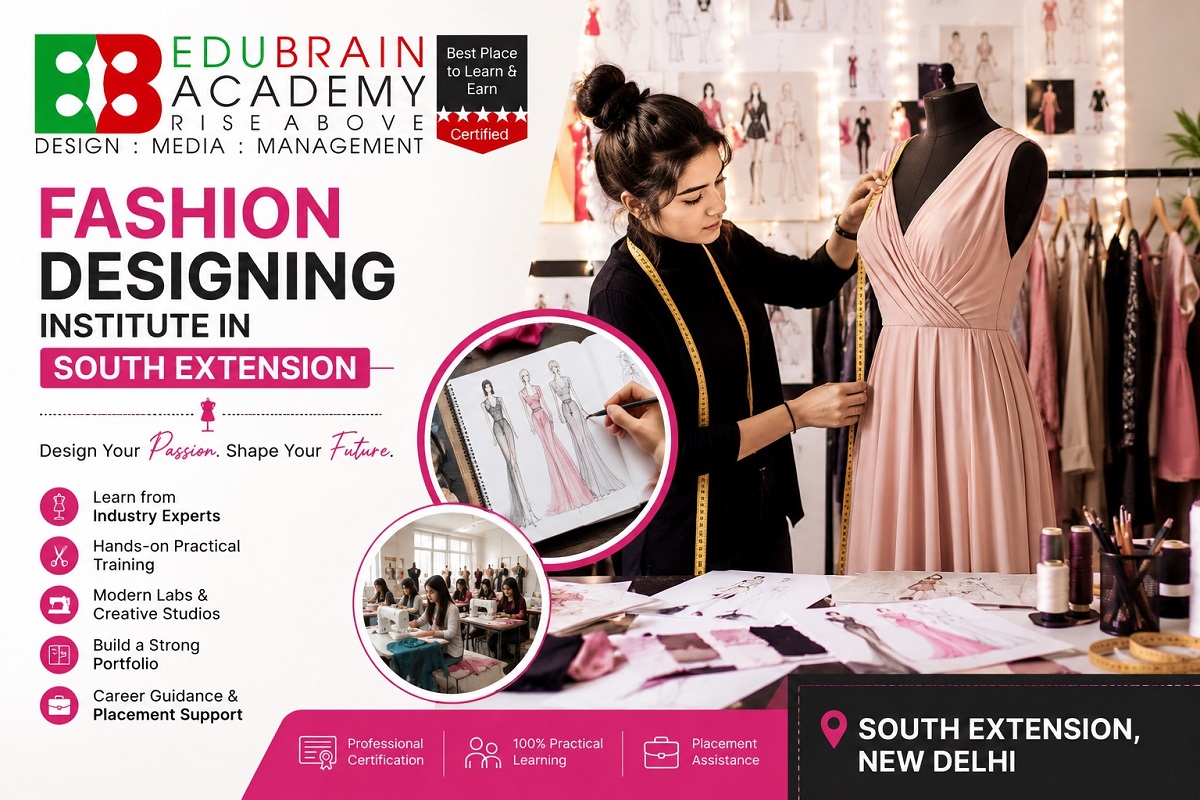
Students searching for a fashion designing institute in South Extension often compare courses based on location, fees, course duration, practical training and career goals. South Extension is also well connected to several parts of South Delhi, giving students the option to consider institutes in nearby areas.
Before choosing a fashion design course, it is important to check the actual campus location, eligibility, curriculum, practical facilities, portfolio development, software training, course fees and admission process. This guide explains the key factors students should consider when looking for fashion designing education in and around South Extension.
What to Look for in a Fashion Design Course Near South Extension
A well-structured fashion design course in Delhi should combine creative concepts with technical and practical learning.
Fashion Illustration and Sketching
Fashion illustration helps students communicate clothing ideas visually before garments are produced.
Students may learn:
-
Figure drawing
-
Fashion poses
-
Garment illustration
-
Colour rendering
-
Design development
-
Mood boards
-
Concept presentation
Regular sketching practice can help students communicate their design ideas more effectively.
Textile and Fabric Studies
Understanding fabrics is an essential part of fashion design.
Students learn about:
-
Natural and synthetic fabrics
-
Fabric characteristics
-
Textures
-
Weaves
-
Prints
-
Surface treatments
-
Fabric selection
-
Appropriate fabric use for different garments
Fabric knowledge helps designers make practical decisions while developing collections.
Pattern Making and Garment Construction
Fashion design is not only about creating an attractive sketch. Students also need to understand how a design can be converted into a wearable garment.
Practical learning may include:
-
Basic pattern making
-
Pattern development
-
Cutting techniques
-
Sewing
-
Garment construction
-
Fitting
-
Finishing techniques
These skills provide an important foundation for professional fashion work.
Fashion Styling and Trend Research
Fashion students also need to understand changing consumer preferences, seasonal styles and emerging fashion trends. Styling and trend research help students develop a better understanding of how fashion is presented and how trends influence design choices.
Styling education may cover:
-
Outfit coordination
-
Colour combinations
-
Accessories and styling
-
Personal styling
-
Editorial styling
-
Visual presentation
-
Fashion trend research
-
Seasonal and consumer trends
Trend research helps students understand how fashion evolves across seasons, markets and different consumer groups. It also helps them create designs and styling concepts that are relevant to current fashion preferences.
For students looking for a fashion designing institute in South Extension, practical learning in styling and trend research can be an important part of evaluating a course and its curriculum.
Digital Fashion Design
Technology has become an important part of modern design education. Students may work with digital illustration, fashion CAD and other creative software depending on the course.
Digital tools can help with:
-
Fashion illustrations
-
Design presentations
-
Technical drawings
-
Colour variations
-
Collection development
-
Portfolio creation
Students should check exactly which software and digital tools are included before enrolling. Read More: fashion design institute in South Extension
How to Evaluate Practical Training Before Admission
Practical experience is one of the most important factors to consider when comparing fashion designing institutes in South Extension.
Instead of learning only through theory, students should have opportunities to apply concepts through assignments and projects.
Design Projects
Projects allow students to develop complete fashion concepts from initial research to final presentation.
A project may involve:
-
Selecting a design theme
-
Conducting research
-
Creating a mood board
-
Developing sketches
-
Selecting fabrics
-
Creating patterns
-
Constructing garments
-
Presenting the final collection
This process helps students understand how fashion design works as a complete workflow.
Portfolio Development
A portfolio is particularly important for fashion students because it demonstrates their creativity and technical abilities.
A strong portfolio can include:
-
Fashion illustrations
-
Mood boards
-
Textile experiments
-
Garment concepts
-
Pattern development
-
Styling projects
-
Completed garments
-
Design collections
-
Photography and presentation work
Students should therefore ask whether portfolio development is included in the course.
Workshops and Industry Exposure
Workshops, fashion events, expert sessions and practical activities can help students understand professional expectations.
Depending on the fashion designing institute in South Extension, students may receive exposure to areas such as apparel production, styling, textiles, retail, merchandising and fashion entrepreneurship.
Fashion Designing Courses You Can Consider
Students have different educational backgrounds and career goals, so there is no single course that is right for everyone.
Common options include:
Certificate Course in Fashion Design
Certificate programs can be suitable for beginners who want to understand the fundamentals of fashion design within a shorter period.
They may introduce:
-
Fashion illustration
-
Basic styling
-
Fabric knowledge
-
Garment concepts
-
Basic construction
Diploma in Fashion Designing
A diploma generally provides more extensive training than a short certificate program.
Depending on the institute, the curriculum may cover:
-
Fashion illustration
-
Pattern making
-
Garment construction
-
Textile studies
-
Styling
-
Fashion CAD
-
Portfolio development
Advanced Diploma in Fashion Design
An advanced diploma can provide broader exposure to fashion design and related professional skills.
Students may work on more complex design projects, collections and portfolio presentations.
Bachelor’s Degree in Fashion Design
Students who have completed Class 12 and want a longer undergraduate pathway can consider a bachelor's-level program.
A degree course generally provides deeper exposure to:
-
Design fundamentals
-
Apparel construction
-
Textiles
-
Pattern making
-
Fashion communication
-
Styling
-
Design projects
-
Professional practice
Always check the current eligibility requirements and curriculum of the specific institution before applying.
Fashion Designing Course Fees Near South Extension
| Course | Duration | Listed Fee |
|---|---|---|
| Certificate in Fashion Styling | 3 Months | ₹50,000 PA |
| Diploma in Fashion Design & AI | 1 Year | ₹1,30,000 PA |
| Diploma in Fashion Design & Boutique Management | 1 Year | ₹1,30,000 PA |
| Diploma in Fashion Design & Merchandising | 1 Year | ₹1,20,000 PA |
| Advanced Diploma in Fashion Design & Apparel | 2 Years | ₹1,30,000 PA |
| Bachelor in Fashion Design | 3 Years | ₹1,50,000 PA |
| B.Des in Fashion Design | 4 Years | ₹1,80,000 PA |
| Diploma in Garment Construction & Embroidery | 1 Year | ₹1,30,000 PA |
Fees are based on the current course information displayed by Edu Brain. Students should confirm the latest fee structure, payment schedule, admission charges, examination/assessment fees and certification charges before admission.
Need the latest fashion course fees or admission details?
Contact Edu Brain at +91 9319338333 or eduinfo@edubrain.in
Who Can Join a Fashion Designing Course?
Eligibility depends on the program.
For many entry-level certificate and diploma programs, institutes may accept students who have completed Class 10 or Class 12.
Bachelor's-level courses generally require completion of Class 12, although exact eligibility varies by institution.
Students from different academic streams may be able to pursue fashion design, depending on the admission requirements of the course.
Before applying, check:
-
Minimum educational qualification
-
Age requirements, if applicable
-
Entrance requirements
-
Portfolio requirements
-
Course duration
-
Admission procedure
Is Drawing Necessary for Fashion Designing?
You do not need to be an expert artist before starting a fashion design course.
However, drawing and visual communication are useful skills for fashion students. These skills can be developed through regular practice.
A good learning program should help beginners improve:
-
Figure drawing
-
Fashion sketching
-
Proportion
-
Colour application
-
Garment representation
-
Design presentation
Creativity, observation and willingness to practise are equally important.
Career Opportunities After Fashion Designing
Fashion education can lead to different professional pathways depending on a student's interests and skills.
Fashion Designer
Fashion designers develop clothing concepts, collections and garment designs according to creative and market requirements.
Fashion Stylist
Fashion stylists create complete looks by combining clothing, accessories, colours and visual elements for individuals, brands, shoots or events.
Textile Designer
Textile designers work with patterns, prints, colours, textures and surface designs used in fabrics.
Fashion Illustrator
Fashion illustrators communicate clothing and collection concepts through artistic and digital illustrations.
Apparel Designer
Apparel designers focus on designing garments for specific markets, brands or customer groups.
Fashion Merchandiser
Fashion merchandising combines fashion knowledge with product planning, market understanding, sales and retail requirements.
Fashion Entrepreneur
Students can also develop their own fashion label, boutique, online store or styling business after gaining sufficient knowledge and practical experience.
How to Choose a Fashion Designing Institute in South Extension?
Choosing an institute should involve more than comparing advertisements or course fees.
1. Check the Curriculum
Review the subjects covered in the course.
Look for a balance between:
-
Design theory
-
Illustration
-
Textiles
-
Pattern making
-
Garment construction
-
Styling
-
Digital tools
-
Projects
-
Portfolio development
2. Look for Practical Learning
Ask how much of the course involves hands-on work.
Practical assignments, garment projects and collection development can provide experience that classroom theory alone cannot provide.
3. Review Student Portfolios
Student portfolios can give you an idea of the type and quality of work produced during the program.
Look for:
-
Original concepts
-
Design development
-
Technical work
-
Garment projects
-
Presentation quality
-
Variety of projects
4. Check Faculty Experience
Faculty guidance can influence how effectively students develop their design skills.
Before admission, understand the faculty's academic and professional background where such information is available.
5. Ask About Workshops and Industry Exposure
Find out whether the institute provides opportunities such as:
-
Workshops
-
Expert sessions
-
Fashion shows
-
Industry visits
-
Practical projects
-
Internships
-
Portfolio reviews
6. Understand Career Support
Ask what career assistance is actually provided.
This may include:
-
Resume preparation
-
Portfolio guidance
-
Interview preparation
-
Internship assistance
-
Career counselling
-
Employer interaction
Avoid assuming that career support means a guaranteed job. Always ask for the exact services provided.
7. Compare Fees and Course Duration
Do not choose an institute based only on the lowest fee.
Compare the overall value of the program, including:
-
Course duration
-
Curriculum
-
Practical facilities
-
Studio access
-
Equipment
-
Faculty
-
Projects
-
Portfolio support
-
Career guidance
Fashion Education
South Delhi offers students access to a wide range of educational and creative environments for fashion and design. Students searching for a fashion designing institute in South Delhi can explore options in and around South Extension, including Hauz Khas, Lajpat Nagar, Okhla, Saket, Kalkaji and Greater Kailash.
When comparing an institute, location is only one factor to consider. Students should also evaluate the course structure, practical training, faculty experience, studio facilities, portfolio development opportunities, course fees, duration and career support before choosing an institute.
For students based in or around South Extension, exploring nearby areas can provide more options and help them find a fashion design course that matches their career goals, learning requirements and preferred area of specialization.
Why Practical Fashion Training Matters
Fashion is a hands-on profession. Understanding how an idea moves from a sketch to a finished garment can be just as important as learning design theory.
Practical training can help students understand:
-
How fabrics behave
-
How patterns are developed
-
How garments are constructed
-
How fittings are improved
-
How collections are presented
-
How design concepts are communicated
This experience can also make it easier for students to identify the areas of fashion they enjoy most.
Start Your Fashion Design Journey
Choosing a fashion designing institute in South Extension should be based on your career goals, preferred specialization and learning requirements rather than location alone.
Before enrolling, compare the curriculum, practical training, faculty guidance, studio facilities, software exposure, portfolio development, course duration, eligibility and career support.
The right education should help you move from creative ideas to practical fashion projects while developing the confidence and portfolio needed for future opportunities.
Conclusion
Choosing the right fashion designing institute in South Extension is an important step for students who want to build a career in the fashion industry. Before enrolling, compare the course curriculum, practical training, faculty guidance, studio facilities, portfolio development, course duration, eligibility and career support.
A well-structured fashion design program should help students develop creative thinking, technical knowledge and practical skills through projects and hands-on learning. Take time to understand the course and admission requirements so you can choose an education pathway that matches your interests and long-term career goals.
Frequently Asked Questions (FAQs)
What should I look for in a Fashion Designing Institute in South Extension?
Look for a well-structured curriculum, practical training, experienced faculty, portfolio development, industry exposure, suitable facilities and career guidance.
Can I study fashion designing after Class 12?
Yes. Many fashion design programs accept students after Class 12, although eligibility depends on the specific course and institution.
Do I need to be good at drawing to study fashion design?
No. Basic drawing skills can be developed through practice and professional training. Creativity and willingness to learn are also important.
How long is a fashion designing course?
Course duration depends on the program. Certificate courses can be shorter, while diploma and degree programs generally require more extensive study.
What skills are taught in fashion designing?
Common skills include fashion illustration, textile knowledge, pattern making, garment construction, styling, digital design, trend research and portfolio development.
What software is used in fashion design?
Depending on the institute, students may use digital illustration, graphic design, fashion CAD and other specialized fashion-design tools. Always check the specific software included in the course.
Is fashion designing a good career?
Fashion designing can offer career opportunities in apparel, styling, textiles, retail, merchandising, fashion communication and entrepreneurship. Career outcomes depend on skills, portfolio quality, experience and individual effort.
Is a fashion design portfolio important?
Yes. A portfolio can demonstrate your creative thinking, technical skills, design development and completed projects to colleges, internship providers and potential employers.
Can students from any stream study fashion designing?
Eligibility varies by course. Many programs accept students from different Class 12 streams, but students should check the specific admission criteria before applying.
How do I choose the right fashion designing course?
Start by identifying your career goal and then compare the curriculum, duration, practical training, faculty, facilities, portfolio opportunities, fees and career support.