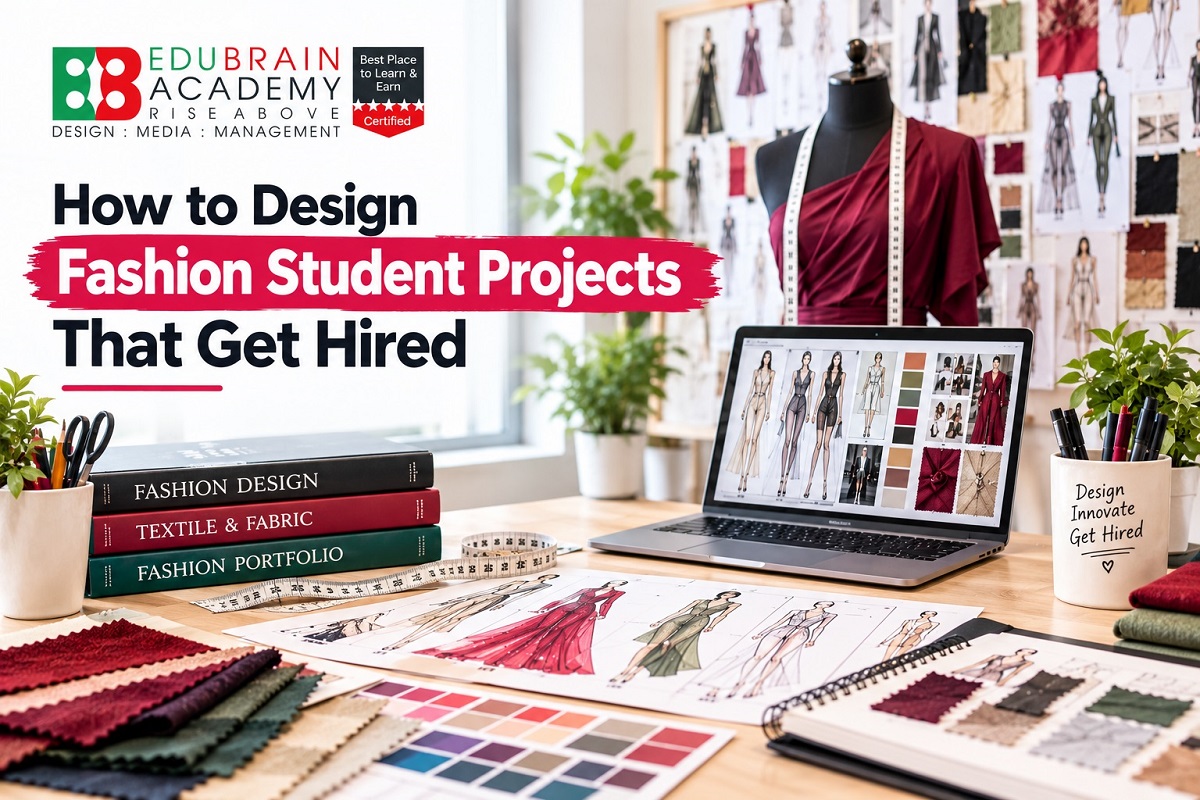

A fashion design portfolio is one of the most important tools for aspiring fashion designers. Whether you are applying for a fashion course, seeking internships, participating in competitions, or preparing for job opportunities, a well-organised portfolio helps showcase your creativity, technical skills, and personal design style.
A portfolio is more than a collection of sketches. It tells your design story by presenting your ideas, inspiration, research, illustrations, garment concepts, fabric selections, mood boards, and creative projects in a professional format.
Students often believe that only experienced designers need a portfolio. However, beginners can also create impressive portfolios by presenting their work creatively and systematically.
Quick Answer
A fashion designing portfolio is a collection of creative work that showcases a student's design skills, fashion illustrations, garment concepts, textile understanding, styling ideas, and practical projects. A strong portfolio combines creativity, technical knowledge, and professional presentation.
What is a Fashion Design Portfolio?
A fashion portfolio is a visual presentation of your creative work. It demonstrates your design abilities and helps colleges, institutions, and industry professionals understand your skills and design thinking.
A portfolio may include:
-
Fashion illustrations
-
Design concepts
-
Mood boards
-
Textile studies
-
Fabric swatches
-
Garment designs
-
Styling projects
-
Technical drawings
-
Fashion photography
-
Creative research
A good portfolio reflects your unique style and creative personality.
Why is a Fashion Portfolio Important?
A portfolio helps students:
-
Showcase creativity.
-
Present practical skills.
-
Demonstrate design thinking.
-
Build professional confidence.
-
Prepare for interviews.
-
Apply for fashion programs.
-
Explore internship opportunities.
-
Organise creative work.
Many educational institutions and fashion organisations appreciate portfolios because they provide practical evidence of a student's abilities. A strong portfolio can also support admission to a Design Institute in Delhi, where students further develop creative, technical, and professional skills through practical learning.
Step-by-Step Guide to Creating a Fashion Design Portfolio
Step 1: Understand the Purpose of Your Portfolio
Before creating a portfolio, identify its purpose.
Ask yourself:
-
Is it for college admission?
-
Is it for internships?
-
Is it for competitions?
-
Is it for personal branding?
-
Is it for professional opportunities?
Understanding the purpose helps you organise your work effectively.
Step 2: Collect Your Best Work
Quality is more important than quantity.
Choose projects that highlight different skills.
Include:
-
Sketches
-
Fashion illustrations
-
Creative concepts
-
Textile experiments
-
Colour studies
-
Styling projects
-
Design collections
-
Practical assignments
Avoid including unfinished or repetitive work.
Step 3: Create an Inspiring Mood Board
Mood boards help explain your creative inspiration.
A mood board may include:
-
Colours
-
Textures
-
Fabrics
-
Nature
-
Architecture
-
Art
-
Photography
-
Cultural references
Mood boards demonstrate your research and creative process.
Step 4: Include Fashion Illustrations
Fashion illustrations are an important part of many portfolios.
Present:
-
Figure drawings
-
Front views
-
Back views
-
Side views
-
Colour variations
-
Design details
Neat presentation improves the overall appearance of your portfolio.
Step 5: Showcase Fabric and Textile Knowledge
Fashion is not only about sketching.
Include:
-
Fabric swatches
-
Textile research
-
Material studies
-
Surface designs
-
Embroidery ideas
-
Print concepts
Understanding materials demonstrates practical knowledge.
Step 6: Present Technical Drawings
Technical drawings show construction details.
They may include:
-
Stitching details
-
Garment structure
-
Measurements
-
Construction techniques
-
Pattern concepts
Technical work highlights attention to detail.
Step 7: Add Complete Fashion Collections
Instead of random sketches, create small collections.
A collection may include:
-
Theme
-
Inspiration
-
Colour palette
-
Mood board
-
Fashion illustrations
-
Fabric choices
-
Final garments
This helps viewers understand your creative journey.
Step 8: Show Your Design Process
People enjoy seeing how ideas develop.
Include:
Research → Inspiration → Sketches → Colour Studies → Fabric Selection → Final Design.
Showing the complete process demonstrates creativity and planning.
Step 9: Include Styling Projects
Fashion styling is an important part of creative education because it helps students understand how clothing, accessories, and overall presentation work together to create a complete look. Styling projects allow students to showcase their creativity and design perspective.
Styling projects may include:
-
Editorial concepts
-
Seasonal looks
-
Accessory combinations
-
Personal styling
-
Commercial styling
Including styling projects adds variety and depth to your portfolio while demonstrating versatility. Creative projects help students improve presentation skills and showcase different aspects of fashion design. Students interested in expanding their understanding of fashion education and creative careers can also explore our guide on Fashion Designing Institute in South Delhi.
Step 10: Build a Professional Layout
Organisation is essential.
Arrange projects logically.
Keep:
-
Consistent fonts
-
Balanced spacing
-
Clear headings
-
Simple backgrounds
-
High-quality images
Digital vs Physical Portfolio
Digital Portfolio
Advantages:
-
Easy to update.
-
Easy to share.
-
Professional presentation.
-
Suitable for online applications.
Physical Portfolio
Advantages:
-
Tangible presentation.
-
Good for interviews.
-
Creative display options.
Many students maintain both formats.
Common Mistakes to Avoid
Avoid:
❌ Too many sketches.
❌ Poor image quality.
❌ Cluttered pages.
❌ Inconsistent presentation.
❌ Weak research.
❌ Repetitive work.
❌ Unfinished projects.
❌ Copying other designers.
A portfolio should reflect originality.
Skills a Portfolio Should Showcase
A strong portfolio demonstrates:
-
Creativity
-
Drawing skills
-
Fashion knowledge
-
Textile understanding
-
Styling concepts
-
Communication
-
Colour understanding
-
Problem solving
-
Technical skills
-
Presentation abilities
Student Checklist
Before completing your portfolio, ask:
✓ Is the layout organised?
✓ Are projects complete?
✓ Are mood boards included?
✓ Are fashion illustrations clear?
✓ Is textile knowledge demonstrated?
✓ Are styling projects included?
✓ Is creativity visible?
✓ Are pages professionally arranged?
Portfolio Presentation Tips
A well-presented fashion design portfolio can create a positive impression on colleges, mentors, and industry professionals. Good presentation helps viewers understand your creative process and appreciate your work more effectively.
Keep your portfolio:
-
Clean
-
Professional
-
Creative
-
Organised
-
Balanced
-
Easy to read
Arrange projects in a logical sequence and place your strongest work at the beginning to capture attention. Use high-quality images, consistent layouts, and clear descriptions to explain your concepts and design journey. A thoughtfully organised portfolio reflects creativity, attention to detail, and professional presentation skills.
Why Practical Learning Helps Portfolio Development
Creative projects, assignments, workshops, and practical activities help students improve their portfolio over time.
Regular practice allows students to develop new ideas and refine their presentation skills.
Students interested in professional fashion education often explore a fashion designing course in Delhi to improve practical knowledge and creative abilities.
Why Students Consider Edu Brain Academy
Students often look for educational environments that encourage creativity and practical learning.
Edu Brain Academy focuses on:
-
Practical assignments
-
Creative workshops
-
Portfolio development
-
Project-based learning
-
Professional guidance
-
Skill enhancement
Students planning their future may also explore a Career After 12th in Design to understand available creative opportunities.
Key Takeaways
✓ A portfolio showcases creativity and practical skills.
✓ Quality is more important than quantity.
✓ Include mood boards and design research.
✓ Present complete fashion collections.
✓ Keep layouts clean and professional.
✓ Update your portfolio regularly.
Expert Advice
Your portfolio should tell your creative story rather than simply display artwork. Focus on originality, presentation, and continuous improvement.
Conclusion
A fashion design portfolio is one of the most valuable tools for aspiring designers. It demonstrates creativity, technical understanding, practical skills, and personal design style. By including fashion illustrations, mood boards, textile studies, styling projects, and complete collections in a well-organised format, students can create a professional portfolio that supports educational and career opportunities.
Frequently Asked Questions (FAQs)
1. What is a fashion designing portfolio?
A fashion portfolio is a collection of creative work that showcases design skills and practical abilities.
2. Why is a portfolio important?
It helps demonstrate creativity, technical skills, and professional potential.
3. What should a portfolio include?
Fashion illustrations, mood boards, textile studies, styling projects, and design collections.
4. Can beginners create a portfolio?
Yes. Beginners can showcase assignments, creative projects, and original ideas.
5. Should portfolios include mood boards?
Yes. Mood boards explain inspiration and design concepts.
6. Is a digital portfolio better?
Digital portfolios are easy to share and update, while physical portfolios are useful for interviews.
7. How many projects should be included?
Focus on quality and include your strongest work.
8. What mistakes should students avoid?
Poor presentation, repetitive work, unfinished projects, and cluttered layouts.
9. How often should a portfolio be updated?
Regular updates help reflect new skills and creative growth.
10. Can portfolios help with admissions?
Yes. A strong portfolio supports educational applications and creative opportunities.