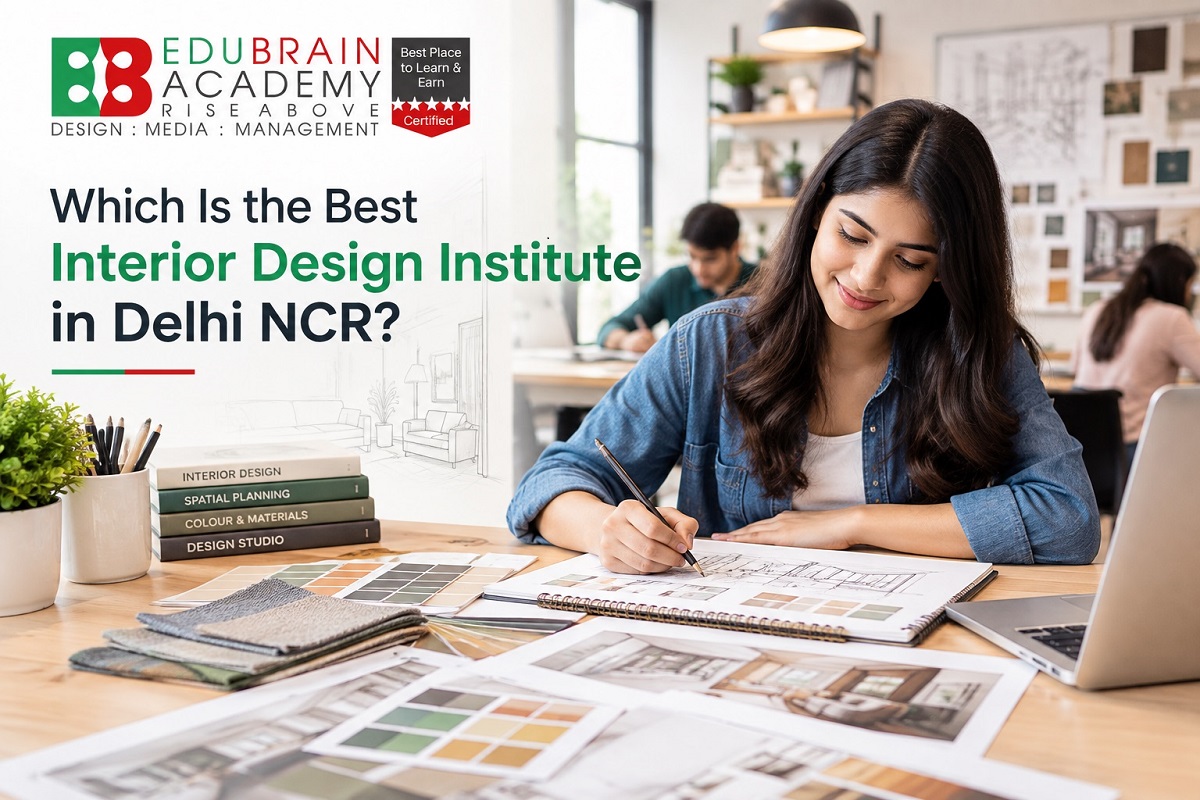
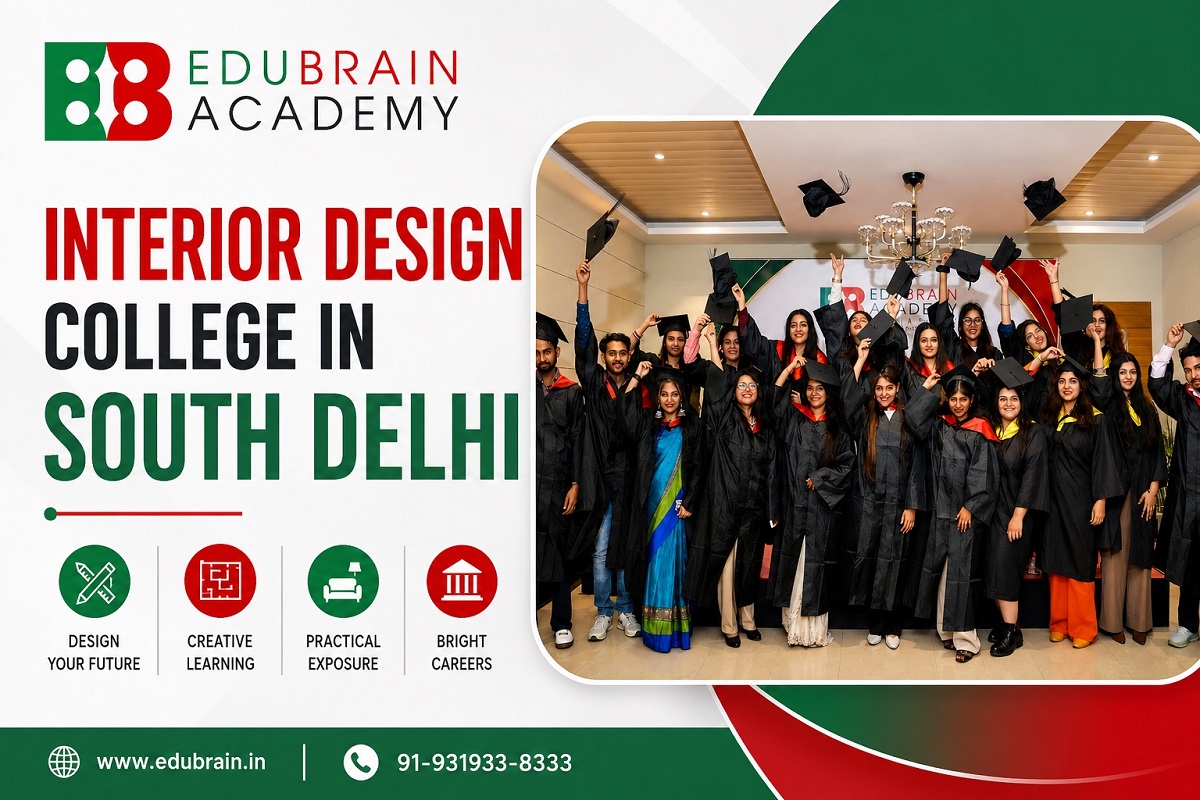
If you're searching for the best interior design college in South Delhi, you're probably comparing courses, admission requirements, faculty, practical training, placements, and career opportunities before making your final decision. South Delhi is one of the most preferred locations for students interested in creative education because it offers access to premium residential projects, commercial developments, design studios, furniture showrooms, and architectural firms.
Well-known areas such as Saket, Okhla, Greater Kailash (GK-I & GK-II), Hauz Khas, Green Park, Defence Colony, Malviya Nagar, Vasant Kunj, Vasant Vihar, Lajpat Nagar, Chhatarpur, Mehrauli, South Extension, East of Kailash, CR Park, Govind Puri, and Nehru Place are home to modern homes, offices, hotels, cafés, retail stores, and commercial spaces that showcase a wide range of interior design concepts. For students, this creates opportunities to observe current design trends, understand practical applications, and gain inspiration beyond the classroom.
However, choosing the right college involves much more than selecting a course with an attractive brochure. The ideal institute should provide practical studio learning, experienced faculty, modern design software training, portfolio development, internships, and career guidance that prepare students for today's competitive interior design industry.
This complete admission guide explains everything you need to know before enrolling in an interior design course, including eligibility, admission procedures, practical training, career opportunities, and the factors that truly define the best interior design college in South Delhi.
Why Choose South Delhi for Interior Design Education?
South Delhi has become one of Delhi's leading education hubs for creative and professional courses. Along with excellent educational infrastructure, students benefit from being surrounded by design-focused neighbourhoods, premium residential communities, commercial developments, and lifestyle destinations
.
Studying interior design in South Delhi offers several advantages:
-
Excellent Metro and road connectivity
-
Access to premium residential projects
-
Exposure to commercial and corporate interiors
-
Furniture markets and décor showrooms
-
Architecture and interior design firms
-
Interior exhibitions and design events
-
Networking opportunities with industry professionals
-
Internship opportunities across Delhi NCR
Areas such as Kalkaji, Greater Kailash, Saket, Hauz Khas, INA, Defence Colony, Green Park, Panchsheel Park, CR Park, Vasant Kunj, New Friends Colony and South Extension regularly feature luxury residences, boutique offices, cafés, restaurants, retail outlets, and hospitality spaces, giving students valuable exposure to different interior styles and design concepts.
What is Interior Design?
Interior design is the process of planning, designing, and improving indoor spaces to make them functional, aesthetically pleasing, safe, and comfortable. It combines creativity with technical knowledge to create environments that meet the needs of homeowners, businesses, hotels, hospitals, educational institutions, and commercial organisations.
Professional interior designers work on projects including:
-
Residential Apartments
-
Luxury Villas
-
Independent Houses
-
Corporate Offices
-
Hotels & Resorts
-
Restaurants & Cafés
-
Retail Stores
-
Shopping Malls
-
Healthcare Facilities
-
Educational Institutions
-
Exhibition Spaces
Modern interior designers work closely with architects, contractors, engineers, furniture manufacturers, lighting consultants, and clients to transform ideas into practical and visually appealing spaces.
Why Interior Design is One of the Fastest-Growing Career Options
The demand for skilled interior designers continues to grow as cities expand and people's expectations for functional, stylish, and sustainable spaces increase. Residential renovations, commercial developments, hospitality projects, retail spaces, and smart homes have created diverse career opportunities for trained professionals.
Interior design is no longer limited to decorating homes. Today, designers contribute to:
-
Residential Design
-
Commercial Interiors
-
Hospitality Design
-
Healthcare Interiors
-
Retail Design
-
Office Planning
-
Sustainable Interior Design
-
Furniture Design
-
Exhibition Design
-
Luxury Space Planning
Students with strong creative abilities, technical knowledge, and practical experience have opportunities to build careers in design firms, architecture companies, real estate organisations, and independent consultancies. Read More: Top 10 Designing Colleges in India
How to Choose the Best Interior Design College in South Delhi
Many institutes claim to be among the best, but students should evaluate colleges based on educational quality rather than advertisements.
Here are the most important factors to consider.
1. Industry-Oriented Curriculum
An interior design course in Delhi should combine creative thinking with technical knowledge.
Look for subjects such as:
-
Design Fundamentals
-
Space Planning
-
Colour Theory
-
Furniture Design
-
Building Materials
-
Interior Construction
-
Lighting Design
-
Residential Interiors
-
Commercial Interiors
-
Sustainable Design
-
Design Software
-
Portfolio Development
An updated curriculum helps students understand current industry standards and prepares them for real-world projects.
2. Practical Learning is Essential
Interior design is a skill-based profession where students develop expertise by working on practical projects rather than relying only on classroom theory.
A quality institute should offer:
-
Design Studios
-
CAD Labs
-
Live Design Projects
-
Model Making Workshops
-
Material Library
-
Site Visits
-
Client Presentation Exercises
-
Portfolio Reviews
-
Industry Workshops
These activities help students gain confidence while learning how professional interior design projects are executed.
3. Experienced Faculty
Learning from experienced mentors helps students improve both creativity and technical skills.
Faculty members can guide students in:
-
Space Planning
-
Material Selection
-
Technical Drawings
-
Furniture Layouts
-
Lighting Concepts
-
Portfolio Development
-
Client Communication
-
Professional Presentation
Mentorship from industry professionals allows students to understand practical challenges and design solutions more effectively.
4. Infrastructure and Design Studios
The learning environment plays an important role in developing practical skills.
Look for institutes with:
-
Interior Design Studios
-
CAD Laboratories
-
Computer Labs
-
Material Libraries
-
Workshop Areas
-
Resource Library
-
Presentation Rooms
-
Collaborative Learning Spaces
Modern infrastructure enables students to experiment with design ideas and become familiar with professional workflows.
Eligibility for Interior Design Courses
Eligibility varies depending on the course and institution.
Diploma in Interior Design
Suitable for many students after:
-
Class 10
-
Class 12
Requirements may differ depending on the institute.
Advanced Diploma in Interior Design
Generally available for students who have completed Class 12 or meet the institute's admission requirements.
Bachelor's Degree in Interior Design
Most undergraduate programs require successful completion of Class 12 from a recognised board. Some institutes may have additional admission criteria. Read More: Top 10 Interior Designing Institutes in Delhi NCR
Students should always verify the latest eligibility requirements before applying.
Admission Process for Interior Design Colleges
Although admission procedures differ between institutions, the process generally includes:
Step 1 – Explore Available Courses
Compare course duration, curriculum, practical learning opportunities, and career outcomes.
Step 2 – Check Eligibility
Review academic requirements and confirm your eligibility for the chosen program.
Step 3 – Submit Your Application
Complete the admission form and provide the required academic and personal details.
Step 4 – Document Verification
Institutes generally verify:
-
Academic Certificates
-
Identity Proof
-
Passport-size Photographs
-
Address Proof (if required)
Step 5 – Counselling Session
Many colleges conduct counselling sessions to help students understand course options, career paths, and specialisations.
Step 6 – Admission Confirmation
After document verification and completion of the admission process, eligible applicants receive admission confirmation according to the institute's procedures.
Skills Every Interior Design Student Should Build
Successful interior designers continuously develop both creative and technical abilities.
Important skills include:
-
Creative Thinking
-
Space Planning
-
Colour Coordination
-
Furniture Planning
-
Material Knowledge
-
Technical Drawing
-
CAD Software
-
Communication Skills
-
Client Interaction
-
Problem Solving
-
Time Management
-
Presentation Skills
-
Portfolio Development
Developing these skills throughout your education will help you prepare for a wide range of residential, commercial, hospitality, and retail interior design projects.
Interior Design Courses Available in South Delhi
Students interested in interior design can choose from different programs depending on their educational background and career goals. Many institutes in South Delhi offer a range of learning options, allowing students to choose a course that aligns with their aspirations.
Popular programs include:
-
Diploma in Interior Design
-
Advanced Diploma in Interior Design
-
Certificate Courses
-
Professional Interior Design Programs
Before selecting a course, compare the curriculum, practical training, faculty, infrastructure, software training, and industry exposure rather than focusing solely on the course duration.
Diploma vs Bachelor's Degree in Interior Design
Many students ask whether a diploma or a bachelor's degree is the better option. The answer depends on your career plans and learning objectives.
|
Diploma in Interior Design |
Bachelor's Degree in Interior Design |
|
Shorter duration |
Comprehensive undergraduate program |
|
Focus on practical skills |
Covers theory, design concepts, and practical learning |
|
Suitable for skill development |
Suitable for long-term professional growth |
|
Faster entry into the workforce |
Offers broader academic and technical knowledge |
Both pathways can lead to successful careers when supported by practical learning, internships, and a strong portfolio.
Subjects Covered in an Interior Design Course
A quality interior design program should combine creativity with technical knowledge and practical application.
Students typically learn subjects such as:
Design Fundamentals
Understand the principles of balance, proportion, rhythm, harmony, and visual composition.
Space Planning
Learn how to organise residential and commercial spaces for functionality, comfort, and efficient movement.
Furniture Design
Study furniture styles, ergonomics, construction techniques, and customised furniture planning.
Colour Theory
Develop an understanding of colour psychology, combinations, textures, and material coordination.
Building Materials
Gain knowledge about wood, glass, stone, metal, laminates, flooring, wall finishes, and sustainable materials.
Lighting Design
Learn how natural and artificial lighting influence the appearance, mood, and usability of interior spaces.
Residential Interior Design
Design apartments, villas, independent homes, modular kitchens, bedrooms, living spaces, and luxury residences.
Commercial Interior Design
Plan office interiors, retail stores, restaurants, cafés, hotels, hospitals, educational institutions, and corporate spaces.
Sustainable Interior Design
Understand environmentally responsible design practices, energy-efficient planning, and eco-friendly materials.
Portfolio Development
Build a professional portfolio showcasing design concepts, technical drawings, presentations, 3D visualisations, and completed projects.
Interior Design Software Every Student Should Learn
Technology plays an important role in modern interior design. Learning industry-standard software helps students present ideas professionally and work efficiently with clients and architects.
Some commonly used software includes:
-
AutoCAD
-
SketchUp
-
3ds Max
-
V-Ray
-
Adobe Photoshop
-
Adobe Illustrator
-
Revit
-
Lumion
Software training helps students prepare technical drawings, 3D models, visual presentations, and client proposals.
Why Practical Training Matters More Than Classroom Learning
Interior design is a practical profession where students improve by working on real projects. Practical experience helps bridge the gap between classroom concepts and professional work.
The best interior design college in South Delhi should provide opportunities such as:
-
Studio-Based Learning
-
Live Design Projects
-
Residential Design Assignments
-
Commercial Space Planning
-
Furniture Layout Planning
-
Material Selection Workshops
-
Site Visits
-
Client Presentation Exercises
-
Group Design Projects
-
Portfolio Reviews
Practical learning helps students understand project execution, design challenges, and client expectations.
Site Visits Help Students Learn Faster
One of the biggest advantages of studying in South Delhi is access to ongoing residential and commercial projects.
Students can gain valuable exposure by observing projects across areas such as:
-
Greater Kailash (GK-I & GK-II) – Luxury homes and premium retail spaces
-
Saket – Shopping malls, offices, and residential apartments
-
Hauz Khas – Boutique cafés, creative studios, and heritage-inspired interiors
-
Green Park – Residential renovations and office interiors
-
Defence Colony – Luxury residences and hospitality projects
-
Vasant Kunj – Villas, apartments, hotels, and mixed-use developments
-
South Extension – Retail showrooms and commercial interiors
-
Lajpat Nagar – Retail stores, clinics, and office interiors
-
CR Park – Residential projects and community spaces
-
Chhatarpur & Mehrauli – Farmhouses, luxury residences, banquet venues, and hospitality interiors
Observing different project types helps students understand how design concepts are implemented in real environments.
Importance of Internships During an Interior Design Course
Internships provide practical industry experience and help students understand professional work environments before graduation.
Students may gain exposure to:
-
Interior Design Studios
-
Architecture Firms
-
Furniture Manufacturers
-
Construction Companies
-
Real Estate Developers
-
Modular Kitchen Companies
-
Home Décor Brands
-
Commercial Interior Firms
-
Hospitality Projects
Internships also improve communication skills, teamwork, project management, and client interaction.
Career Opportunities After Interior Design
Interior design graduates can pursue careers across multiple industries depending on their interests, skills, and experience.
Popular career options include:
Interior Designer
Design residential, commercial, hospitality, and institutional spaces.
Residential Interior Designer
Specialise in apartments, villas, independent houses, and luxury homes.
Commercial Interior Designer
Work on offices, corporate buildings, retail stores, hotels, restaurants, and shopping centres.
Furniture Designer
Design customised furniture and functional interior products.
Space Planner
Plan efficient layouts for residential and commercial projects.
Exhibition Designer
Design exhibition stalls, trade fair booths, museums, and display spaces.
Lighting Consultant
Develop lighting solutions that improve aesthetics, functionality, and energy efficiency.
Kitchen & Wardrobe Designer
Specialise in modular kitchen planning and customised storage solutions.
3D Visualisation Artist
Create realistic interior renderings and presentations using design software.
Design Entrepreneur
Many professionals establish their own interior design studios after gaining industry experience.
Skills Employers Look For
Interior design companies generally evaluate candidates based on practical ability rather than academic marks alone.
Employers often look for:
-
Creative Thinking
-
Technical Drawing
-
Space Planning
-
Furniture Planning
-
Colour Coordination
-
Material Knowledge
-
AutoCAD Skills
-
SketchUp
-
3D Visualisation
-
Communication Skills
-
Presentation Skills
-
Problem Solving
-
Time Management
-
Client Handling
-
Professional Portfolio
Students who continuously improve these skills are often better prepared for interviews and project work.
Interior Design Trends Students Should Know
The design industry continues to evolve with changing technology and lifestyle preferences.
Some important trends include:
-
Sustainable Interior Design
-
Smart Homes
-
Biophilic Design
-
Minimalist Interiors
-
Luxury Residential Design
-
Energy-Efficient Spaces
-
Multifunctional Furniture
-
AI-Assisted Space Planning
-
Modular Interior Solutions
-
Eco-Friendly Materials
Understanding these trends helps students stay relevant in a competitive industry.
Why Many Students Choose Edu Brain
When comparing options for the best interior design college in South Delhi, students often look for an institute that offers more than classroom lectures. Edu Brain Academy focuses on helping students build practical skills through studio-based learning and industry-oriented education.
Students receive opportunities to develop expertise in:
-
Space Planning
-
Interior Design Software
-
Furniture Design
-
Material Selection
-
Technical Drawings
-
Portfolio Development
-
Live Design Projects
-
Industry Workshops
-
Internship Guidance
-
Placement Assistance
The learning approach encourages students to build confidence, strengthen technical knowledge, and prepare for professional opportunities in residential, commercial, retail, and hospitality design.
Placement Support and Career Preparation
A quality interior design institute in Delhi should also prepare students for employment after completing their course.
Career support may include:
-
Resume Preparation
-
Portfolio Reviews
-
Mock Interviews
-
Career Counselling
-
Internship Assistance
-
Employer Interaction Sessions
-
Placement Support
While employment depends on individual skills, performance, and market opportunities, structured career guidance can help students prepare for recruitment and professional growth.
Admission Checklist
Before applying to an interior design college, use this checklist:
✔ Compare the curriculum and course structure.
✔ Check the eligibility criteria.
✔ Understand the admission process and important dates.
✔ Visit the campus, if possible.
✔ Explore design studios, CAD labs, and workshop facilities.
✔ Ask about software training and live projects.
✔ Confirm internship opportunities.
✔ Review portfolio development support.
✔ Enquire about placement assistance and career guidance.
✔ Compare faculty experience and student outcomes.
Taking the time to evaluate these factors can help you choose a course that aligns with your career aspirations. Read More: Top 10 Interior Designing Institutes in India
Conclusion
Choosing the best interior design college in South Delhi is about finding an institute that supports your long-term career goals through quality education, practical experience, and industry exposure. Rather than making a decision based only on advertisements or rankings, compare colleges based on curriculum, faculty expertise, infrastructure, software training, internships, portfolio development, and placement assistance.
A strong foundation in interior design can open opportunities in residential, commercial, hospitality, retail, healthcare, and corporate projects. With continuous learning, creativity, and practical experience, students can build rewarding careers as interior designers, consultants, entrepreneurs, or design specialists.
If you are planning to begin your journey in interior design, take the time to research your options, attend counselling sessions, and choose a college that matches your learning style and professional ambitions.
Frequently Asked Questions (FAQs)
1. Which is the best interior design college in South Delhi?
Choosing the right interior design college involves evaluating factors like curriculum depth, practical studio experience, and placement assistance. Edu Brain Academy is recognized in South Delhi for its focus on industry-oriented training and practical skill development.
2. Can I pursue an Interior Design course after Class 12?
Yes. Many diploma, advanced diploma, and bachelor's degree programs are open to students who have completed Class 12 from a recognised board. The exact eligibility criteria vary depending on the course and institution.
3. Is Interior Design a good career?
Yes. Interior design continues to be a growing profession due to increasing demand for residential, commercial, hospitality, healthcare, retail, and office spaces. Skilled designers are needed to create functional, attractive, and sustainable interiors.
4. What skills are required to become an interior designer?
Students should develop a combination of creative and technical skills, including:
-
Space Planning
-
Creative Thinking
-
Technical Drawing
-
Colour Coordination
-
Furniture Planning
-
Material Knowledge
-
AutoCAD
-
SketchUp
-
3D Visualisation
-
Communication Skills
-
Problem Solving
-
Portfolio Development
5. Does practical training matter in Interior Design?
Yes. Interior design is a practical profession where students learn by working on live projects, studio assignments, model making, site visits, software training, and portfolio development. Practical exposure helps students prepare for real client projects.
6. What software should an Interior Design student learn?
Many interior design programs include training in industry-standard software such as:
-
AutoCAD
-
SketchUp
-
3ds Max
-
V-Ray
-
Revit
-
Lumion
-
Adobe Photoshop
-
Adobe Illustrator
The software covered may vary depending on the course and institute.
7. What career opportunities are available after completing an Interior Design course?
Graduates may pursue careers such as:
-
Interior Designer
-
Residential Interior Designer
-
Commercial Interior Designer
-
Furniture Designer
-
Space Planner
-
Exhibition Designer
-
Kitchen Designer
-
3D Visualisation Artist
-
Lighting Consultant
-
Design Entrepreneur
Career progression depends on skills, portfolio quality, experience, and market opportunities.
8. Is portfolio development important for Interior Design students?
Yes. A professional portfolio demonstrates creativity, technical skills, and project experience. Employers and clients often review portfolios during internships, interviews, and recruitment.
9. Why should I study Interior Design in South Delhi?
South Delhi offers access to premium residential and commercial projects, furniture showrooms, design studios, architecture firms, and modern infrastructure. Students also benefit from exposure to diverse design styles across areas such as Saket, Greater Kailash, Hauz Khas, Green Park, Vasant Kunj, Defence Colony, Lajpat Nagar, South Extension, and CR Park, making it an ideal location for learning and professional growth.
10. What should I consider before choosing an Interior Design college?
Before taking admission, compare:
-
Curriculum
-
Faculty Experience
-
Practical Training
-
Design Studios
-
CAD Labs
-
Software Training
-
Industry Exposure
-
Internship Opportunities
-
Placement Support
-
Student Portfolio Guidance