Interior design is more than selecting colours, furniture and decorative accessories. It involves creating functional, comfortable and visually appealing spaces that meet the needs of the people who use them. From luxury homes and modern offices to hotels, restaurants and retail stores, interior designers turn ideas into practical environments.
For creative individuals who enjoy planning, problem-solving and design, the profession offers several career paths. Earning potential depends on factors such as experience, specialisation, location, technical skills and the complexity of projects.
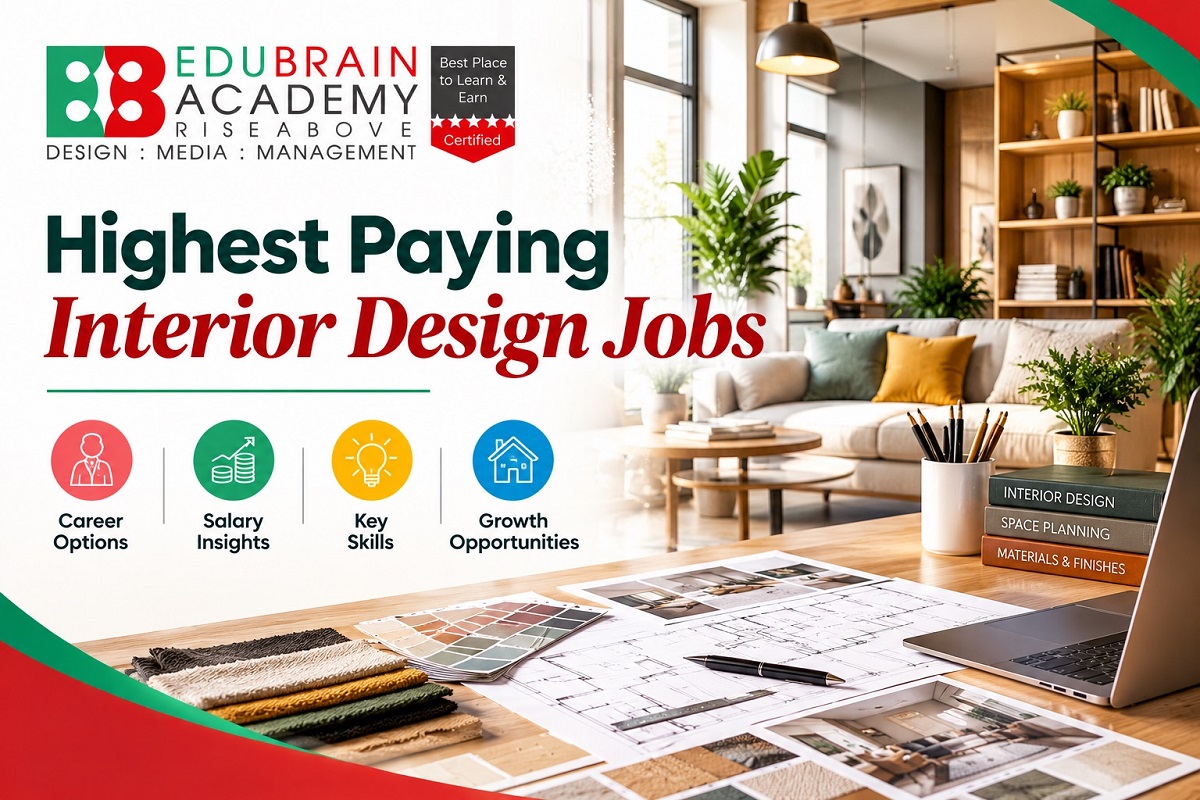
In this guide, we explore the highest paying interior design jobs in India, the responsibilities associated with each role, salary benchmarks, essential skills and practical steps to help you build a successful career.
Quick Answer
Interior design careers with potentially strong earning opportunities include:
-
Interior design studio owner
-
Senior interior designer
-
Interior design project manager
-
Luxury residential interior designer
-
Commercial interior designer
-
Hospitality interior designer
-
Retail and showroom designer
-
3D interior visualisation specialist
-
Workplace design consultant
-
Furniture and spatial design specialist
Which interior design job pays the most?
There is no single answer for every professional. Experienced studio owners and independent consultants may earn substantial incomes, while senior designers and project managers may receive higher salaries as their responsibilities grow. Aspiring designers can enrol in an interior design college in Delhi NCR to develop the practical skills needed to pursue career opportunities. Independent earnings also depend on client demand, project fees, business expenses and profitability.
1. Interior Design Studio Owner
Running an interior design studio can be a rewarding career direction for professionals who combine creative ability with business knowledge. Studio owners may manage residential, commercial or hospitality projects, depending on their experience and client base.
Key responsibilities
-
Understanding client requirements and budgets
-
Developing design concepts and project proposals
-
Preparing estimates and material plans
-
Coordinating with contractors, suppliers and consultants
-
Managing timelines and project quality
-
Building client relationships and securing new projects
Skills required
Business development, design planning, communication, negotiation, budgeting and project management are valuable skills.
Earning potential
Income depends on project size, fee structure, client relationships, operating expenses and the number of projects completed. Independent designers must account for costs such as staff, software, travel, marketing and other business expenses.
This path may suit experienced professionals who want greater independence and are prepared to manage both creative work and business operations.
2. Senior Interior Designer
Senior interior designers take responsibility for complex design assignments and may supervise junior designers or coordinate with other professionals. They help ensure that a project's creative vision remains practical and consistent.
Key responsibilities
-
Developing and refining design concepts
-
Preparing or reviewing technical drawings
-
Selecting furniture, lighting and finishes
-
Presenting proposals to clients
-
Coordinating with consultants and project teams
-
Reviewing design quality and project progress
Skills required
Space planning, technical documentation, material knowledge, design software, presentation skills and team leadership are important.
Career growth
With experience, senior designers may move into design leadership, creative direction, studio management or independent consulting.
3. Interior Design Project Manager
Interior design project managers coordinate the process of delivering a design project. They help keep the work aligned with the approved scope, schedule, budget and quality expectations.
Key responsibilities
-
Planning project schedules and milestones
-
Monitoring budgets and expenses
-
Coordinating designers, vendors and contractors
-
Tracking materials and site progress
-
Addressing delays and practical challenges
-
Communicating updates to clients and stakeholders
Skills required
Organisation, budgeting, communication, documentation, problem-solving and team coordination are essential.
This career may suit designers who enjoy planning and decision-making as much as developing creative concepts.
4. Luxury Residential Interior Designer
Luxury residential interior designers create personalised spaces for premium apartments, villas and private residences. Their work may involve custom furniture, detailed lighting plans, specialist finishes and carefully selected materials.
Key responsibilities
-
Understanding the client's lifestyle and preferences
-
Planning room layouts and storage
-
Selecting finishes, furnishings and lighting
-
Developing customised design concepts
-
Coordinating with contractors and suppliers
-
Reviewing details during project execution
Skills required
Attention to detail, space planning, material selection, visualisation, communication and budget management are important.
Designers who balance individual client preferences with functionality and quality may build a strong reputation in this specialisation. Read More: Which Is the Best Interior Design Institute in Delhi NCR
5. Commercial Interior Designer
Commercial interior designers plan spaces such as offices, clinics, co-working facilities, educational environments and business premises. Their designs need to support the activities carried out within each space.
Key responsibilities
-
Developing functional layouts
-
Planning circulation and furniture placement
-
Selecting suitable materials and finishes
-
Preparing presentations and technical drawings
-
Coordinating with consultants
-
Considering accessibility, maintenance and usability
Skills required
Space planning, drafting, design software, technical coordination and an understanding of user requirements can help designers succeed in commercial projects.
This career path may offer opportunities with design consultancies, corporate clients, real estate companies and commercial fit-out businesses.
6. Hospitality Interior Designer
Hospitality interior designers work on hotels, resorts, restaurants, cafés and other guest-focused spaces. Their designs help establish a property's atmosphere while supporting everyday operations.
Key responsibilities
-
Creating concepts based on the property's identity
-
Planning guest rooms, lobbies and dining areas
-
Selecting furnishings, finishes and lighting
-
Considering durability and maintenance
-
Coordinating with operators and project teams
-
Maintaining design consistency across spaces
Skills required
Concept development, materials knowledge, visual storytelling, technical coordination and attention to operational requirements are useful.
Designers who understand both the guest experience and the practical needs of hospitality businesses can explore this specialised career.
7. Retail and Showroom Interior Designer
Retail designers develop spaces that present products effectively and make it easier for customers to navigate a store. They may work on fashion outlets, furniture showrooms, lifestyle stores and brand experience spaces.
Key responsibilities
-
Planning product displays and circulation
-
Designing store layouts and fixtures
-
Coordinating lighting and signage
-
Reflecting the brand's visual identity
-
Improving product presentation
-
Adapting layouts to different store formats
Skills required
Space planning, visual merchandising awareness, brand communication, lighting and presentation skills are useful in this field.
Retail designers may work with individual brands, retail design agencies, showroom operators or commercial design studios.
8. 3D Interior Visualisation Specialist
A 3D interior visualisation specialist creates digital representations of proposed interiors. These images, models and walkthroughs help clients understand a design before construction begins.
Key responsibilities
-
Building 3D models of interior spaces
-
Applying materials, textures and lighting
-
Producing rendered images and walkthroughs
-
Revising visuals according to feedback
-
Preparing presentation files for clients and teams
Skills required
Modelling, rendering, lighting, composition, material representation and technical file management are important.
Depending on the employer, useful tools may include SketchUp, AutoCAD, 3ds Max or other modelling and rendering applications.
Specialists with strong visual communication skills may find opportunities with design studios, architects, developers and visualisation companies.
9. Workplace Design Consultant
Workplace design consultants help organisations plan offices and other work environments around their operational needs. Their work may involve space utilisation, collaboration areas, meeting rooms and employee facilities.
Key responsibilities
-
Assessing how teams use existing spaces
-
Planning workstations and shared areas
-
Considering privacy, comfort and circulation
-
Developing recommendations for clients
-
Coordinating with design and technical teams
-
Presenting concepts and planning options
Skills required
Research, space planning, communication, problem-solving and an understanding of workplace requirements are useful.
This path may appeal to designers who enjoy developing practical solutions for organisations and their employees.
10. Furniture and Spatial Design Specialist
Furniture and spatial design specialists focus on furniture, built-in storage, fittings and the relationship between objects and the spaces around them. They may work with furniture brands, manufacturers, design studios or private clients.
Key responsibilities
-
Developing furniture concepts
-
Selecting appropriate materials and finishes
-
Considering proportions, comfort and usability
-
Preparing drawings and visualisations
-
Coordinating with manufacturers
-
Reviewing design details and production requirements
Skills required
Design development, materials knowledge, technical drawing, attention to detail and an understanding of manufacturing processes can be valuable.
This specialisation can suit designers who enjoy creating individual objects as well as planning complete interiors.
Interior Designer Salary in India: Published Salary Benchmarks
Interior designer salaries vary across India. A fresher, senior designer, project manager and studio owner may have very different compensation structures. Location, employer, experience and specialisation can all affect earnings.
AmbitionBox's published updated 2026 salary pages provide the following indicative annual ranges:
|
Role |
Reported annual salary range |
Reported sample |
|
Interior Designer |
₹1.3 lakh–₹7 lakh |
13,400+ salary submissions |
|
Junior Interior Designer |
₹1.2 lakh–₹4.5 lakh |
716 salary submissions |
|
Project Interior Designer |
₹3 lakh–₹15 lakh |
47 salary submissions |
How should you interpret these figures? These are third-party reported ranges, not guaranteed salaries. The roles, experience levels and sample sizes differ, so the ranges should not be treated as a direct comparison of equivalent jobs. They also may not represent the latest offers in every city.
Before making a career decision, compare current job listings and recent salary information for your target role and location. For independent designers, distinguish project revenue from profit after expenses.
What affects an interior designer's salary?
-
Experience and responsibility: Professionals who manage projects, communicate effectively with clients and make sound design decisions may qualify for more senior roles.
-
Location: Compensation can vary between cities and local markets because of differences in employers, project budgets and demand.
-
Specialisation: Commercial, luxury residential, hospitality, retail and project-management roles involve different responsibilities and compensation structures.
-
Technical skills: Proficiency in relevant drafting, modelling, rendering and presentation tools can make a candidate suitable for specific roles.
-
Portfolio quality: A portfolio that demonstrates design thinking, technical knowledge and project outcomes helps employers assess a candidate's abilities.
-
Employer and project scale: Company size, client type, project complexity and level of responsibility can influence compensation.
-
Independent business performance: Freelancers and studio owners must consider client acquisition, project fees, operating expenses and cash flow. Their earnings may fluctuate over time.
What Employers Look for When Hiring Interior Designers
Employers assess more than creativity when reviewing interior design candidates. They also want to understand whether a candidate can turn a design idea into a practical, well-planned space.
Here are five ways to make a portfolio more effective.
1. Show the complete design process
Include the project brief, initial layout, design concept, material choices and final visualisation. This helps employers understand how you approach a design problem rather than seeing only the finished images.
2. Demonstrate functional space planning
Explain how your layout improves circulation, storage, furniture placement or the use of available space. A well-presented project should communicate why the proposed layout works.
3. Include technical work
Where relevant, show floor plans, elevations, sections, furniture layouts or other drawings that demonstrate your technical understanding. Select examples that are appropriate to the position you want.
4. Explain your material choices
Describe why you selected particular finishes or materials, considering appearance, durability, maintenance and budget. This demonstrates practical thinking alongside creativity.
5. Be clear about your contribution
Identify whether a project was academic, personal, collaborative or professionally completed. Explain which parts you worked on yourself, and never present a conceptual design as a completed real-world project.
Practical example: Presenting a portfolio project
Imagine a small apartment where the client needs additional storage without making the living area feel crowded.
A useful portfolio entry would show the original challenge, the proposed layout, the storage solution, the material palette and the final visualisation. A short explanation of the design decisions would make the project more informative than images alone.
These principles can help aspiring designers communicate their abilities, although hiring decisions vary by employer and role.
Essential Skills for a Successful Interior Design Career
A successful interior designer needs a combination of creative thinking, technical knowledge and professional skills.
1. Space planning
Learn how to organise rooms, furniture, storage and circulation so that spaces work efficiently.
2. Technical drawing
Understand floor plans, elevations, sections and working drawings relevant to your chosen role.
3. Design software
Develop proficiency in tools used for drafting, 3D modelling, rendering and presentations. Requirements vary between employers.
4. Materials and finishes
Understand the appearance, performance, durability and maintenance needs of common materials and finishes.
5. Lighting and colour
Learn how lighting, colour, texture and contrast influence a space's appearance and functionality.
6. Communication and presentation
Designers must explain ideas clearly, respond to feedback and work effectively with clients, contractors and colleagues.
7. Budgeting and coordination
An understanding of estimates, schedules, procurement and site coordination helps connect design concepts with practical delivery.
8. Portfolio development
Show your design process as well as the final concept. Include relevant drawings, material boards, visualisations and explanations of your decisions.
How to Start a Career in Interior Design
If you are interested in entering the profession, the following steps can help you prepare.
Step 1: Explore different specialisations
Research residential, commercial, hospitality, retail, furniture and visualisation careers. Understanding the day-to-day work can help you identify your interests.
Step 2: Choose suitable education or training
Compare course content, duration, practical assignments, software training, faculty experience and the qualification awarded. Verify admission requirements and recognition details directly with the institution.
Students researching an interior design institute in Delhi can compare available programmes, practical learning opportunities and admission requirements before deciding where to study.
Step 3: Develop technical skills
Practise space planning, drawing, material selection and digital visualisation. Learn how designers communicate ideas to clients and project teams.
Step 4: Build a portfolio
Create projects that demonstrate your thinking, from the initial brief and layout to material choices and final visualisations. Make it clear when work is academic or conceptual.
Step 5: Gain practical exposure
Look for internships, supervised projects, site visits or entry-level roles that help you understand how projects progress from design to execution.
Step 6: Prepare for job applications
Tailor your CV and portfolio to each role. A visualisation position may require different examples from a project coordination position.
Step 7: Continue learning
Review industry practices, improve your software skills and seek feedback on your work. Practical experience can help you identify where further training would be useful.
Students considering an undergraduate route may explore a bachelor in interior design while comparing programme duration, eligibility, curriculum and awarding institutions before applying.
How to Build an Interior Design Portfolio That Gets Noticed
A portfolio helps employers understand your creative approach and technical ability. It should be organised, relevant and easy to review.
Consider including:
-
A brief introduction and your career interests
-
Selected residential or commercial design projects
-
Floor plans, elevations or other relevant drawings
-
Material boards and colour palettes
-
3D visualisations or photographs of completed projects
-
A short explanation of the design brief and your approach
-
Software and skills used for each project
Prioritise quality over quantity. Clearly state your contribution to team projects and never present conceptual designs as completed real-world work.
Future Scope of Interior Design in India
Interior design offers different opportunities across residential, commercial and specialist markets. Demand can change with economic conditions, construction activity, consumer preferences and business investment, so no career path guarantees employment or high earnings.
Potential areas of work include:
-
Residential design and renovation
-
Office and commercial fit-outs
-
Hotels, restaurants and hospitality spaces
-
Retail and showroom interiors
-
3D visualisation and digital presentations
-
Furniture and custom interior elements
-
Efficient space planning and thoughtful material selection
-
Independent consulting and design entrepreneurship
Technology can support design development and visual communication, but designers still need to understand client requirements, site conditions, materials, budgets and practical constraints.
Professionals who continue learning and build a portfolio around a clear specialisation can make more informed career decisions as the industry evolves.
Frequently Asked Questions (FAQs)
1. Which interior design careers offer the best earning potential in India?
Interior design professionals can build high earning potential through roles such as design studio ownership, luxury home design, commercial space planning and project management. Income varies with experience, portfolio quality, client network, project budgets and location. Professionals who combine creative skills with budgeting, technical knowledge and project coordination may be better positioned for career growth.
2. How much can interior designers earn in India?
Interior designer salaries vary according to experience, specialisation, employer and city. Beginners typically start with smaller projects or junior positions, while experienced designers may progress into senior roles, manage larger projects or work independently. For a realistic estimate, compare recent job listings and salary reports for the specific role and experience level you are targeting.
3. How can Edu Brain Academy help me build a career with a good salary in interior design?
Edu Brain Academy can help aspiring interior designers explore training opportunities and develop skills relevant to the industry. Building a strong portfolio, learning practical design techniques and understanding space planning, materials and design software can improve your readiness for job opportunities. Your eventual salary will depend on your skills, experience, location, employer and the quality of your work.
4. Can freshers build a successful interior design career?
Yes. Freshers can work towards a career by developing technical skills, creating a relevant portfolio, gaining practical exposure and applying for suitable entry-level opportunities. Progress depends on individual skills, market conditions and experience.
5. Which skills are most valuable in interior design?
Space planning, technical drawings, materials knowledge, design software, visualisation, communication and project coordination are useful across many roles. The ideal combination depends on the specialisation.
6. Do interior designers need to learn 3D software?
Many roles benefit from 3D modelling or visualisation skills, but requirements differ. Check job descriptions in your preferred area to understand which tools employers expect.
7. How can I get my first interior design job?
Develop a portfolio, learn the tools used in your target role, seek internships or practical projects and apply for jobs that match your current abilities. Ask for feedback and improve your portfolio over time.
8. Is interior design a good career choice?
It can be a good fit for people who enjoy creative problem-solving, planning spaces and working with clients or project teams. Research the training, daily responsibilities and employment options before committing to a course.
Start Planning Your Interior Design Career
Interior design combines creativity with technical and practical problem-solving. By exploring different specialisations, building relevant skills and developing a strong portfolio, you can make better-informed decisions about your professional future.
Edu Brain Academy can help you explore available training options and course details. Contact the team to ask about the curriculum, eligibility, practical learning and admissions process before choosing a programme.