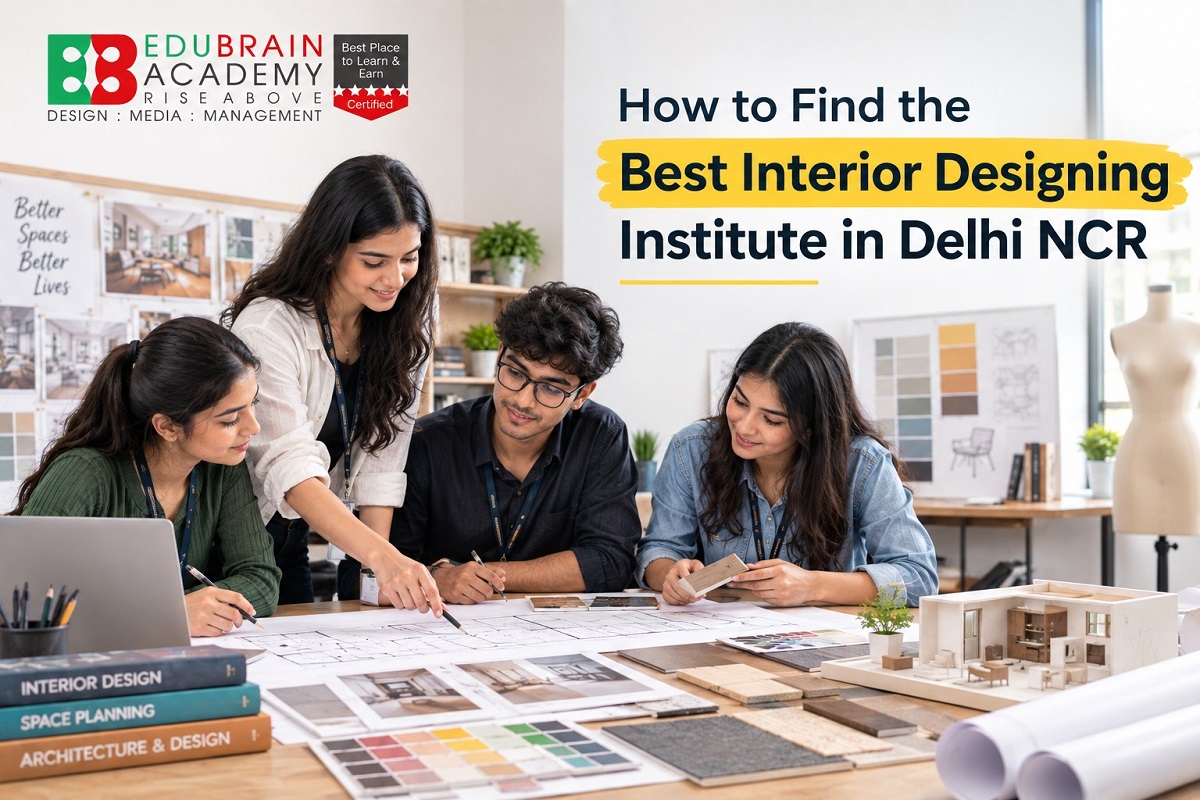
For students comparing design schools across the region, the Best Interior Designing Institute in Delhi NCR can provide a strong foundation for a creative and technical career when its curriculum matches their goals. Students often compare course fees, practical training, software education, faculty guidance, facilities, portfolio opportunities, and career support before making an admission decision.
A good institute should combine creative education with technical training, helping students develop skills in space planning, materials, furniture, lighting, CAD, 3D visualisation, and project development. Practical assignments and portfolio-building opportunities are equally important because they allow students to demonstrate what they can actually create and execute. Before making a final admission decision, these factors should be compared carefully to identify the Best Interior Designing Institute in Delhi NCR for individual learning needs and career plans.
Which is the Best Interior Design Training Institute in Delhi NCR?
Finding the best training institute for an interior design course in Delhi NCR depends on more than rankings or course names. Students should compare the curriculum, practical training, software education, faculty guidance, portfolio development, course duration, fees, location, industry exposure, and career support before selecting an institute.
Based on these factors, the following institutes can be considered among the notable options for students exploring interior design education across Delhi NCR:
Explore Top 10 Interior Designing Institutes in Delhi NCR:
1. Edu Brain Academy
Edu Brain Academy offers career-focused interior design programs with options including Interior Design Diploma, Interior Design Degree, and professional interior design programs. Its curriculum covers areas such as space planning, material studies, CAD, furniture design, lighting and acoustics, sustainable interior design, building services, and 3D modelling and visualisation.
2. Amity University, Noida
Amity University provides design education through its design school and offers undergraduate and postgraduate opportunities in design-related fields. Students can evaluate its curriculum, campus facilities, practical learning, and career-oriented opportunities when considering an interior design education.
3. World University of Design, Sonipat
World University of Design is a design-focused university offering programs across different areas of design and creative education. Students interested in interior and spatial design can evaluate its curriculum, studios, workshops, and multidisciplinary learning environment.
4. JD Institute of Fashion Technology
JD Institute offers design-focused education with interior design programs and opportunities to develop creative, technical, and portfolio-related skills. Students should compare the specific course structure and campus facilities before admission.
5. Sushant University, Gurugram
Sushant University offers design and architecture-related education through its School of Art and Architecture. Its programs provide opportunities for students interested in spatial design, architecture, and related creative disciplines.
6. Guru Gobind Singh Indraprastha University (GGSIPU), New Delhi
GGSIPU is a prominent university in Delhi with a range of professional and higher-education programs. Students considering design education should check the current affiliated institutes and specific course availability before applying.
7. IMS Design & Innovation Academy (IMS DIA), Noida
IMS DIA provides design-focused education in Noida, with programs covering creative and applied design disciplines. Students can compare its interior and spatial design offerings, practical learning, facilities, and curriculum with other institutes.
8. New Delhi YMCA Institute for Fashion Technology & Design (IFTD)
The YMCA Institute for Fashion Technology & Design provides vocational and professional-oriented design education. Its interior-related programs can be considered by students looking for focused and career-oriented design training.
9. National Institute of Fashion Technology (NIFT), New Delhi
NIFT is a well-known government design and fashion education institution. Students interested in interior-related creative careers should check the current program structure to determine whether the available courses match their specific interior design goals.
10. Pearl Academy, New Delhi
Pearl Academy offers education across creative and design disciplines, with programs and learning opportunities in areas related to spatial and interior design. Students should review the current course curriculum, duration, fees, and admission requirements before making a decision.
Start With the Skills You Want to Build
Before comparing institutes, students should first understand what they expect from an interior design course in Delhi and Delhi NCR. Interior design is not limited to selecting colours, furniture, or decorative elements. Professional training involves creative thinking as well as technical knowledge.
A useful course should help students develop skills such as:
-
Space planning and layout development
-
Residential and commercial interior concepts
-
Material selection and material understanding
-
Furniture and lighting design
-
Colour and design principles
-
Technical drawings and documentation
-
CAD drafting
-
3D modelling and visualisation
-
Project presentation and client communication
-
Sustainable and functional design approaches
When these areas are included in the learning process, students can develop a broader understanding of how interior projects are planned and executed.
Look Beyond the Course Name
Two institutes may offer courses with similar names but provide very different learning experiences. A diploma, degree, or professional interior design course should therefore be evaluated according to its actual curriculum rather than its title alone.
Check whether the syllabus explains what students will learn throughout the course. Look for a balance between design concepts, technical subjects, software training, assignments, and project work.
A well-planned curriculum should gradually move students from basic design principles to more advanced applications instead of introducing complex software or project work without sufficient foundation.
Find Out How Much of the Course Is Practical
Interior design is a practice-oriented profession. Reading about design concepts is useful, but students also need opportunities to apply those concepts.
Ask the institute how students work on:
-
Room and space planning exercises
-
Residential design projects
-
Commercial design concepts
-
Furniture layouts
-
Material boards
-
Lighting plans
-
Working drawings
-
3D visualisation projects
-
Complete interior design presentations
Practical assignments can help students understand how different design decisions affect functionality, aesthetics, budget, and user requirements.
Check the Software Training Carefully
Software skills are an important part of modern interior design education. However, simply mentioning software names in a brochure does not necessarily mean students will receive sufficient hands-on training.
Students should find out whether the course includes practical learning in relevant design and visualisation tools, such as CAD and 3D modelling software.
The more important question is not only which software is taught, but also how students use it during projects.
A stronger learning environment allows students to use software for actual drawings, layouts, models, presentations, and portfolio projects rather than learning commands in isolation. Students comparing different options can also explore the Top 10 Interior Designing Institutes in Delhi NCR to understand the range of institutes and their course offerings.
Evaluate Faculty Through Their Teaching Approach
Faculty guidance can have a major effect on a student's development. Instead of judging faculty only by qualifications or job titles, students should understand how instructors interact with learners.
Consider whether faculty members:
-
Review student assignments
-
Explain design concepts clearly
-
Provide individual feedback
-
Help students improve design decisions
-
Guide software-based projects
-
Discuss practical design challenges
-
Encourage experimentation and creative thinking
Regular feedback is particularly valuable because students can identify weaknesses in their work and improve them before creating final portfolio projects.
Use Student Work as Your Evidence
One of the most practical ways to evaluate an interior design training institute in Delhi NCR is to look at the work produced by its students.
Do not focus only on professionally photographed promotional images. Ask to see actual student projects, drawings, 3D views, material boards, presentations, and completed portfolios.
Look for progression in the work. Beginner projects may naturally be simpler, while advanced projects should demonstrate stronger planning, technical understanding, visualisation, and presentation skills.
Student work can provide a more realistic picture of the training environment than promotional claims alone.
Understand What Industry Exposure Actually Means
The phrase “industry exposure” can mean different things at different institutes. Students should ask what activities are actually included.
Industry-oriented learning may involve:
-
Practical design assignments
-
Guest sessions with professionals
-
Site visits
-
Workshops
-
Live or simulated projects
-
Portfolio reviews
-
Internships
-
Design exhibitions
-
Industry interactions
The quality and relevance of these opportunities matter more than simply having the words “industry exposure” listed on a course page.
Students considering a degree-level option can also explore the Bachelor in Interior Design course to understand its duration, curriculum, practical training, and career-oriented learning opportunities.
Compare Interior Design Course Fees and Duration
Course fees are an important factor when evaluating the best interior designing institute in Delhi NCR, but students should compare the cost with the course duration, curriculum, practical training, software education, facilities, portfolio development, and career support.
Edu Brain offers different interior design and related programs with varying durations and fee structures:
|
Course |
Duration |
Fee |
|
Advance Diploma in Interior Design & Architecture |
2 Years |
₹1,30,000 per annum |
|
Bachelor in Interior Design |
3 Years |
₹1,50,000 per annum |
|
Certificate Course in Interior Styling |
3 Months |
₹30,000 |
|
Certificate Course in Vastu Shastra |
3 Months |
₹60,000 |
|
Diploma in Interior Software |
6 Months |
₹90,000 |
|
Master Diploma in Interior Design |
2 Years |
₹1,30,000 per annum |
|
Professional Diploma in Interior Design & Vastu Shastra |
1 Year |
₹1,30,000 |
When comparing interior design course fees in Delhi NCR, students should also check what is included in the advertised fee. Depending on the program, this may include classroom instruction, practical assignments, software training, project work, assessments, or other academic components.
Course duration should also be considered carefully. A longer program may provide more time for technical subjects, practical projects, software training, and portfolio development, while shorter certificate programs may be more suitable for students looking for focused training in a specific area.
Students should confirm the latest course fees, admission charges, examination fees, certification costs, and other applicable charges directly with the institute before taking admission, as fee structures and course inclusions can change.
Think About Your Portfolio From Day One
A portfolio is one of the most useful outcomes of interior design education. It can demonstrate a student's creativity, technical ability, problem-solving skills, and understanding of design principles.
During the course, students should aim to develop different types of work rather than creating several projects that all look similar.
A strong student portfolio can include:
-
Concept development
-
Floor plans
-
Furniture layouts
-
Mood boards
-
Material selections
-
Technical drawings
-
3D views
-
Residential projects
-
Commercial projects
-
Final design presentations
Students should ask whether portfolio development is formally included in the course or simply left to the learner.
Consider the Institute's Location and Accessibility
Delhi NCR is geographically large, so location can influence the overall student experience.
A conveniently located institute can make regular attendance easier and reduce the time and expense involved in daily travel. Students should consider metro connectivity, public transport, travel time, and the distance between the institute and their home.
Accessibility becomes especially important for practical courses where students may need to attend studio sessions, workshops, project reviews, or additional practical activities.
Ask the Questions That Brochures Don't Answer
Before admission, students can make a short list of questions and discuss them directly with the institute.
Useful questions include:
- What subjects are covered throughout the course?
- How much practical training is included?
- Which design software will students learn?
- How frequently are student projects reviewed?
- Can students see examples of previous student portfolios?
- Are workshops or industry interactions included?
- Are internships supported?
- What facilities are available for practical learning?
- What is included in the course fee?
- What kind of career guidance is provided during or after the course?
The answers can reveal important differences between institutes that may not be obvious from advertisements.
Watch for These Red Flags
Students should also know what to avoid when comparing interior design institutes.
Be cautious if an institute:
-
Makes unrealistic career or salary promises
-
Provides little information about the actual syllabus
-
Cannot show genuine student work
-
Focuses heavily on certificates but not practical skills
-
Gives unclear information about course fees
-
Does not explain software training properly
-
Makes unsupported placement claims
-
Avoids questions about faculty or facilities
A professional decision should be based on verifiable information, transparent communication, and the quality of education being offered.
Why Delhi NCR Can Be a Useful Place to Study Interior Design
Delhi NCR provides a diverse environment for students interested in interior design. The region includes residential developments, commercial spaces, hospitality projects, retail environments, offices, and other built environments that can provide useful references for design education.
Studying in such an environment can help students observe different architectural styles, materials, spatial requirements, and design approaches.
For students who want exposure to a broad range of interior applications, the region can provide a useful setting for developing practical design awareness.
Why Edu Brain Academy Can Be Considered
Edu Brain Academy of Design, Media & Management provides career-focused Interior Design Courses for students looking to develop both creative and technical skills. Its interior design learning approach covers areas such as space planning, material studies, CAD, furniture design, lighting and acoustics, sustainable interior design, building services, and 3D modelling and visualisation.
The academy offers options that include Interior Design Diploma, Interior Design Degree, and professional Interior Designer programs. Its West Delhi location is accessible through nearby Ramesh Nagar on the Blue Line and Rajouri Garden on the Pink Line.
Students can evaluate the available course structure, practical learning, facilities, portfolio development, and career-oriented support according to their individual goals before making an admission decision.
A Simple Way to Make the Final Decision
After researching different institutes, students can score each option across the areas that matter most to them.
A useful comparison can include:
Curriculum → Practical Training → Software → Faculty → Portfolio → Facilities → Industry Exposure → Location → Fees → Career Support
Rather than selecting an institute because it appears first in a search result or uses the word “best” in its advertising, students should look at the complete learning experience.
The strongest choice is usually the institute that provides a suitable combination of structured education, practical application, technical skills, guidance, and opportunities to demonstrate what the student has learned.
Ready to Start Your Interior Design Journey?
If you have compared the course, practical training, software exposure, fees, and career support and want to discuss your options, connect with Edu Brain Academy of Design, Media & Management.
📞 Call or WhatsApp: +91 9319338333
✉️ Email: eduinfo@edubrain.in
Final Thoughts
Selecting the best interior designing institute in Delhi NCR is an important academic and career decision. Students should take time to examine the curriculum, practical training, software education, faculty, student projects, facilities, portfolio opportunities, industry exposure, location, fees, and career support before enrolling.
A thoughtful comparison can help students avoid choosing an institute based only on advertisements or price. The goal should be to find a learning environment that develops creativity, technical confidence, practical experience, and the ability to present professional design work.
Also Read: Best Interior Designing Institute in Kalkaji
Frequently Asked Questions (FAQs)
1. Is practical training important in an interior design course?
Yes. Practical assignments allow students to apply design concepts to layouts, materials, furniture, lighting, drawings, 3D visualisation, and complete projects.
2. Which software should interior design students learn?
Students should look for courses that provide hands-on training in relevant CAD, 3D modelling, visualisation, and presentation tools used for interior design projects.
3. How can I judge the quality of an interior design institute?
Review the curriculum, speak with the institute, examine genuine student work, understand the practical training process, check available facilities, and ask specific questions about faculty and career support.
4. Does course fee matter when selecting an interior design training institute in Delhi NCR?
Yes, but it should not be the only deciding factor. Compare the fee with the curriculum, practical training, facilities, software education, portfolio opportunities, and other services included in the course.
5. What should I check before choosing an interior designing institute in Delhi NCR?
Check the curriculum, practical training, software education, faculty experience, student portfolios, facilities, industry exposure, course duration, fees, location, and career support.