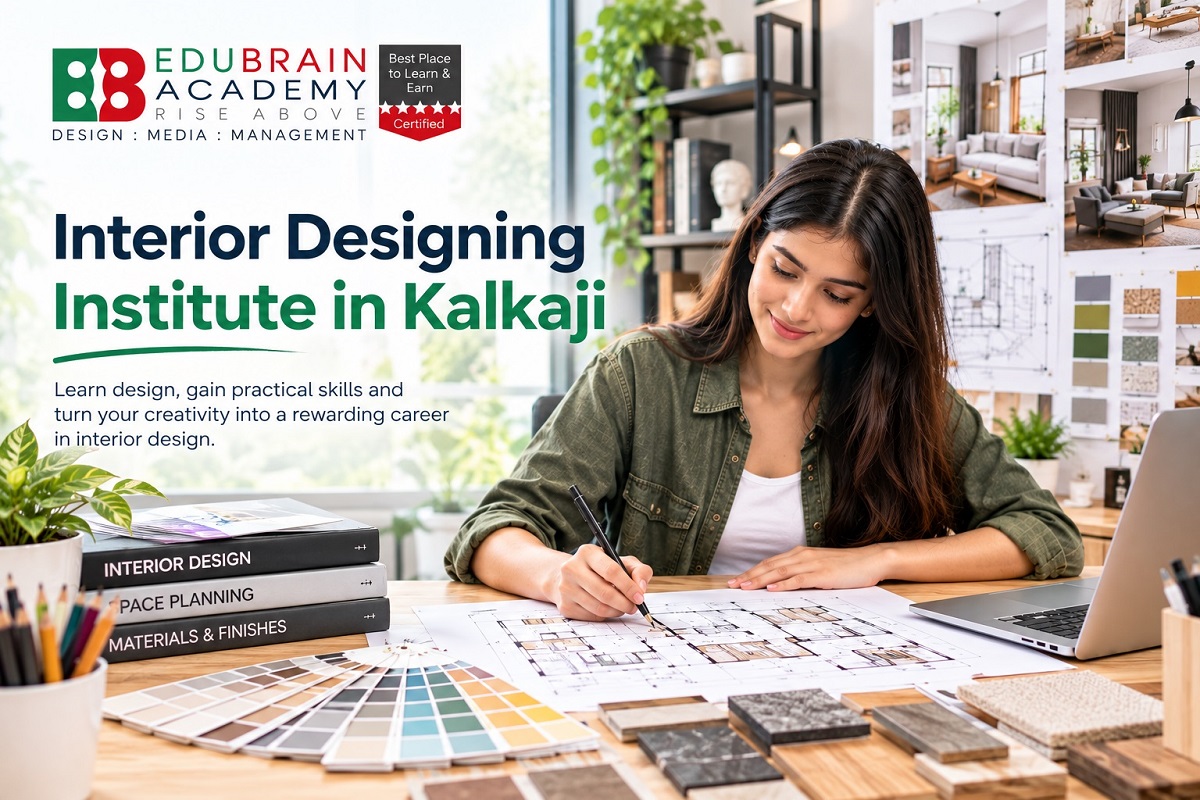
Interior designing is a professional field that combines creativity with technical planning, material knowledge, digital design and an understanding of how people use different spaces. From residential interiors and offices to retail stores, hospitality spaces and commercial environments, interior designers work on both the appearance and functionality of a space. Students searching for an interior designing institute in Kalkaji may have different reasons for entering the field. Some may want to develop professional design skills after 12th, while others may be interested in software, interior styling, architecture-related concepts or a shorter professional course.
The duration of an interior design program can range from a few months to several years. A short course may focus on one specific skill, whereas a longer program can cover space planning, materials, furniture, lighting, technical drawings, digital visualization and portfolio development in greater depth. For students comparing options across the city, an interior designing institute in Delhi can also provide access to different course formats and specialisations.
This guide explains what students should know about interior design education, including course options, fees, practical training, software skills, eligibility, career opportunities and factors to consider before admission.
What Does an Interior Design Course Actually Teach?
Interior design education goes beyond decorating rooms. Students learn how to understand a space and gradually convert an idea into a workable design.
A typical learning journey can include:
-
Understanding space and dimensions
-
Developing design concepts
-
Planning furniture layouts
-
Studying colours and textures
-
Selecting materials and finishes
-
Understanding lighting
-
Preparing technical drawings
-
Creating 2D layouts
-
Developing 3D visualisations
-
Presenting design concepts
-
Working on portfolio projects
The depth of each subject depends on the duration and level of the course.
A beginner may start with fundamental design principles, while an advanced student may work on complete residential or commercial projects involving technical drawings, material specifications and digital presentations.
Interior Design Courses and Their Duration
Different students require different levels of training. Short-term programs can be useful for focused skills, while diploma and degree programs provide a broader professional foundation.
The current Edu Brain School of Interior course information includes the following options:
|
Interior Design Course |
Duration |
Course Fee |
|
Certificate Course in Interior Styling |
3 Months |
₹30,000 |
|
Certificate Course in Vastu Shastra |
3 Months |
₹60,000 |
|
Diploma in Interior Software |
6 Months |
₹90,000 PA |
|
Professional Diploma in Interior Design & Vastu Shastra |
1 Year |
₹1,30,000 |
|
Advance Diploma in Interior Design & Architecture |
2 Years |
₹1,30,000 PA |
|
Master Diploma in Interior Design |
2 Years |
₹1,30,000 PA |
|
Bachelor in Interior Design |
3 Years |
₹1,50,000 PA |
Students are advised to verify the complete fee structure, payment timelines, and any additional assessment or certification charges directly with the interior designing institute in Kalkaji prior to admission.
Which Type of Interior Design Program Fits Your Goal?
The course duration should be considered alongside the type of skills you want to develop.
Short-Term Interior Styling
A short styling course can suit students interested in décor, colour combinations, furniture arrangement, accessories and visual presentation.
It can also be useful for people who want to explore interior styling before committing to a longer professional program.
Interior Design Software Training
Students interested in the technical side of the profession can focus on software skills.
Training in CAD, 3D modelling and digital visualization can help students prepare drawings and communicate design concepts more effectively.
Professional Diploma Education
A professional diploma can provide a wider introduction to interior design, combining creative concepts with technical and practical subjects.
This route may suit students who want structured training without immediately committing to a three-year degree.
Advanced Interior Design and Architecture
An advanced program can provide deeper exposure to interior design along with architecture-related concepts.
This can be useful for students who want to understand the relationship between interiors, structures, materials and built environments.
Bachelor's Degree
A Bachelor degree in Interior Design offers a longer academic route with greater scope for developing design fundamentals, technical knowledge, software skills, projects and professional presentation.
From an Idea to a Complete Interior Project
One of the most important parts of interior education is understanding how a project develops from beginning to end.
Step 1: Understanding the Requirement
Students learn to identify the purpose of a space, the users, available area, functional requirements and design expectations.
Step 2: Developing the Concept
The designer creates a visual direction using colours, materials, furniture, textures, lighting and other elements.
Step 3: Space Planning
The concept is translated into a functional layout. Furniture placement, movement, storage and room relationships are considered at this stage.
Step 4: Technical Development
Plans, elevations, dimensions and other drawings help communicate how the proposed design should be developed.
Step 5: Visualisation
3D models and visual presentations allow the designer and client to understand the proposed environment more clearly.
Step 6: Presentation
The final concept is presented through drawings, material selections, mood boards, 3D views and other project documentation.
This process helps students understand that interior design involves both creative decisions and technical accuracy.
Practical Training and Studio Experience
Interior design is a project-oriented profession. Students need opportunities to apply concepts instead of only studying them theoretically.
Practical work can involve:
-
Residential design exercises
-
Commercial space planning
-
Furniture layouts
-
Material boards
-
Colour schemes
-
Lighting concepts
-
Technical drawings
-
3D models
-
Design presentations
-
Site-related assignments
-
Portfolio projects
Regular project work also helps students become more comfortable with deadlines, design revisions and presentation requirements.
Digital Skills for Modern Interior Designers
Technology has changed the way interior projects are developed and presented. Digital skills are therefore an important part of professional preparation.
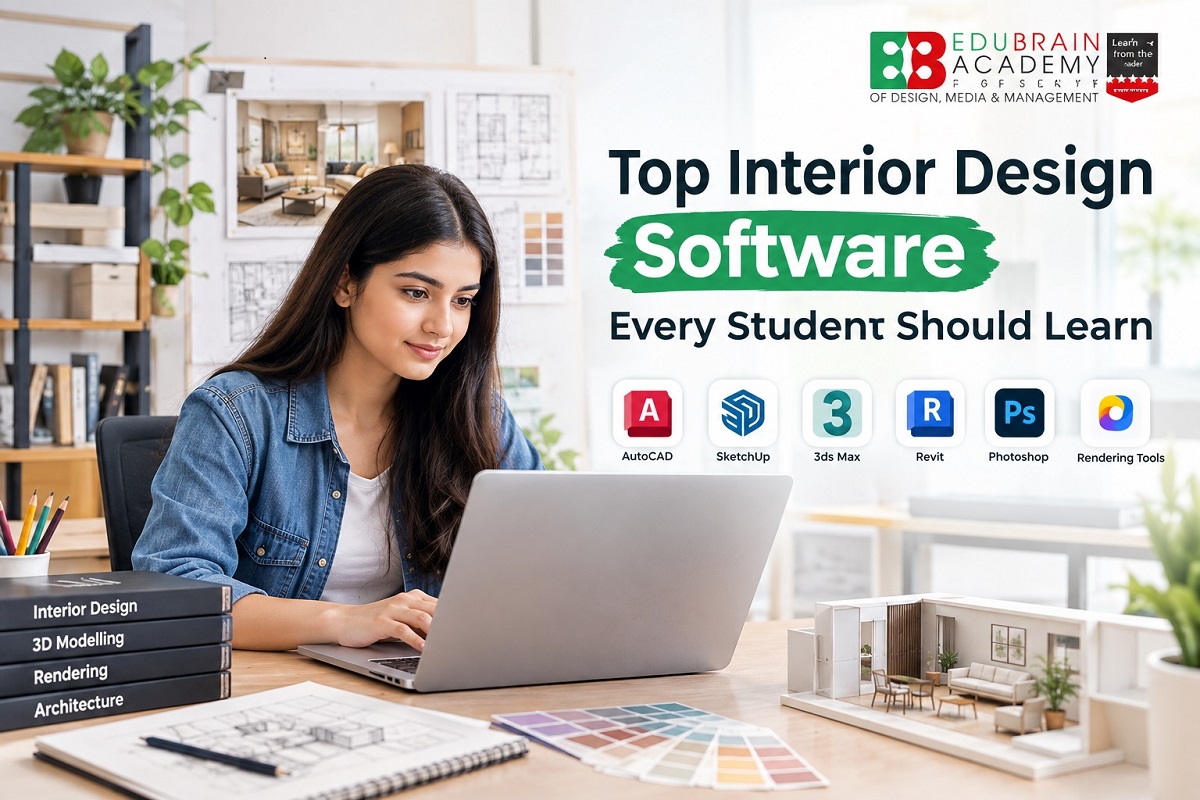
AutoCAD
Used for creating technical drawings, floor plans, layouts and detailed design documentation.
SketchUp and 3D Modelling
Useful for developing three-dimensional representations of rooms, furniture and complete interior concepts.
Digital Visualization
Helps communicate how a proposed interior may look before the actual work begins.
Presentation Tools
Interior designers need to organise concepts, drawings, material selections and visual references into clear presentations for clients and project teams.
Students should therefore look at both design education and software practice when comparing interior design courses.
Why Portfolio Development Matters
A portfolio allows students to demonstrate their abilities through actual work.
For an interior design student, a portfolio can include:
-
Concept sketches
-
Mood boards
-
Floor plans
-
Furniture layouts
-
Material boards
-
Colour palettes
-
Technical drawings
-
3D views
-
Residential projects
-
Commercial projects
-
Styling projects
The purpose is not simply to show how many projects a student has completed. A good portfolio should demonstrate the student's ability to develop an idea, solve a design problem and present the final result professionally.
Career Opportunities After Interior Design
Interior design education can lead to creative, technical and project-related roles.
Interior Designer
Works on the planning and development of interior spaces according to client requirements.
Residential Interior Designer
Specialises in homes, apartments, kitchens, bedrooms, living areas and other residential spaces.
Commercial Interior Designer
Works on offices, retail outlets, restaurants, studios and other commercial environments.
CAD Designer
Prepares technical drawings and layouts using computer-aided design software.
3D Visualizer
Creates digital representations of proposed spaces for client presentations and design development.
Interior Stylist
Focuses on décor, furniture, accessories, colours, textures and visual presentation.
Space Planner
Works on the functional arrangement of furniture, circulation and usable areas.
Furniture Designer
Develops furniture concepts based on design, dimensions, materials and functionality.
Design Consultant
Provides design recommendations according to space requirements, style preferences and project objectives.
Freelance Interior Designer
Experienced designers can work independently and take up residential or commercial projects directly.
Skills That Can Strengthen an Interior Design Career
A professional interior designer needs more than creative ability. The field also requires technical accuracy and communication.
Useful skills include:
-
Creative thinking
-
Spatial understanding
-
Drawing
-
Colour sense
-
Material knowledge
-
Technical documentation
-
CAD
-
3D visualization
-
Presentation
-
Communication
-
Problem-solving
-
Time management
-
Client handling
-
Project coordination
Developing these skills together can help students become more confident when working on professional projects.
Eligibility for Interior Designing Courses
Eligibility depends on the course level.
Students who have completed 10th may be eligible for selected short-term or diploma-level programs.
Students who have completed 12th can explore diploma, advanced diploma and bachelor's-level options depending on the training institute's requirements.
Graduates can also consider advanced programs designed for higher-level professional development.
For example, the current Edu Brain information specifies 10+2 with a minimum of 45% for its Bachelor in Interior Design, while its advanced programs have their own eligibility requirements.
Students should verify the eligibility criteria for their preferred course before submitting an admission application.
How to Compare Interior Designing Institutes in Kalkaji
Students searching for the best interior design institute in South Delhi should look beyond promotional claims and compare the actual learning experience.
Curriculum
Check whether the course covers important areas such as space planning, materials, furniture, lighting, technical drawing and digital design.
Practical Work
Find out how much project work students complete during the program.
Software Training
Ask which design software is taught and whether students receive sufficient practical exposure.
Faculty Guidance
Faculty feedback can be particularly important during drawing, modelling, project development and portfolio preparation.
Portfolio Opportunities
Check whether students develop substantial projects that can later be used for internships and job applications.
Studio Facilities
Design education requires space and resources for drawing, presentations, project work and software practice.
Industry Exposure
Workshops, professional interactions, site visits and internships can help students understand how interior projects function in the real world.
Complete Fee Information
Compare the total educational cost rather than looking only at the basic tuition amount.
Career Support
Ask about internship assistance, placement guidance, industry interaction and career counselling.
Location and Daily Travel for Interior Design Students
Location can have a practical impact on a student's daily routine.
Interior design courses may involve studio sessions, software classes, project work and presentations. Students should therefore consider how much time they will spend travelling to and from the institute.
Before admission, check:
-
Daily travel time
-
Public transport availability
-
Class timings
-
Frequency of practical sessions
-
Access to studio facilities
-
Time required for project work
A convenient location can make regular attendance easier, but it should be considered together with curriculum, practical training and overall learning quality.
Interior Design Programs at Edu Brain Academy
Edu Brain Academy's School of Interior provides different pathways for students interested in interior design, styling, software and related areas.
Bachelor in Interior Design
The bachelor's route provides broader undergraduate education in interior design and allows students to develop creative, technical and digital skills over a longer period.
Advance Diploma in Interior Design & Architecture
This program combines interior design with architecture-related learning and provides a more extensive professional training pathway.
Master Diploma in Interior Design
This advanced option is intended for graduates looking to develop further knowledge and professional skills in interior design.
Diploma in Interior Software
This program focuses more strongly on the technical side of interior design, including digital drawings, modelling and visualization.
Professional Diploma in Interior Design & Vastu Shastra
This program combines interior design education with Vastu-related concepts and provides a broader one-year learning pathway.
Certificate Course in Interior Styling
This short-term option focuses on styling and décor-related skills for students who want a more specialised introduction to the field.
Start Your Interior Design Journey
If interior design interests you as a career, take time to compare the course content, practical training, software exposure, portfolio opportunities, eligibility, fees and career support before admission.
Edu Brain Academy can provide information about available interior design programs, admission requirements, course details and current fees.
Contact: +91 9319338333
Email: eduinfo@edubrain.in
Frequently Asked Questions (FAQs)
How do I find an interior designing institute in Kalkaji?
Compare the curriculum, practical training, software education, faculty, portfolio development, facilities, fees and accessibility before deciding on a course.
Which interior design course is suitable after 12th?
Students after 12th can consider a bachelor's program, advanced diploma or diploma depending on their career objective and preferred duration of study.
What is the fee for an interior designing course?
Fees vary according to course duration and level. Current Edu Brain course information ranges from ₹30,000 for the 3-month Interior Styling certificate to ₹1,50,000 PA for the 3-year Bachelor in Interior Design.
Can I study interior design after 10th?
Yes. Certain short-term and diploma-level interior design programs accept students after 10th, subject to their individual eligibility requirements.
How long does an interior designing course take?
The duration can range from 3 months to 3 years, depending on the type of program.
Is AutoCAD important for interior design students?
AutoCAD is an important technical skill for many interior design roles because it is used for layouts, plans and technical drawings.
What software should an interior design student learn?
Students can benefit from learning CAD, 3D modelling, visualization and digital presentation tools. The specific software depends on the course and intended career path.
Does interior design require drawing skills?
Drawing and visualisation are useful, but interior design also requires spatial understanding, material knowledge, technical skills, software proficiency and problem-solving.
What jobs can I get after an interior design course?
Possible career paths include interior designer, CAD designer, 3D visualizer, space planner, interior stylist, furniture designer, design consultant and freelance interior designer.
What should I check before admission to an interior designing institute in Kalkaji?
Check the curriculum, practical training, software exposure, faculty, studio facilities, portfolio opportunities, industry exposure, complete fee structure and career support.
Final Thoughts
An interior designing institute in Kalkaji can provide students with a foundation in creative design, space planning, materials, furniture, lighting, technical drawings and digital visualization. The right program depends on the student's educational background and career objective. Short-term courses can provide focused skills, while diploma, advanced diploma and bachelor's programs offer broader professional education.
Before admission, students should focus on the quality of learning, practical project work, software training, portfolio development, faculty guidance and complete course cost rather than making a decision based only on location or course title. A well-rounded interior design education can help students develop the creative and technical foundation needed to explore opportunities across residential, commercial, styling, visualization and freelance interior design work.