Interior design is no longer limited to choosing colours, furniture, and decorative elements. Modern interior designers work with space planning, materials, lighting, furniture, technical drawings, 2D and 3D visualization, sustainability, and client requirements.
For students searching for an interior designing institute in South Extension, choosing the right institute involves more than looking at course names. Students should consider the curriculum, practical training, software exposure, portfolio development, industry interaction, internships, and career guidance.
South Delhi offers access to a range of residential, commercial, and creative environments, making it a relevant area for students interested in design education. Students can compare interior design institutes in Delhi by looking at course structure, practical exposure, facilities, faculty experience, portfolio opportunities, and career support rather than relying only on promotional claims.
Why Choose an Interior Design Institute in South Extension?
South Extension and surrounding South Delhi areas offer students exposure to modern residential interiors, retail spaces, offices, hospitality environments, and design-related businesses.
However, an institute's location is only one factor. A good interior design program should combine creative concepts with technical knowledge and practical experience.
Growing Demand for Interior Designers
Interior designers design and improve residential and commercial spaces. As homes, offices, cafés, retail stores, and hospitality spaces continue to evolve, designers need a combination of creative and technical skills.
Students can prepare for different areas of the industry, including:
-
Residential interior design
-
Commercial interior design
-
Retail and showroom design
-
Hospitality interiors
-
Furniture design
-
Interior styling
-
3D visualization
-
Space planning
-
Interior consultancy
Access to Design Education in South Delhi
Students living around South Extension, Greater Kailash, Lajpat Nagar, Defence Colony, Kalkaji, Nehru Place, Saket, and nearby areas can explore interior design institutes across South Delhi based on accessibility, curriculum, practical exposure, and course quality. When choosing an institute, students should also consider the learning environment, software training, portfolio development, project work, and career guidance offered as part of the course.
For students specifically searching for a training institute for interior designing courses, it is important to check the actual campus location before applying. Institutes serving students from South Extension may have campuses in other parts of South Delhi, so students should compare travel distance, course structure, and facilities before making a decision.
Practical and Industry-Oriented Learning
Interior design is a practical profession that combines creativity with technical knowledge. Students can benefit from working on design concepts, space planning, layouts, technical drawings, material selection, software projects and portfolio development rather than relying only on classroom theory.
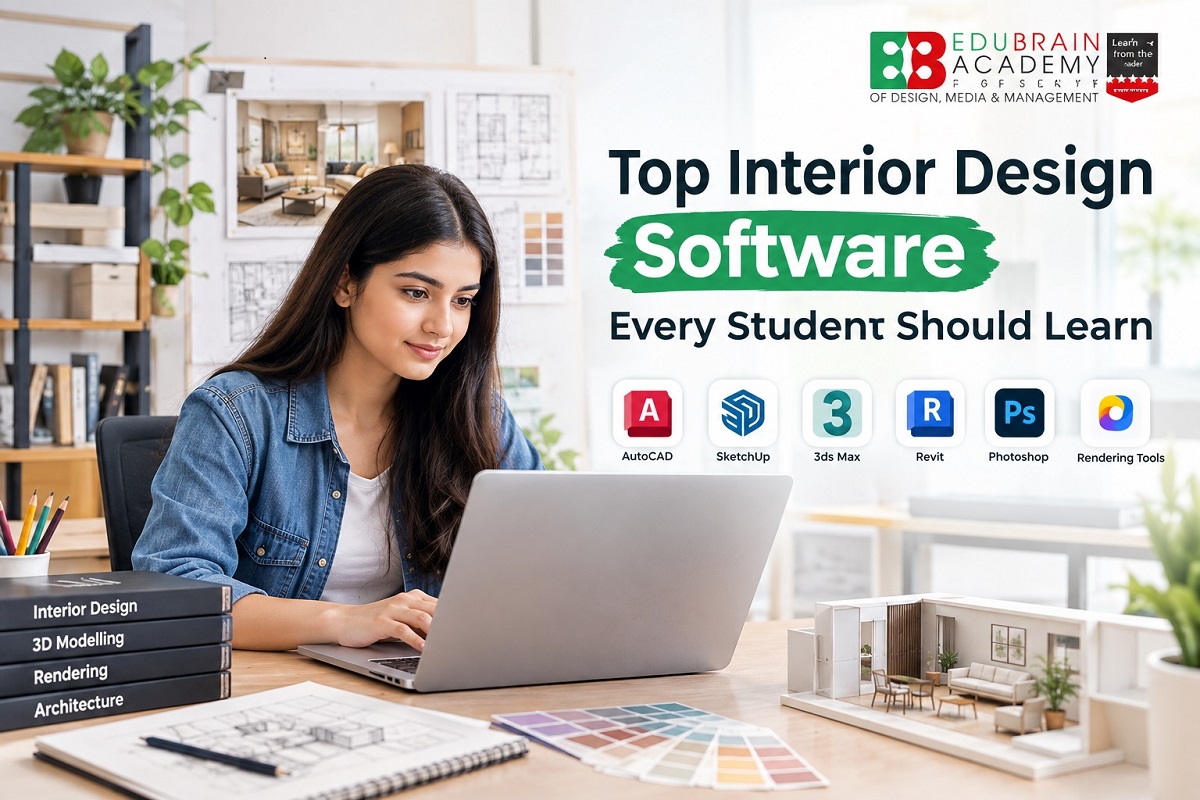
A well-structured interior design program should provide opportunities to work on practical assignments and design projects while developing skills in tools such as AutoCAD, 3D modelling, SketchUp, Revit, and other industry-relevant software. Project-based learning can also help students understand how design concepts are developed and presented in real-world situations.
What Do You Learn at an Interior Designing Institute?
A comprehensive interior design curriculum can introduce students to both creative and technical aspects of the profession.
Space Planning and Interior Design Concepts
Space planning helps students understand how rooms and areas should be organized according to function, movement, and user requirements.
Students can learn about:
-
Space utilization
-
Furniture placement
-
Circulation
-
Functional zoning
-
Design principles
-
Residential planning
-
Commercial space planning
Colour Theory and Material Selection
Colours and materials influence the appearance, atmosphere, and functionality of an interior.
Students can explore:
-
Colour combinations
-
Textures
-
Flooring materials
-
Wall finishes
-
Fabrics
-
Wood and laminates
-
Glass and metal
-
Sustainable materials
Furniture and Interior Styling
Furniture plays an important role in both the function and visual character of an interior.
Students can study furniture layouts, furniture detailing, styling principles, and the relationship between furniture, architecture, and available space.
Technical Drawings and Working Drawings
Interior designers need to communicate their ideas accurately.
Training may include:
-
Floor plans
-
Elevations
-
Sections
-
Furniture layouts
-
Electrical layouts
-
Ceiling plans
-
Construction details
-
Material specifications
2D and 3D Interior Design Software
Digital tools have become an important part of professional interior design workflows.
Interior design course information mentions software such as AutoCAD, 3ds Max, SketchUp, and Revit, along with 3D visualization.
Students should learn not only the software interface but also how to use digital tools to communicate an actual design concept.
Portfolio Development
A portfolio demonstrates what a student can create.
A strong interior design portfolio can include:
-
Concept boards
-
Floor plans
-
Mood boards
-
Material boards
-
Furniture designs
-
3D renders
-
Residential projects
-
Commercial projects
-
Technical drawings
-
Final presentations
Portfolio development can be particularly valuable when applying for internships, jobs or freelance opportunities.
Practical Training in Interior Designing
Practical exposure can help students understand how design concepts are developed and presented professionally.
Studio-Based Design Projects
Students can work on hypothetical or academic design briefs that require them to solve real design problems.
A project may involve understanding the client's requirements, preparing a concept, developing layouts, selecting materials, and presenting the final design.
Live Project Experience
Where available, live projects can expose students to practical considerations that may not appear in textbooks.
These can include:
-
Client requirements
-
Site measurements
-
Budget considerations
-
Material selection
-
Space limitations
-
Design revisions
-
Presentation requirements
Interior Design Presentations
Designers need to communicate their ideas clearly to clients and other professionals.
Students can develop presentation skills through:
-
Concept presentations
-
Mood boards
-
Material boards
-
2D drawings
-
3D visualization
-
Project documentation
Portfolio Building
Projects completed during a course can gradually become part of a student's professional portfolio.
The focus should be on demonstrating design thinking and problem-solving rather than simply collecting a large number of pages.
Industry Workshops and Expert Sessions
Workshops, seminars and interactions with industry professionals can help students understand current design practices, project requirements and professional expectations. These sessions may provide exposure to topics such as residential interiors, commercial spaces, materials, furniture, lighting, visualization and sustainable design.
Practical projects, portfolio reviews and expert guidance can further help students understand how interior design skills are applied beyond the classroom and prepare for internships, freelance projects or entry-level opportunities.
Interior Designing Courses You Can Consider
If you are looking for an interior designing course in South Extension, compare courses based on curriculum, practical projects, software training, portfolio development, course duration, and career guidance. A good course should help students develop both creative and technical skills required for residential, commercial, and other interior design projects.
Depending on their educational background and career goals, students can choose from certificate, diploma, advanced diploma, bachelor's and master's-level interior design programs.
Diploma in Interior Software
A software-focused diploma can be useful for students who want to develop technical digital-design skills. Such programs may cover tools used for drafting, 3D modelling, visualization, and presentation of interior spaces.
A typical Diploma in Interior Software can be completed in around 6 months, although the duration and curriculum may vary between institutes.
Advanced Diploma in Interior & Architecture
An advanced diploma can provide broader training by combining interior design principles with aspects of interior architecture. Students may study space planning, materials, construction basics, technical drawings, furniture design, lighting, and 3D visualization.
An Advanced Diploma in Interior Design & Architecture may be structured as a 2-year course, depending on the institute and curriculum.
Bachelor in Interior Design
Students looking for a longer undergraduate pathway can consider a bachelor's-level interior design program. These programs generally provide more extensive training in design fundamentals, space planning, materials, construction, furniture, lighting, visualization, and professional practice.
A Bachelor's degree in Interior Design in Delhi is commonly structured as a 3-year undergraduate program, subject to the eligibility and academic structure of the institute offering the course.
Master Diploma in Interior Design
Graduates and other eligible learners looking for advanced professional education can consider a master diploma in interior. Such programs can provide deeper exposure to advanced design concepts, project development, visualization, and professional practice.
This diploma may be offered as a 2-year program, depending on the institute and eligibility requirements.
Interior Styling and Vastu Courses
Students interested in specialized areas of interior design can also explore short-term programs in interior styling and Vastu Shastra. Interior styling courses may focus on colour coordination, furniture, décor, materials, and visual presentation, while Vastu-oriented courses focus on traditional principles related to spatial planning.
Certificate programs in Interior Styling and Vastu Shastra may be available with durations of around 3 months, depending on the course provider.
Career Opportunities After Interior Designing
An interior design qualification can lead to several career paths depending on a student's skills, portfolio and professional interests.
Interior Designer
Interior designers develop concepts and solutions for residential and commercial spaces while considering aesthetics, functionality and client requirements.
Residential Interior Designer
Residential designers work on homes, apartments, villas, and other living spaces.
Commercial Interior Designer
Commercial interior designers can work on offices, retail stores, restaurants, cafés, showrooms, and other business environments.
3D Visualizer
3D visualizers create digital representations of interior spaces that help clients and design teams understand proposed concepts.
Interior Design Consultant
Experienced designers can provide consultation related to layouts, materials, colours, furniture and overall interior concepts.
Furniture and Spatial Design Professional
Students interested in furniture can explore careers involving furniture concepts, detailing and integration with interior spaces.
Interior Design Course Fees in South Extension
Interior design course fees can vary depending on the program, course duration, curriculum, practical training, software learning, and level of specialization. Students should compare the complete course structure along with the fee before choosing an interior designing institute in South Extension.
Edu Brain Academy offers interior design programs for students with different educational backgrounds and career goals. The current course options include certificate, diploma, advanced diploma, bachelor's and master's-level programs.
Interior Designing Courses and Fees
| Interior Design Course | Duration | Course Fee |
|---|---|---|
| Diploma in Interior Software | 6 Months | ₹90,000 PA |
| Master Diploma in Interior Design | 2 Years | ₹1,30,000 PA |
| Advance Diploma in Interior Design & Architecture | 2 Years | ₹1,30,000 PA |
| Certificate Course in Interior Styling | 3 Months | ₹30,000 PA |
| Certificate Course in Vastu Shastra | 3 Months | ₹60,000 |
| Bachelor in Interior Design | 3 Years | ₹1,50,000 PA |
| Professional Diploma in Interior Design & Vastu Shastra | 1 Year | ₹1,30,000 |
These course fees are based on the current course information available from Edu Brain Academy. Students should confirm the applicable fee, payment schedule and admission requirements with the academy before enrollment because course details can change.
What Should You Check Before Paying the Fee?
Before taking admission, students should understand the complete cost of the selected interior design program. Important points to discuss with the institute include:
- Course duration
- Curriculum and subjects
- Practical design projects
- Interior design software training
- Studio and learning facilities
- Portfolio development
- Examination or other applicable charges
- Payment schedule
- Admission requirements
The lowest fee is not always the most suitable option. Students should compare the course duration, practical learning, software training, project work and overall learning experience before making a decision.
Get Interior Design Course Details
If you are searching for an interior designing training institute in South Extension, you can contact Edu Brain Academy to understand the available courses, fees, eligibility and admission process.
Call: 9319336333
Email: eduinfo@edubrain.in
Eligibility for Interior Designing Courses
Educational Qualification
Different programs can have different entry requirements. For example, Edu Brain currently lists its Bachelor in Interior Design for students who have completed 10+2, while several diploma/certificate programs have broader eligibility requirements.
Students should check the eligibility requirements for their preferred course before applying.
Skills That Help in Interior Design
You don't need to be an expert artist to begin learning interior design.
Useful skills include:
-
Creativity
-
Visual thinking
-
Observation
-
Communication
-
Basic drawing ability
-
Problem-solving
-
Interest in architecture and interiors
-
Computer skills
-
Attention to detail
Is Drawing Skill Necessary?
Drawing can be helpful, but modern interior design also relies heavily on digital tools and technical documentation.
Students can improve their sketching and visualization abilities through practice while developing software skills alongside them.
Students comparing interior design institutes in South Extension should also consider the type of projects included in the course, the software covered, portfolio-building opportunities, and the institute's approach to practical learning. A strong interior design program should help students understand both the creative side of design and the technical requirements involved in executing projects.
How to Choose the Best Interior Designing Institute in South Extension?
Choosing an institute should involve comparing several practical factors rather than relying only on the phrase "best institute."
Check the Curriculum
Review whether the curriculum covers both creative and technical areas such as space planning, materials, furniture, drawings, software, and visualization.
Look for Practical Training
Ask whether students work on projects and assignments that simulate professional design work.
Review Student Portfolios
A portfolio can provide useful insight into the type and quality of work students produce during their education.
Check Software and Studio Facilities
Interior design students should have opportunities to develop skills with relevant design and visualization software.
Understand Internship and Career Support
Ask what type of internship and career guidance is actually provided before choosing an interior design program. Useful support may include portfolio reviews, resume preparation, mock interviews, career counselling, internship assistance, employer interaction and guidance on available career opportunities.
Students should also check whether career support is integrated into the course or offered separately. A strong portfolio, practical project experience and professional presentation skills can be particularly valuable when applying for internships, freelance assignments or entry-level interior design roles.
Compare Course Duration and Fees
Don't choose a course based only on the lowest fee.
Compare:
-
Course duration
-
Curriculum
-
Practical training
-
Software training
-
Faculty
-
Projects
-
Portfolio development
-
Internship opportunities
-
Career support
-
Total cost
Why Consider Edu Brain Academy for Interior Design Course?
Edu Brain Academy is an option for students looking for interior design institute in South Delhi.
Its current interior design information includes programs ranging from short-term certificate and software courses to diploma and bachelor's-level programs.
Industry-Oriented Design Education
The academy describes its approach as practical and aligned with current industry requirements, with an emphasis on professional skills.
Practical and Studio-Based Learning
Students can develop their skills through design projects, software practice, portfolio development, and other practical activities.
Portfolio Development
Building a portfolio throughout the course can help students demonstrate their skills to potential employers or clients.
Internship and Career Guidance
Edu Brain's published course information includes internship guidance and placement assistance as part of its student-support approach.
Learning Opportunities in South Delhi
For students searching for an interior design institute in South Extension, Edu Brain can be considered as a South Delhi option. Its listed South Delhi campus is in Okhla Phase-2, rather than South Extension itself.
This distinction should remain clear on the website so the page provides accurate local information.
How to Apply for an Interior Designing Course?
The admission process can vary depending on the program.
Explore Available Courses
First, identify whether you need a certificate, diploma, advanced diploma, bachelor's or master's-level program.
Check Eligibility
Review the academic qualifications and other requirements for the selected course.
Contact the Institute
Speak with the admissions team to confirm the current course structure, fees, duration, batch dates, and eligibility.
Discuss Course and Admission Details
Before enrolling, ask about:
-
Course curriculum
-
Practical projects
-
Software training
-
Faculty
-
Portfolio development
-
Internship opportunities
-
Career support
-
Fees
-
Payment options
-
Certification
-
Admission requirements
Start Your Interior Design Journey
Choosing an interior designing institute in South Extension should be based on more than proximity or a course title. Look for an education program that combines design fundamentals, technical drawings, software skills, practical projects, portfolio development, and career preparation.
For students serious about building a career in interior design, the most valuable outcome is not simply completing a course. It is developing the skills, portfolio, and practical understanding needed to work confidently in the design industry.
Before enrolling, compare the course curriculum, practical learning opportunities, software training, faculty guidance, project work, internship support, course duration, eligibility, and admission requirements. Making an informed choice can help you select a program that matches your learning goals and long-term career plans.
Conclusion
Choosing the right interior designing institute in South Extension is an important step for anyone planning to build a career in this field. Before making a decision, compare the curriculum, practical learning, software training, project work, portfolio development, faculty guidance, internship opportunities, and career support.
A well-planned course can help students develop both creative thinking and technical skills while gaining the confidence to work on real design requirements. Take time to understand the course structure, eligibility, duration, and admission process before enrolling.
Frequently Asked Questions (FAQs)
1. What should I look for in an interior designing institute in South Extension?
Look for an institute that offers a well-structured curriculum, practical project work, interior design software training, portfolio development, experienced faculty, industry exposure, and career guidance. Course duration, eligibility, fees, and campus location should also be checked before admission.
2. Which interior designing course is best for beginners?
Beginners can consider certificate or diploma-level interior design programs that cover design fundamentals, space planning, materials, technical drawings, 2D/3D visualization, and basic software. The right course depends on your educational background and career goals.
3. What is the eligibility for an interior designing course?
Eligibility varies by course and institute. Certificate and diploma programs may accept students after Class 10 or 12, while bachelor's programs generally require Class 12. Always verify the latest eligibility criteria for the specific program.
4. How long does an interior designing course take?
Interior designing courses can range from a few months to several years. Certificate programs may take around 3–6 months, diploma programs can take 1–2 years, and bachelor's programs commonly take around 3 years.
5. What software is taught in interior design courses?
Depending on the curriculum, students may learn software such as AutoCAD, SketchUp, 3ds Max, Revit, and other tools used for drafting, 3D modelling, visualization, and presentations.
6. Can I pursue interior design after Class 12?
Yes. Students who have completed Class 12 can explore diploma, advanced diploma and bachelor's-level interior design programs, subject to the eligibility requirements of the institute and course.
7. Is drawing necessary to become an interior designer?
Good drawing skills can be helpful, but you do not need to be an expert artist to begin learning interior design. Courses typically develop skills in technical drawing, visual representation, space planning, and digital design tools.
8. What career opportunities are available after an interior course?
Depending on their skills and experience, graduates can explore roles such as interior designer, residential interior designer, commercial interior designer, 3D visualizer, interior stylist, furniture designer, design consultant, or freelance designer.
9. Is a portfolio important for an interior designer?
Yes. A portfolio demonstrates your design thinking, technical skills, and ability to develop projects. Including space-planning exercises, drawings, 3D visualizations, material boards, and completed projects can help when applying for internships or entry-level opportunities.
10. How can I choose the right interior design institute?
Compare institutes based on curriculum, practical training, software exposure, studio facilities, faculty experience, student portfolios, project opportunities, internship support, course duration, fees, and actual campus location. Avoid choosing an institute solely because it appears high in search results or uses promotional claims.