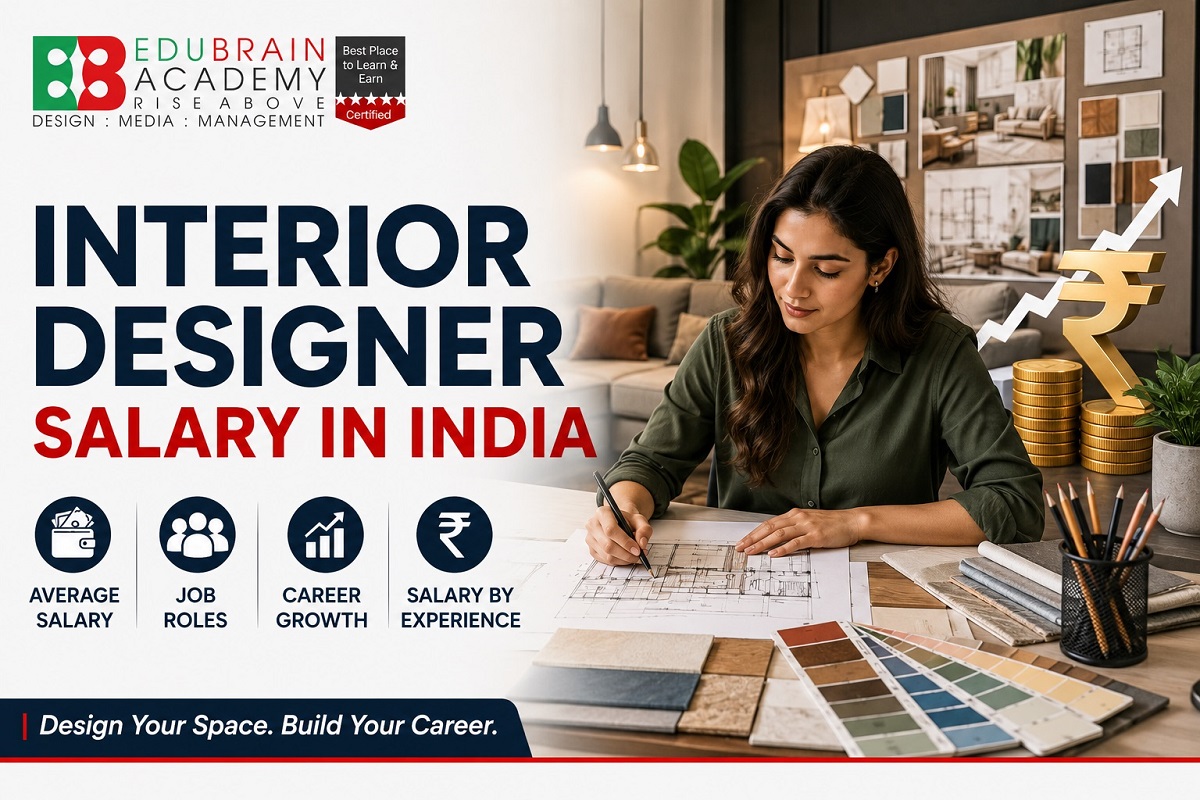
The Interior Designer Salary in India varies depending on experience, education, location, technical skills, specialization, employer, and the type of projects handled. Interior design has become an attractive career option for students and creative professionals who want to work across residential, commercial, hospitality, retail, and other spaces.
An interior designer's career involves much more than choosing colours and furniture. Professionals work on space planning, furniture layouts, material selection, lighting concepts, 2D and 3D drawings, client presentations, budgeting, site coordination, and project execution. As designers gain experience and develop specialised skills, they can progress into senior design, consultancy, project management, creative leadership, or independent practice.
For students considering interior design as a career, understanding potential earnings is an important part of choosing the right course and career path. This guide explains salary expectations by experience and job role, factors that influence earnings, career opportunities, required skills, qualifications, freelance opportunities, and the long-term career scope of interior design.
Interior Designer Salary by Experience
An interior designer's salary generally increases as professionals gain practical experience, develop specialised skills, build stronger portfolios, and take responsibility for larger projects. The following ranges can be used as a general career guide rather than guaranteed salaries because actual compensation varies by employer, location, qualification, portfolio, and responsibilities.
| Experience Level | Typical Annual Salary Range |
| Fresher / 0–1 year | ₹2.0 lakh – ₹3.5 lakh |
| 1–3 years | ₹2.5 lakh – ₹5 lakh |
| 3–5 years | ₹4 lakh – ₹7 lakh |
| 5–8 years | ₹6 lakh – ₹10 lakh+ |
| 8+ years | ₹8 lakh – ₹15 lakh+ |
| Senior / Lead / Project Manager | ₹10 lakh – ₹20 lakh+ |
These figures are indicative ranges and should not be treated as fixed salaries. Compensation can be higher or lower depending on the company, city, project portfolio, specialisation, software expertise, and level of responsibility.
Professionals working independently may follow a completely different earning model because freelance income depends on project fees, consultation charges, project size, number of clients, operating costs, and business development.
How Much Does an Interior Designer Earn in India?
There is no single salary applicable to every interior designer because earnings vary considerably based on professional experience and job responsibilities. A beginner entering the industry may start with an entry-level salary, while an experienced designer handling large residential, commercial, hospitality, or corporate projects can earn considerably more.
Salary can also differ according to the organisation. A small design studio may offer a different package compared with a large architecture firm, real estate company, luxury interior brand, or multinational organisation.
Professionals working independently have another earning structure. Freelance interior designers and consultants may charge clients according to project size, design scope, consultation requirements, or the complexity of the work.
Interior Designer Salary by Experience
Experience is one of the most important factors influencing earning potential.
Entry-Level Interior Designer:
Fresh graduates generally begin their careers as junior interior designers, design assistants, CAD designers, or trainees. At this stage, professionals focus on developing practical experience, understanding client requirements, preparing drawings, learning materials, and assisting senior designers.
Mid-Level Interior Designer:
With several years of experience, designers usually take greater responsibility for projects. They may communicate directly with clients, coordinate vendors, prepare design concepts, supervise execution, and manage project timelines.
Senior Interior Designer:
Experienced professionals can move into senior design, project management, creative direction, or consultancy roles. Their responsibilities may include leading design teams, managing major projects, developing concepts, handling clients, and supervising overall execution.
Independent Interior Designer:
Professionals who establish their own consultancy or design studio have the potential to earn based on the number, size, and type of projects they undertake. However, business development, client acquisition, budgeting, vendor management, and project execution also become part of their responsibilities.
Factors That Affect Interior Designer Salary in India
Several factors can influence how much an interior designer earns in India. Understanding these factors can help students identify the skills and qualifications that can support career progression.
Educational Qualification
A relevant qualification in interior design can provide a strong foundation in design principles, space planning, materials, drafting, and software. Diploma, undergraduate, and advanced programmes can prepare students for different career paths.
Professional Experience
Experience allows designers to handle more complex projects and responsibilities. Professionals who build a strong portfolio and gain practical exposure can become eligible for higher-level positions.
Location
Salary levels can vary between cities because demand, project budgets, property markets, and living costs differ across locations. Major metropolitan areas with active real estate and commercial development can provide broader employment opportunities.
Technical Skills
Knowledge of design software is highly valuable. Professionals may work with tools such as AutoCAD, SketchUp, 3ds Max, Revit, V-Ray, and other visualisation or drafting platforms depending on their role.
Portfolio Quality
A strong portfolio demonstrates creativity, technical ability, design thinking, and practical project experience. Employers and clients can use a portfolio to evaluate a designer's capabilities before offering employment or projects.
Specialization
Interior designers can specialize in areas such as residential interiors, commercial spaces, hospitality design, retail interiors, office design, kitchen design, furniture design, or sustainable interiors. Specialization can influence the type of projects and clients a professional attracts.
Career Opportunities in Interior Design
Interior design offers several career paths beyond the traditional interior designer role. Professionals can choose positions according to their interests and strengths.
Some common career options include:
-
Interior Designer
-
Junior Interior Designer
-
Senior Interior Designer
-
Interior Design Consultant
-
CAD Designer
-
3D Visualizer
-
Space Planner
-
Residential Interior Designer
-
Commercial Interior Designer
-
Hospitality Interior Designer
-
Furniture Designer
-
Set Designer
-
Project Coordinator
-
Design Project Manager
-
Interior Styling Consultant
-
Interior Design Entrepreneur
Interior Designer Salary in India by Job Role
The earning potential of an interior designer can vary depending on the position, responsibilities, experience, technical skills, and type of organisation. Professionals who develop specialised expertise and take responsibility for complete projects can gradually move into higher-paying positions.
Junior Interior Designer
Junior Interior Designers generally assist senior designers with concept development, drawings, material selection, presentations, site visits, and project documentation. This is usually an entry-level position where professionals gain practical knowledge of client requirements, design processes, vendors, and project execution.
Interior Designer
An Interior Designer typically handles projects from the initial concept through design development and execution. Responsibilities can include space planning, furniture layouts, material selection, 2D drawings, 3D visualisation, client communication, and coordination with contractors.
Senior Interior Designer
Senior designers take greater responsibility for projects and may supervise junior designers and other team members. They often manage client presentations, design decisions, project coordination, budgets, timelines, and quality standards.
3D Visualizer
A 3D Visualizer creates realistic digital representations of interior spaces. Strong knowledge of 3D modelling, rendering, lighting, textures, and visualisation software can help professionals build careers with interior design studios, architecture firms, real estate companies, and visualisation agencies.
Interior Design Consultant
Interior Design Consultants provide professional advice to residential and commercial clients. They may recommend layouts, materials, colour schemes, furniture, lighting, and design concepts according to the client's requirements and budget.
Project Manager
Experienced professionals can move into interior design project management. This role involves coordinating designers, contractors, suppliers, timelines, budgets, site activities, and client expectations to ensure projects are completed successfully.
Interior Design Entrepreneur
Designers with strong professional experience and business skills can establish their own interior design consultancy or studio. Independent professionals may work on residential properties, offices, restaurants, retail spaces, hotels, and other commercial projects.
Industries That Hire Interior Designers
Interior designers can work across several industries because professional space planning and design are required in both residential and commercial environments.
Residential Interior Design
Residential designers work on apartments, villas, independent houses, kitchens, bedrooms, living rooms, and other personal spaces. They focus on creating functional and visually appealing environments according to the client's lifestyle and preferences.
Commercial Interior Design
Commercial projects include offices, corporate spaces, co-working facilities, showrooms, restaurants, cafés, and retail stores. Designers need to consider functionality, customer experience, branding, safety, and efficient use of space.
Hospitality Industry
Hotels, resorts, restaurants, cafés, and entertainment venues require specialised interior design to create attractive environments and improve customer experience. Hospitality designers often work closely with architects, lighting consultants, furniture suppliers, and project teams.
Real Estate and Property Development
Real estate companies require interior professionals for model apartments, sample homes, clubhouses, offices, and property development projects. Designers may also contribute to staging and presentation of properties for prospective buyers.
Architecture and Design Firms
Architecture firms frequently employ interior designers to develop the interiors of residential and commercial buildings. Working in a multidisciplinary environment can provide exposure to architecture, structural planning, materials, lighting, and construction.
Furniture and Lifestyle Brands
Furniture companies and lifestyle brands also hire professionals who understand space planning, furniture layouts, product presentation, styling, and customer requirements. Designers can contribute to showroom design, product development, visual merchandising, and client consultations.
Skills That Can Improve Career Growth
Salary growth is not based on qualification alone. Employers generally value professionals who can combine creative thinking with technical knowledge and practical project experience.
Design Software
Knowledge of interior design software such as AutoCAD, SketchUp, 3ds Max and Revit can improve productivity and employability.
Space Planning
Effective space planning is one of the fundamental skills in interior design. Designers need to understand dimensions, circulation, furniture placement, functionality, ergonomics, and the relationship between different areas.
Material Knowledge
Understanding wood, laminates, glass, stone, metal, fabrics, paints, flooring, lighting products, and other materials helps designers select appropriate solutions for different projects.
3D Visualisation
The ability to create realistic 3D models and renders allows designers to communicate concepts clearly to clients before execution begins. Strong visualisation skills can be particularly valuable for presentation-heavy roles.
Communication Skills
Interior designers regularly communicate with clients, contractors, suppliers, architects, vendors, and project teams. Clear communication helps reduce misunderstandings and ensures that design requirements are implemented correctly.
Project Management
Professionals who understand budgeting, scheduling, vendor coordination, site supervision, documentation, and quality control can take on greater project responsibilities as their careers progress.
Portfolio Development
A professional portfolio is essential when applying for interior design jobs or attracting freelance clients. It should demonstrate different types of projects, design concepts, technical drawings, 3D visualisations, material boards, and completed work.
Does Experience Increase an Interior Designer Salary?
Yes, experience can have a significant effect on earning potential. Entry-level professionals generally focus on learning and assisting with projects, while experienced designers take responsibility for larger assignments and client relationships.
Career progression may follow a path such as:
Design Intern → Junior Interior Designer → Interior Designer → Senior Interior Designer → Design Lead/Project Manager → Creative Director or Entrepreneur
However, career progression is not determined by years of experience alone. The quality of a professional's portfolio, technical expertise, communication ability, project exposure, specialization, and leadership skills can also influence advancement.
Professionals who consistently update their software knowledge, understand emerging design trends, develop sustainable design awareness, and gain experience with real-world projects can create stronger opportunities for long-term growth.
How to Start a Career in Interior Design
Starting a career in interior design usually involves combining formal education with practical experience, technical skills, and a strong portfolio. There is no single educational route for everyone. Students can choose a diploma or undergraduate interior design course in Delhi depending on their education level, career goals, available time, and desired area of specialisation. Current course options in India include diploma programmes, B.Des and B.Sc. programmes, while postgraduate programmes are available for students who want advanced specialisation.
A practical career pathway can look like this:
Complete Class 12 → Choose an interior design course → Learn design software → Build a portfolio → Complete an internship → Apply for entry-level roles → Gain project experience → Move into specialised or senior positions
Internships are particularly valuable because they expose students to real projects, client requirements, materials, site work, drawings, vendors, and project coordination.
Build a Professional Portfolio
Students can learn more about building a strong interior design portfolio before applying for internships and entry-level positions. Include floor plans, mood boards, colour palettes, material boards, furniture layouts, technical drawings, 3D renders, and completed academic or professional projects.
How Edu Brain Academy Helps Students Prepare for an Interior Design Career
Choosing the right interior design education can help students build the technical knowledge and practical skills required to enter the industry. Edu Brain focuses on career-oriented learning that can help aspiring designers develop skills in areas such as space planning, technical drawing, design software, 3D visualization, materials, project work, and portfolio development.
Practical exposure is particularly important in interior design because professionals need to understand how design concepts are translated into real projects. Students can strengthen their understanding through practical assignments, project-based learning, software training, and industry-focused activities.
A strong portfolio is also important when applying for interior design jobs. Students can use academic and practical projects to demonstrate their creativity, design thinking, technical abilities, and understanding of materials and space planning to prospective employers.
However, completing a course does not guarantee a specific salary. Career growth depends on individual skills, portfolio quality, practical experience, communication abilities, specialization, location, job role, and employer. Students should therefore focus on building relevant skills and gaining practical experience alongside their formal education. Students can also explore our guide to the Best Interior Design College in South Delhi.
Qualifications and Interior Design Courses
Students can select a course according to their previous education, available time, and career objectives. Course structures and eligibility requirements vary between institutions, so applicants should always verify the requirements of the specific programme before admission.
Diploma in Interior Design
A diploma can provide focused training in design fundamentals, drafting, space planning, materials, computer-aided design, and project work. Diploma programmes can be suitable for students seeking a comparatively shorter route into the industry.
Bachelor's Degree in Interior Design
Undergraduate programmes such as B.Des or B.Sc. in Interior Design provide broader academic and practical exposure. They can cover design theory, technical drawing, digital design tools, materials, project development, and professional practice.
Postgraduate Interior Design Courses
Students who already hold a relevant Bachelor's in Interior Design can explore postgraduate programmes such as M.Des or M.Sc. in Interior Design. These programmes can allow deeper specialisation in areas such as sustainable design, furniture, lighting, or advanced spatial design.
Short-Term and Certification Courses
Short-term programmes can be useful for developing specific skills such as AutoCAD, 3D visualisation, furniture design, or other specialised areas. They can complement formal education or help working professionals expand their existing skill set.
Freelance Opportunities for Interior Designers
Freelancing provides another career opportunity in interior design for professionals who want to work independently. Freelance designers can accept residential, commercial, retail, hospitality, renovation, styling, or consultation projects according to their expertise.
A freelancer may offer services such as:
-
Space planning
-
2D floor plans
-
3D visualisation
-
Material selection
-
Furniture planning
-
Colour consultation
-
Lighting concepts
-
Complete interior design consultancy
-
Site coordination
Freelance income is highly variable because it depends on project size, location, pricing model, client network, portfolio strength, and the services offered. Some designers charge a fixed project fee, while others may use consultation fees, design fees, or project-based pricing. Therefore, freelance earnings should not be treated as a guaranteed monthly salary.
Building professional experience before becoming independent can be beneficial because it helps designers understand project execution, client management, vendor coordination, budgeting, and industry workflows.
Factors That Can Increase Salary Growth
Professionals who want to improve their earning potential should focus on skills that increase their responsibility and value to employers or clients.
Advanced Software Skills
Proficiency in tools such as AutoCAD, SketchUp, 3ds Max, Revit, and rendering software can strengthen employability, particularly for technical and visualisation-oriented positions.
Specialisation
Specialising in commercial interiors, luxury residential design, hospitality, retail, sustainable interiors, furniture, or another niche can help professionals develop expertise in a particular market.
Project Management
Designers who can manage budgets, timelines, vendors, contractors, site execution, and client communication can progress into project management and leadership positions.
Client Management
Strong communication and presentation skills become increasingly important as professionals move from supporting roles to client-facing positions.
Portfolio and Industry Experience
A strong portfolio supported by internships and real project exposure can demonstrate practical ability more effectively than theoretical knowledge alone. Industry-focused education increasingly emphasises technical drawing, digital tools, material studies, project management, and practical learning.
Which Interior Design Roles Have Higher Earning Potential?
Higher earning potential in interior design is generally associated with greater responsibility, specialised expertise, strong portfolios, leadership skills, and the ability to manage complete projects.
Professionals can potentially increase their earning opportunities by progressing into roles such as:
-
Senior Interior Designer
-
Design Lead
-
Project Manager
-
Design Consultant
-
Creative Director
-
Hospitality Design Specialist
-
Luxury Residential Designer
-
Commercial Interior Design Specialist
-
Independent Interior Design Consultant
-
Interior Design Entrepreneur
However, there is no fixed “highest salary” for an interior designer. Senior professionals and business owners may earn substantially different amounts depending on their clients, projects, reputation, pricing model, team size, and business performance.
Conclusion
Interior design offers a wide range of career opportunities for students and professionals who combine creativity with technical knowledge, practical experience, and strong communication skills. Professionals can begin with junior design or visualisation roles and gradually progress into senior design, consultancy, project management, creative leadership, or independent practice.
The Interior Designer Salary in India varies according to experience, location, qualification, technical skills, specialisation, portfolio quality, employer, and project responsibility. Instead of focusing only on the starting package, aspiring designers should build a strong foundation in design principles, learn relevant software, complete internships, develop a professional portfolio, and gain practical project experience.
As the industry evolves through sustainable design, digital visualisation, smart spaces, commercial development, and specialised interiors, professionals who continuously upgrade their skills can create stronger opportunities for long-term career growth.
Frequently asked questions (FAQs)
1. What is the average Interior Designer Salary in India?
The Interior Designing Salary varies based on experience, location, qualification, skills, specialization, employer, and project responsibilities. Freshers generally start with entry-level positions, while experienced professionals can earn more as they take on larger projects and senior responsibilities.
2. What is the salary of an interior designer in India per month?
The monthly salary of an interior designer depends on experience, job role, location, and employer. Freshers generally earn less than experienced professionals, while senior designers, consultants, project managers, and specialised professionals can have higher earning potential.
3. What is the starting salary of an interior designer after completing a course?
The starting salary depends on the candidate's qualification, portfolio, software skills, internship experience, location, and employer. Graduates may begin as junior interior designers, design assistants, CAD designers, or 3D visualizers and increase their earning potential with practical experience.
4. How much can an interior designer earn after 5 years of experience?
An interior designer's earning potential can increase significantly after several years of experience, particularly when the professional develops a strong portfolio, manages clients, handles complete projects, and gains specialised technical skills. Salary varies by city, employer, role, and level of responsibility.
5. Which city in India offers the best salary opportunities for interior designers?
Major cities such as Delhi NCR, Mumbai, Bengaluru, Hyderabad, Pune, and Chennai offer interior design opportunities across residential, commercial, hospitality, retail, architecture, and real estate projects. The best location depends on the designer's specialization, experience, employer, and career goals.
6. Which skills can help an interior designer earn a higher salary?
Advanced skills in AutoCAD, SketchUp, 3ds Max, Revit, V-Ray, 3D visualization, space planning, material selection, project management, budgeting, client communication, and site coordination can improve employability and support career progression.
7. Which interior design job has the highest earning potential in India?
Senior and leadership positions such as Senior Interior Designer, Design Lead, Project Manager, Creative Director, and Interior Design Consultant can offer higher earning potential. Experienced professionals can also establish their own design studios or consultancy businesses, although independent income varies by projects and clients.
8. How does Edu Brain help students build better salary potential in interior design?
Edu Brain focuses on practical interior design education that can help students develop industry-relevant skills, technical knowledge, software proficiency, project experience, and a professional portfolio. Through practical learning and industry exposure, students can prepare for entry-level opportunities and develop the skills needed to progress toward better career and salary opportunities.
9. Can an interior designer earn more through freelancing?
Yes, freelancing can provide additional earning opportunities for experienced interior designers. Freelancers may offer space planning, 2D drawings, 3D visualization, material selection, styling, consultation, or complete design services. However, freelance income is not fixed and depends on projects, clients, pricing, experience, and business development.
10. How can I increase my salary as an interior designer in India?
To improve earning potential, interior designers can develop advanced software skills, build a strong portfolio, gain practical project experience, specialise in areas such as luxury residential, commercial, hospitality, or retail design, improve client-management skills, and progress into senior or project-management roles.