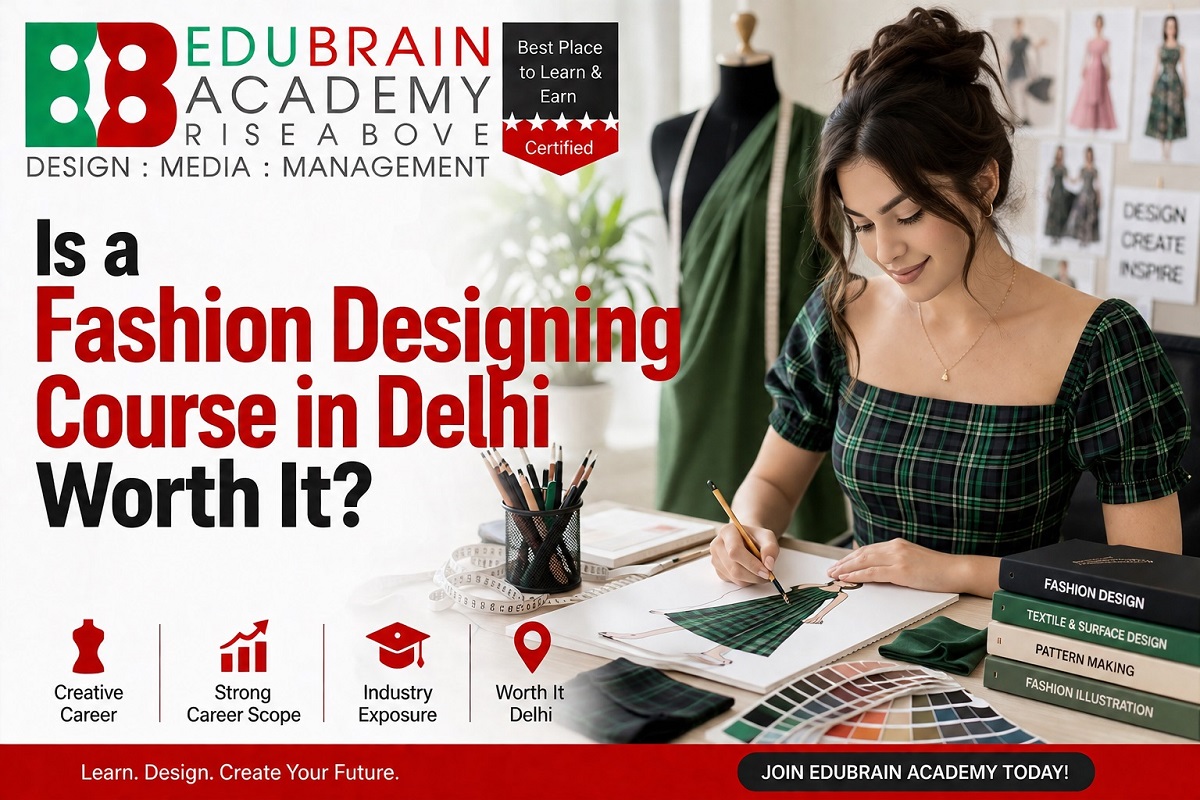
Choosing the right career path is an important decision, especially if you have a passion for creativity, style, and innovation. Many students and aspiring designers often ask, "Is a Fashion Designing Course in Delhi Worth It?" With India's fashion industry expanding through luxury brands, e-commerce, sustainable fashion, and digital design technologies, professional training has become more valuable than ever before.
Delhi is one of the country's leading fashion education and apparel hubs, offering students access to experienced mentors, practical studio training, internships, fashion events, and industry exposure. However, selecting the right course requires understanding the curriculum, career opportunities, skill development, and long-term growth prospects rather than focusing only on the institute's reputation.
In this complete 2026 guide, you'll learn whether pursuing a fashion course is the right choice, what you can expect during your training, career options after graduation, and the key factors to consider before taking admission. Whether you're a student after Class 12, a graduate, or someone looking to build a creative career, this guide will help you make an informed decision.
Quick Answer
Yes, pursuing a fashion designing course in Delhi can be worthwhile for students interested in creative careers. Delhi offers access to experienced faculty, design studios, fashion events, internships, and employment opportunities across apparel, retail, luxury fashion, and e-commerce. The overall value depends on choosing an institute that provides practical training, portfolio development, industry exposure, and placement support. Before taking admission, compare the curriculum, faculty, infrastructure, internship opportunities, and career services to ensure the course aligns with your long-term goals.
Why Delhi Is One of the Best Places to Study Fashion Design
Delhi is one of India's leading hubs for the fashion and apparel industry, offering an ideal environment for students to learn from experienced professionals while gaining exposure to the latest design trends, creative techniques, and industry practices. A Fashion Designing Course in Delhi NCR gives students access to modern design studios, experienced faculty, workshops, fashion events, and internship opportunities that strengthen practical learning. This hands-on approach helps aspiring designers develop the creative, technical, and professional skills needed to build a successful career in today's evolving fashion industry.
Studying fashion design in Delhi provides several advantages:
Strong Fashion Industry Presence
Delhi is home to numerous fashion houses, garment manufacturers, export companies, retail brands, boutiques, and design studios. This creates valuable opportunities for internships, industrial visits, and professional networking.
Learning Beyond the Classroom
Students can explore fashion exhibitions, textile markets, trade fairs, design workshops, and fashion events that help them understand how the industry operates in real-world settings.
Access to Modern Design Tools
Professional institutes increasingly train students in digital illustration, CAD software, AI-assisted design workflows, portfolio development, and visual presentation techniques that are becoming standard across the fashion industry.
Better Career Opportunities
Graduates trained in Delhi often find opportunities in apparel manufacturing, fashion retail, luxury brands, e-commerce, costume design, visual merchandising, fashion styling, and entrepreneurship.
Who Should Choose a Fashion Designing Course?
Fashion design is suitable for individuals who enjoy creativity and want to transform ideas into wearable designs. You do not need to come from a specific educational background to begin learning.
This course is ideal for:
Students After 12th
Students who want to build a creative career can begin developing professional design skills immediately after completing school.
College Students
Many students pursue fashion design alongside higher education to strengthen their portfolios and improve career prospects before graduation.
Graduates
Graduates looking for a creative profession can gain specialized skills that open opportunities across the fashion, lifestyle, and apparel industries.
Working Professionals
Professionals interested in changing careers or upgrading their creative skills can benefit from structured fashion design training.
Entrepreneurs
Individuals planning to launch their own clothing label, boutique, or fashion brand can learn both design principles and the fundamentals of fashion business management.
Benefits of Studying Fashion Designing
A professional fashion designing course helps students develop both creative and technical abilities required by today's employers.
Some of the key benefits include:
Practical Skill Development
Students gain hands-on experience through sketching, garment construction, draping, pattern making, fabric selection, sewing techniques, portfolio creation, and live design assignments.
Industry-Relevant Curriculum
Modern fashion education includes traditional design principles along with digital tools, sustainable fashion concepts, branding, merchandising, and AI-assisted creative workflows.
Portfolio Building
A strong portfolio showcases creativity and technical ability, making it easier for students to apply for internships, jobs, freelance projects, or higher education opportunities.
Creative Confidence
Regular practical assignments, design critiques, presentations, and project work help students improve their problem-solving abilities and creative thinking.
Career Flexibility
Fashion design skills can lead to employment, freelancing, consulting, entrepreneurship, or specialization in areas such as styling, textile design, costume design, visual merchandising, and fashion communication.
Skills You Can Develop During the Course
Fashion design is more than drawing attractive outfits. Students gradually build a combination of creative, technical, and professional skills, including:
-
Fashion Illustration
-
Pattern Making
-
Garment Construction
-
Textile Knowledge
-
Fabric Selection
-
Color Theory
-
Fashion Styling
-
CAD for Fashion Design
-
Portfolio Development
-
Trend Forecasting
-
Design Presentation
-
Visual Merchandising
-
Fashion Branding
-
Creative Problem Solving
-
Communication Skills
These competencies help graduates adapt to the changing demands of the fashion industry and prepare them for diverse career opportunities.
Why Practical Training Matters More Than Theory
Fashion is a skill-based profession where practical experience plays a significant role. While theoretical knowledge provides the foundation, employers often evaluate candidates based on their creativity, portfolio, technical skills, and ability to execute designs.
Institutes that offer live projects, workshops, industry interactions, design competitions, internships, and portfolio development provide students with valuable real-world experience. This practical exposure helps learners understand industry expectations and build confidence before entering the workforce.
Fashion Designing Course Curriculum (2026 Updated)
A modern course should combine creativity, technical knowledge, digital tools, and practical industry exposure. Today's fashion industry expects professionals to understand not only garment design but also sustainability, AI-assisted design, branding, merchandising, and customer preferences.
A comprehensive curriculum generally includes:
Fashion Illustration & Sketching
Learn how to transform creative ideas into professional fashion sketches using proportions, body anatomy, silhouettes, and rendering techniques. Students practice hand illustration as well as digital sketching to communicate design concepts effectively.
Textile Science & Fabric Knowledge
Understand different types of fabrics, fibers, textures, prints, dyes, and materials used in garment production. Students learn how to select suitable fabrics based on design, comfort, durability, and current market trends.
Pattern Making & Garment Construction
Develop technical skills in drafting patterns, garment cutting, stitching, draping, fitting, and finishing. Practical sessions help students understand how a design moves from concept to finished garment.
Fashion Styling & Visual Merchandising
Learn styling techniques for fashion shoots, retail displays, brand campaigns, and fashion presentations. Students also understand how visual merchandising influences customer purchasing decisions.
Computer-Aided Fashion Design (CAD)
Gain practical experience with industry-standard design software used for fashion illustration, digital pattern development, technical drawings, and presentation boards. Digital skills have become essential in modern fashion businesses.
Fashion Forecasting & Trend Analysis
Study global fashion trends, seasonal collections, consumer behavior, color forecasting, and market research. Students learn how fashion brands predict upcoming trends and create collections that meet customer demand.
Sustainable Fashion
Sustainability has become one of the most important aspects of the fashion industry. Students explore eco-friendly materials, ethical manufacturing practices, responsible sourcing, waste reduction, and circular fashion concepts that are increasingly adopted by leading brands.
Fashion Marketing & Brand Management
Understand how fashion brands build their identity, reach customers, launch collections, and promote products through both traditional and digital marketing channels. This module also introduces retail management and customer engagement strategies.
Portfolio Development
Students work on individual collections, design assignments, and creative projects to build a professional portfolio that demonstrates their skills during internships, job interviews, or freelance opportunities.
AI & Digital Tools in Fashion
The fashion industry is rapidly adopting artificial intelligence for trend forecasting, design inspiration, inventory planning, virtual styling, and customer experience. Students are introduced to AI-assisted creative tools while learning how to combine technology with original design thinking.
Course Duration
The duration of a fashion designing course depends on the type of program and the level of specialization.
Most institutes offer flexible learning options such as:
-
Certificate Course: 3–6 months
-
Diploma Program: 6–12 months
-
Advanced Diploma: 1–2 years
Many institutes also provide weekday, weekend, and flexible batch schedules, making it convenient for students as well as working professionals.
Eligibility Criteria
Fashion designing welcomes learners from diverse educational backgrounds. Most professional courses have simple eligibility requirements.
Generally, the course is suitable for:
-
Students after Class 12
-
Undergraduate students
-
Graduates from any discipline
-
Working professionals
-
Boutique owners
-
Entrepreneurs
-
Freelancers
-
Individuals planning a career change
No prior fashion design experience is usually required. Creativity, curiosity, and a willingness to learn are often more important than technical knowledge at the beginning.
Certifications
Professional fashion designing programs often provide institute certifications upon successful completion. Many institutes also prepare students for industry projects, portfolio presentations, and practical assessments that strengthen their professional profiles.
A valuable certification should reflect practical skills rather than only theoretical knowledge. Combined with a strong portfolio, it can improve internship and employment opportunities.
Live Projects & Practical Learning
Fashion design is a hands-on profession, making practical training one of the most valuable parts of the learning process.
Students should receive opportunities to work on activities such as:
-
Fashion illustration assignments
-
Garment construction projects
-
Pattern development
-
Fabric selection exercises
-
Styling sessions
-
Portfolio creation
-
Design presentations
-
Collection development
-
Fashion exhibitions
-
Industry workshops
Practical assignments help students build confidence while understanding how fashion concepts are applied in professional environments.
Internship Opportunities
Internships provide valuable industry exposure and help students experience professional work environments before starting their careers.
Depending on the institute and program, students may receive opportunities to work with:
-
Fashion designers
-
Apparel manufacturers
-
Export houses
-
Retail brands
-
Boutiques
-
Fashion studios
-
Styling agencies
-
E-commerce fashion companies
Internships help students improve communication skills, teamwork, time management, and practical problem-solving while building professional networks. Read More: Diploma vs Degree in Fashion Designing
Career Opportunities After Fashion Designing
One of the biggest advantages of pursuing professional fashion education is the wide range of fashion designing career opportunities available across apparel, retail, luxury brands, e-commerce, media, and entrepreneurship. Depending on your interests and skills, you can choose from creative, technical, or business-focused career paths.
Popular career options include:
-
Fashion Designer
-
Assistant Fashion Designer
-
Fashion Stylist
-
Textile Designer
-
Apparel Designer
-
Costume Designer
-
Fashion Illustrator
-
Pattern Maker
-
Fashion Merchandiser
-
Visual Merchandiser
-
Fashion Consultant
-
Boutique Owner
-
Fashion Entrepreneur
-
Product Developer
-
Fashion Buyer
-
Fashion Coordinator
Graduates can work with fashion houses, export companies, luxury brands, retail chains, design studios, media companies, production houses, and e-commerce platforms, or establish their own fashion label.
Salary & Future Scope
The earning potential in fashion design depends on skills, creativity, portfolio quality, practical experience, specialization, and the employer.
Professionals who continuously upgrade their knowledge in digital fashion design, sustainable practices, AI-assisted workflows, branding, and consumer trends often enjoy stronger career growth.
The future of fashion design looks promising as the industry continues to evolve through technology, sustainability, digital commerce, and personalized customer experiences. Designers who combine creativity with technical expertise and business understanding will be well positioned for opportunities in both India and global markets.
How to Choose the Best Fashion Designing Institute in Delhi
Selecting the right institute is one of the most important decisions for anyone planning a career in fashion. While many institutes offer fashion design programs, the quality of education, practical exposure, and career support can vary significantly.
Before taking admission, consider these factors:
Updated Industry Curriculum
The curriculum should reflect current fashion industry practices and include fashion illustration, garment construction, textile studies, pattern making, styling, CAD, fashion marketing, sustainable fashion, and AI-assisted design tools.
Practical Learning Approach
Fashion is a skill-based profession. Choose a fashion design training institute in Delhi that emphasizes studio practice, live projects, workshops, design assignments, portfolio development, and hands-on garment construction instead of focusing only on theory.
Experienced Faculty
Learning from experienced designers and industry professionals helps students understand current market expectations, production processes, and professional work environments.
Modern Infrastructure
A well-equipped institute should provide design studios, sewing laboratories, pattern-making facilities, garment construction workspaces, and digital learning resources to support practical education.
Internship & Placement Support
Internships allow students to gain real industry exposure before starting their careers. Institutes that provide placement assistance, interview preparation, portfolio guidance, and career counseling help students transition smoothly into professional roles.
Student Portfolio Development
A strong portfolio is one of the most important assets for a fashion designer. Choose an institute that encourages students to build professional portfolios through practical assignments and creative projects.
Why Choose Edu Brain Academy for Fashion Designing?
Choosing the right learning environment can significantly influence your professional growth. Edu Brain Academy offers a practical, industry-focused approach that helps students develop creative, technical, and professional skills required in today's fashion industry.
The training program combines classroom learning with studio practice, garment construction, pattern making, fashion illustration, textile knowledge, styling, portfolio development, and exposure to modern digital design techniques. Students work on practical assignments that strengthen creativity while building confidence through hands-on experience.
Guidance from experienced faculty, career-focused learning, internship opportunities, and placement assistance help students prepare for real-world opportunities in fashion houses, apparel brands, retail organizations, design studios, and entrepreneurial ventures. The curriculum is regularly updated to reflect current industry trends, sustainable fashion practices, and emerging technologies, ensuring learners stay relevant in an evolving fashion landscape.
Future Scope of Fashion Designing in 2026 and Beyond
The fashion industry continues to evolve with changing consumer preferences, digital transformation, sustainability initiatives, and technological innovation. Brands today seek professionals who can combine creativity with technical expertise, business understanding, and digital design capabilities.
Growing opportunities exist across fashion retail, apparel manufacturing, luxury brands, export houses, e-commerce, costume design, fashion communication, visual merchandising, and personal styling. At the same time, entrepreneurship has become more accessible through online marketplaces and social media platforms, allowing designers to launch their own labels and connect directly with customers.
Emerging technologies such as AI-assisted design, digital fashion visualization, virtual fitting solutions, and data-driven trend forecasting are reshaping the industry. Students who continuously upgrade their skills and adapt to new tools will be well-positioned for long-term career growth.
Conclusion
A successful career in fashion begins with the right education, consistent practice, and exposure to real-world design challenges. As the industry embraces sustainability, digital innovation, and AI-assisted workflows, fashion professionals with strong creative and technical skills will remain in demand. Choosing an institute that prioritizes practical learning, portfolio development, and career guidance can help you build a strong foundation for long-term success.
Frequently Asked Questions (FAQs)
1. Is a Fashion Designing Course in Delhi a good career choice?
Yes. Delhi offers access to fashion brands, design studios, experienced faculty, internships, and industry exposure, making it a strong destination for students interested in fashion design careers.
2. Who can join a fashion design course?
Students after Class 12, graduates, working professionals, entrepreneurs, and anyone with an interest in fashion and creativity can enroll in a professional fashion designing program.
3. What skills are taught during a fashion course?
Students learn fashion illustration, pattern making, garment construction, textile knowledge, styling, portfolio development, CAD, trend forecasting, and fashion marketing through practical assignments.
4. How long does a fashion designing course take?
The duration depends on the program. Certificate courses are generally shorter, while diploma and advanced diploma programs provide more comprehensive training over a longer period.
5. Is practical training important in fashion design?
Yes. Practical learning helps students develop technical skills, improve creativity, and build a professional portfolio that supports internships and employment opportunities.
6. What career opportunities are available after completing a fashion designing course?
Graduates can work as fashion designers, stylists, textile designers, merchandisers, visual merchandisers, costume designers, fashion consultants, or start their own fashion brand.
7. Can I start my own clothing brand after completing a fashion course?
Yes. Many students use their knowledge of design, garment production, branding, and marketing to launch their own boutique or clothing label.
8. Does Edu Brain Academy provide practical fashion design training?
Yes. Edu Brain Academy focuses on practical learning through studio sessions, design projects, portfolio development, and industry-oriented training that helps students build job-ready skills.
9. Does Edu Brain Academy provide placement assistance?
Yes. Students receive career guidance, interview preparation, portfolio support, internship opportunities, and placement assistance to help them begin their professional journey in the fashion industry.
10. What is the future scope of fashion designing?
The future remains promising as demand continues to grow across apparel, retail, luxury fashion, e-commerce, costume design, sustainable fashion, and digital fashion technologies.
11. Can I pursue fashion designing after completing Class 12?
Yes. Many students begin professional fashion design training immediately after Class 12 and gradually build the skills required for higher education or industry careers.
12. What should I look for before choosing a fashion designing institute?
Compare the curriculum, faculty experience, practical training, studio facilities, internships, placement assistance, student portfolios, and industry exposure before making your decision.