Choosing between a Diploma and Degree in Fashion Designing is one of the first and most important decisions for aspiring fashion professionals. Both programs can help you build a successful career in the fashion industry, but they differ in course duration, curriculum, practical training, academic depth, and long-term career opportunities. Understanding these differences will help you choose the path that best matches your career goals and interests.
The fashion industry continues to evolve with new design trends, sustainable practices, digital technologies, and changing consumer preferences. Today's employers look beyond academic qualifications—they value creativity, technical expertise, practical experience, and a strong portfolio. Whether your goal is to become a fashion designer, stylist, merchandiser, textile designer, or entrepreneur, choosing the right course can make a significant difference in your professional journey.
In this comprehensive guide, we'll compare diploma and fashion design degree programs based on course structure, practical learning, industry exposure, career opportunities, higher education prospects, and placement support. By the end, you'll have a clear understanding of which option aligns with your aspirations and how to make an informed decision.
Understanding Diploma and Degree Courses in Fashion Designing
Before comparing the two options, it's important to understand what each course offers. Although both prepare students for careers in the fashion industry, they follow different learning approaches and cater to different career objectives.
What Is a Diploma in Fashion Designing?
A diploma in fashion design is a skills-focused professional program designed for students who want to gain practical knowledge and enter the industry more quickly. Most diploma courses last one to two years and emphasize hands-on learning rather than extensive academic study.
Students spend most of their time developing technical skills through studio sessions, workshops, live projects, and portfolio creation. The curriculum is designed to prepare learners for entry-level roles and freelance opportunities by focusing on industry-relevant skills.
A typical diploma program includes subjects such as:
-
Fashion illustration and sketching
-
Pattern making
-
Garment construction
-
Draping techniques
-
Fabric and textile studies
-
Fashion styling
-
Surface ornamentation
-
Portfolio development
-
Basic fashion merchandising
-
Introduction to digital design software
Because diploma programs focus heavily on practical training, they are ideal for students who want to start internships, freelance work, or professional careers as early as possible.
What Is a Degree in Fashion Designing?
A degree in fashion designing provides a more comprehensive education by combining practical learning with academic and business knowledge. Most bachelor's degree programs take three to four years to complete and offer a deeper understanding of the fashion industry's creative, technical, and commercial aspects.
In addition to developing design skills, students study subjects that help them understand how fashion businesses operate, how brands are built, and how consumer trends influence the market.
A degree program typically covers:
-
Fashion history
-
Design principles
-
Textile science
-
Fashion communication
-
Fashion marketing
-
Retail management
-
Consumer behaviour
-
Fashion forecasting
-
Sustainable fashion
-
Entrepreneurship
-
Brand management
-
Advanced digital design technologies
Degree programs often include internships, research projects, fashion shows, industry collaborations, and presentations that prepare students for leadership roles and long-term career growth.
Graduates who wish to pursue postgraduate studies or management positions often benefit from the broader academic foundation offered by a degree program.
Diploma vs Degree in Fashion Designing: Key Differences
Instead of asking "Which course is better?", it's more helpful to ask "Which course is better for my career goals?"
Both diploma and degree programs can lead to rewarding careers, but they are designed for different learning experiences and professional objectives.
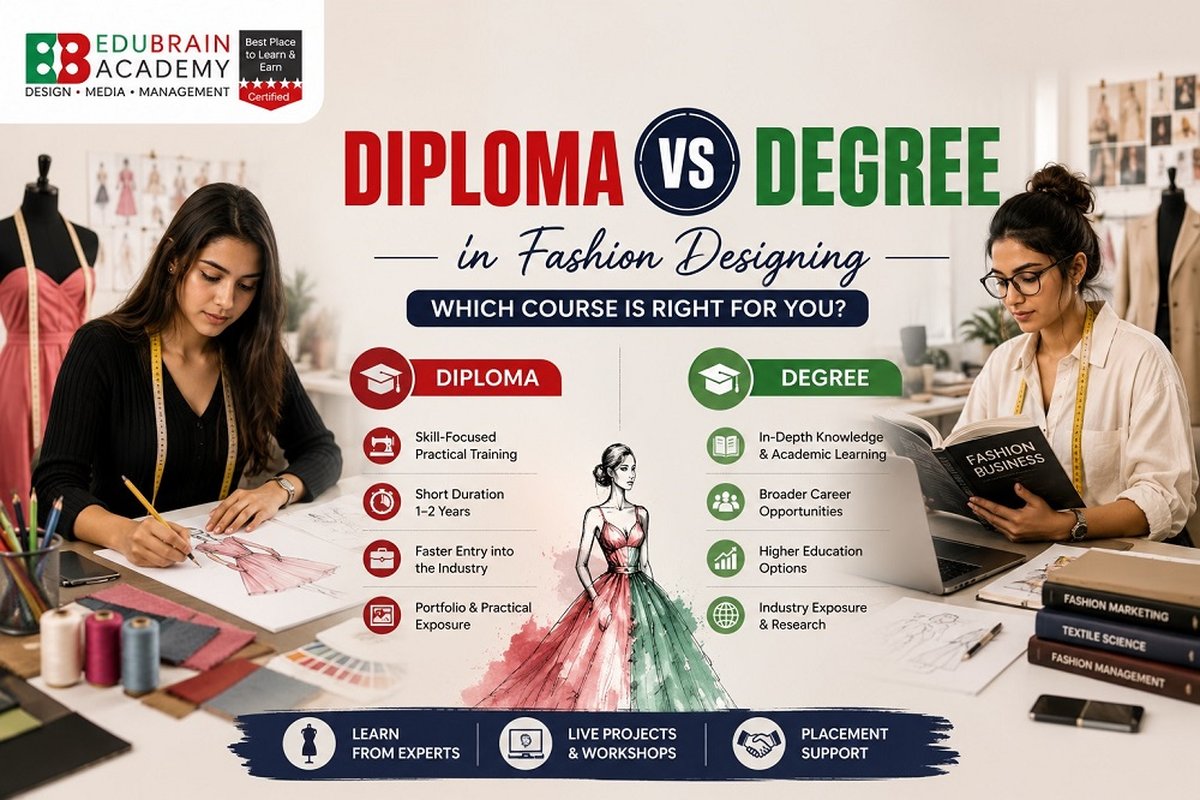
Diploma vs Degree: Quick Comparison
|
Feature |
Diploma |
Degree |
|
Course Duration |
1–2 Years |
3–4 Years |
|
Learning Focus |
Practical, skill-based training |
Practical + academic learning |
|
Curriculum |
Design techniques, portfolio development |
Design, research, business, management |
|
Industry Exposure |
Workshops, internships, live projects |
Workshops, internships, research, industry collaborations |
|
Career Start |
Faster entry into the workforce |
Broader career opportunities after graduation |
|
Higher Education |
Limited |
Suitable for postgraduate studies |
|
Best For |
Students seeking practical skills and quicker employment |
Students looking for comprehensive education and long-term career growth |
Neither option is universally better. The right choice depends on your career aspirations, learning preferences, available time, and future educational plans.
Course Duration: How Much Time Can You Invest?
One of the biggest differences between a diploma and a degree is the time required to complete the program.
A diploma course generally takes one to two years, making it an excellent choice for students who want to develop practical skills quickly and begin working in the fashion industry sooner. These programs focus on essential design techniques and hands-on experience without spending significant time on theoretical subjects.
A degree program usually takes three to four years to complete. During this period, students receive a balanced education that combines practical design training with subjects such as fashion business, communication, textile science, marketing, and research.
If your priority is entering the workforce as soon as possible, a diploma may be the better choice. If you're willing to invest more time in exchange for broader knowledge and long-term fashion design career opportunities, a degree program may be more suitable.
Curriculum: Practical Learning vs Comprehensive Education
The curriculum is one of the most important factors to consider when choosing a fashion design program because it directly influences the skills you'll develop during your studies.
Diploma Curriculum
Diploma programs focus on helping students become industry-ready through practical training and creative skill development.
Students commonly learn:
-
Fashion illustration
-
Pattern making
-
Garment construction
-
Draping
-
Textile fundamentals
-
Fashion styling
-
Portfolio development
-
Basic CAD and digital design tools
Assignments usually involve creating garments, developing collections, participating in workshops, and completing live design projects that simulate real industry work.
Degree Curriculum
Degree programs combine practical learning with academic subjects that provide a broader understanding of the fashion industry.
Students typically study:
-
Fashion history
-
Design principles
-
Textile science
-
Fashion forecasting
-
Fashion marketing
-
Retail management
-
Consumer behaviour
-
Sustainable fashion
-
Entrepreneurship
-
Brand management
This well-rounded curriculum helps students understand not only how garments are designed and produced but also how successful fashion businesses operate in competitive markets.
Skills Employers Look for in Fashion Designers
While qualifications play an important role, employers in the fashion industry often place greater value on your creativity, technical abilities, and practical experience. Whether you complete a diploma or a degree, developing the right skills can significantly improve your career prospects.
Some of the most sought-after skills include:
-
Creative thinking and innovation
-
Fashion illustration and sketching
-
Pattern making and garment construction
-
Fabric and textile knowledge
-
Draping techniques
-
Colour coordination and styling
-
Portfolio presentation
-
Fashion forecasting
-
CAD and digital design software
-
Communication and teamwork
-
Problem-solving and critical thinking
-
Adaptability to emerging fashion trends and technologies
Continuous learning and practical experience will help you stay competitive in an industry that constantly evolves with new styles, technologies, and consumer preferences.
How to Choose the Right Fashion Designing Institute
Choosing the best fashion designing training institute in Delhi is just as important as deciding between a diploma and a degree. A quality institute provides the knowledge, practical exposure, and career guidance needed to succeed in today's competitive fashion industry.
Before taking admission, evaluate the following factors carefully.
Check the Curriculum
An updated curriculum should balance creativity with technical expertise.
Look for programs that include:
-
Fashion illustration
-
Pattern making
-
Garment construction
-
Draping
-
Textile studies
-
Fashion styling
-
Portfolio development
-
Fashion merchandising
-
CAD and digital design software
-
Sustainable fashion practices
A modern curriculum ensures you develop skills that align with current industry requirements.
Prioritise Practical Training
Fashion designing is a practical profession where learning by doing makes all the difference.
Choose an institute that offers:
-
Design studios
-
Garment-making workshops
-
Live projects
-
Fashion exhibitions
-
Design competitions
-
Practical assignments
-
Industry visits
The more practical exposure you receive during your fashion design course in Delhi, the better prepared you'll be for professional work.
Learn from Experienced Faculty
Faculty members with real industry experience can provide valuable insights beyond textbooks. Their guidance helps students understand current fashion trends, overcome design challenges, and develop practical problem-solving skills.
Before enrolling, research the qualifications and professional backgrounds of the trainers.
Look for Internship Opportunities
Internships provide valuable exposure to real workplace environments and help students apply classroom learning in professional settings.
Institutes that collaborate with fashion brands, export houses, designers, boutiques, and retail companies often offer better internship opportunities and industry exposure.
Portfolio Development Support
A professional portfolio is one of the most important assets for aspiring fashion designers.
Choose an institute that encourages students to build and refine their portfolios throughout the fashion designing course in Delhi NCR instead of waiting until the final semester.
Your portfolio should showcase:
-
Original design concepts
-
Fashion sketches
-
Mood boards
-
Technical drawings
-
Garment photographs
-
Collection presentations
-
Creative process documentation
A well-developed portfolio can leave a lasting impression during internships, campus placements, and job interviews.
Placement Assistance
Career support is another important factor when selecting a fashion design institute.
Look for institutes that provide:
-
Resume-building guidance
-
Mock interviews
-
Career counselling
-
Internship assistance
-
Campus placement opportunities
-
Industry networking events
Strong placement support can make your transition from education to employment much smoother.
How Edu Brain Academy Supports Your Fashion Designing Journey
Choosing the right institute can make a significant difference in your career, and at Edu Brain, we focus on helping students build practical skills alongside creative confidence. Our fashion designing programs combine hands-on training, experienced faculty, live projects, portfolio development, and industry exposure to prepare students for real-world opportunities. From learning essential design techniques to participating in workshops, internships, and placement assistance, we provide continuous guidance at every stage of your learning journey. Whether your goal is to become a fashion designer, stylist, entrepreneur, or pursue higher studies, EduBrain is committed to helping you develop the knowledge, skills, and professional portfolio needed to succeed in the competitive fashion industry
Common Mistakes Students Should Avoid
Many students make decisions based on advertisements or assumptions instead of evaluating the course carefully. Avoiding these common mistakes can help you choose the right learning path.
- Choosing a Course Only Because It's Shorter
- Ignoring Practical Learning
- Not Researching the Institute
- Focusing Only on the Qualification
- Neglecting Portfolio Development
Diploma or Degree: Which One Should You Choose?
There is no universal answer because every student's career goals are different.
If your priority is entering the workforce quickly and gaining practical experience, a diploma may be the right choice.
If you're looking for a broader education that combines creative skills with business knowledge and offers opportunities for higher education, a degree program may be a better fit.
Rather than asking which qualification is better, ask yourself:
-
What kind of career do I want?
-
Do I prefer practical or academic learning?
-
How much time can I invest?
-
Do I plan to pursue higher education?
-
What skills do I want to develop?
Answering these questions will help you choose a course that supports your long-term aspirations.
Conclusion
Choosing between a diploma and a degree in fashion designing is an important step toward building a successful career in the fashion industry. Both programs offer valuable learning opportunities, but the right choice depends on your career goals, interests, learning preferences, and plans.
A diploma is ideal for students seeking practical, industry-focused training and a faster route into professional work. A degree, on the other hand, provides a more comprehensive education by combining creative development with business knowledge, research, and management skills.
Regardless of the qualification you choose, your success will depend on the quality of education, practical experience, portfolio, and continuous skill development. Select an institute that offers experienced faculty, hands-on training, internship opportunities, industry exposure, and career guidance to help you confidently begin your journey in the fashion industry.
Frequently Asked Questions (FAQs)
1. Which is better: a diploma or a degree in fashion designing?
Both have their own advantages. A diploma focuses on practical training and faster entry into the fashion industry, while a degree offers broader academic knowledge, business insights, and greater opportunities for higher education and leadership roles.
2. Can I become a fashion designer with a diploma?
Yes. Many successful fashion designers have started their careers after completing diploma programs. Your creativity, technical skills, practical experience, and portfolio often play a greater role in career growth than the qualification itself.
3. Which course offers better career opportunities?
Both qualifications can lead to rewarding careers. A diploma helps students enter the workforce sooner, whereas a degree provides access to a wider range of roles, including merchandising, fashion marketing, brand management, and entrepreneurship.
4. Is practical training more important than theory in fashion designing?
Both are important. Practical training develops technical skills and creativity, while theoretical knowledge helps students understand fashion history, consumer behaviour, business strategies, and industry trends. A balanced learning approach is ideal.
5. What should I look for before joining a fashion designing institute?
Before enrolling, evaluate the curriculum, faculty experience, practical training, internship opportunities, portfolio development support, infrastructure, industry exposure, and placement assistance to ensure the institute aligns with your career goals.