Choosing a career in fashion allows students to combine creativity with technical knowledge while working in an industry that continues to evolve with changing consumer preferences and market trends. Fashion Designing Career Opportunities have expanded beyond clothing design, creating roles in styling, merchandising, retail management, textile development, fashion communication, luxury brands, e-commerce, costume design, and entrepreneurship. Students who develop strong design skills, understand fabrics, learn garment construction, and build professional portfolios can explore opportunities across fashion houses, apparel companies, export firms, retail brands, production units, and independent businesses.
Practical learning, internships, software knowledge, and industry exposure also play an important role in preparing students for professional careers. Whether someone wants to work with established fashion labels or start their own brand, understanding available career options helps in selecting the right educational path. This guide explains the most popular Fashion Designing Career Opportunities, required skills, industries that hire fashion professionals, salary expectations, career growth, and how students can prepare for long-term success in the fashion industry.
Before selecting a course or career path, students should compare institutes based on curriculum, practical training, faculty experience, internships, placement support, and industry exposure. If you are researching institutes, you can also explore our guide on Top 10 Fashion Designing Colleges in Delhi NCR to make a well-informed decision.
Why Fashion Design Is a Growing Career
Fashion has developed into a dynamic industry that combines creativity, technology, business, marketing, and innovation. Today's fashion professionals work across clothing brands, luxury labels, online retail platforms, media companies, textile manufacturers, and entertainment industries.
Growing demand for fashion products, increasing online shopping, and changing consumer preferences have created new career opportunities for skilled designers and creative professionals. Fashion education equips students with both technical and practical skills, enabling them to contribute to different areas of the industry.
Top Career Opportunities in Fashion Design
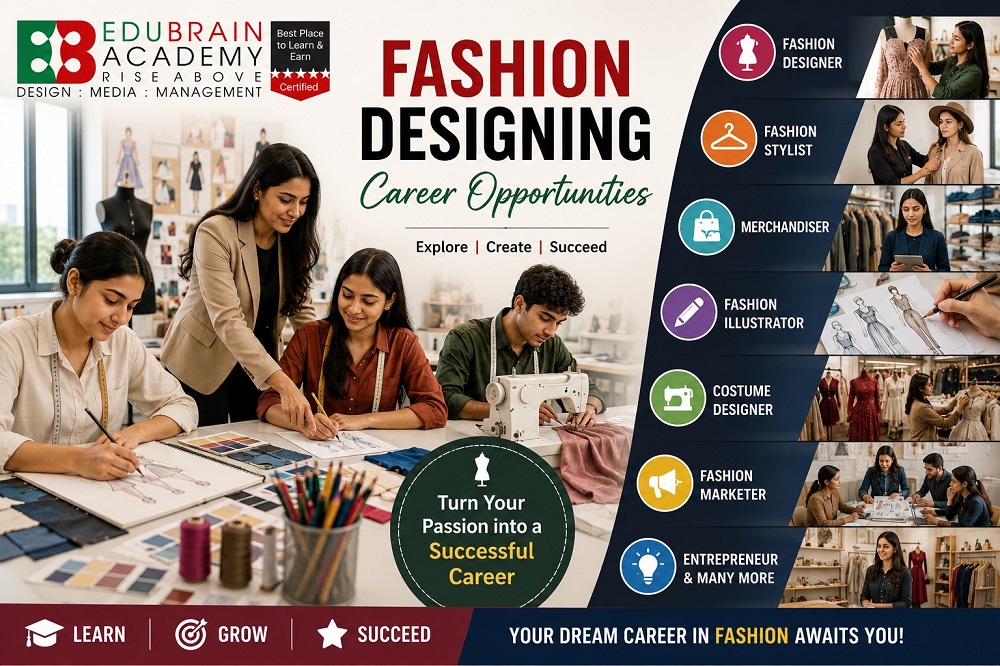
A fashion design qualification opens doors to multiple career paths. Students can choose creative, technical, managerial, or entrepreneurial roles based on their interests and long-term goals.
Fashion Designer
Fashion Designers create garments, accessories, and collections for fashion brands, retail companies, and independent labels. Their responsibilities include researching trends, developing concepts, selecting fabrics, creating sketches, and supervising garment production.
Fashion Stylist
Fashion Stylists work with celebrities, brands, photographers, magazines, television productions, and fashion campaigns. They create clothing combinations and visual presentations for different projects and audiences.
Fashion Merchandiser
Fashion Merchandisers coordinate between design, production, and sales teams. They study customer preferences, analyse market trends, manage product planning, and ensure collections meet business objectives.
Textile Designer
Textile Designers develop prints, patterns, textures, and fabric concepts used in apparel and home furnishing products. They work closely with manufacturers and fashion companies to produce innovative textile designs.
Costume Designer
Costume Designers create clothing for films, television shows, theatre productions, advertisements, and entertainment projects. They research characters, historical periods, and themes to design appropriate costumes.
Fashion Buyer
Fashion Buyers select clothing and accessories that retailers sell to customers. They evaluate trends, pricing, quality, customer demand, and seasonal collections before making purchasing decisions.
Retail Fashion Manager
Retail Fashion Managers oversee store operations, merchandising displays, customer experience, inventory planning, and sales performance for fashion brands and retail outlets.
Fashion Blogger or Content Creator
Many professionals build careers by creating fashion-related content for websites, YouTube channels, Instagram, and other digital platforms. They share styling tips, industry news, trend analysis, and fashion reviews.
Fashion Entrepreneur
Some graduates establish their own boutiques, clothing labels, design studios, or online fashion businesses, giving them the opportunity to develop independent brands and products.
Students planning their careers immediately after school should first understand the admission process, eligibility, and course options. Our guide on How to Become a Fashion Designer After 12th explains everything needed to begin a successful career in the fashion industry.
Skills Required for Fashion Designing Career Opportunities
Success in fashion design depends on developing both creative and technical skills.
Creativity and Design Thinking
Designers should be able to create original concepts, experiment with colours, fabrics, and silhouettes, and develop collections that reflect current market trends.
Fashion Illustration
Sketching helps designers communicate ideas before production begins. Learning both hand drawing and digital illustration strengthens presentation skills.
Pattern Making and Garment Construction
Understanding garment construction, cutting, stitching, measurements, and fitting allows designers to transform concepts into finished products.
Fabric and Textile Knowledge
Knowledge of different fabrics, fibres, textures, and materials helps professionals choose suitable textiles for different clothing categories.
CAD Software Skills
Fashion companies increasingly use Computer-Aided Design (CAD) software for technical drawings, digital illustrations, and pattern development. Learning industry-standard software improves employability.
Communication Skills
Fashion professionals regularly collaborate with buyers, manufacturers, clients, photographers, stylists, and marketing teams. Good communication supports effective teamwork.
Time Management
Fashion projects often follow strict production schedules and seasonal deadlines. Strong organisational skills help designers complete projects efficiently.
Business Knowledge
Understanding branding, pricing, marketing, merchandising, and customer behaviour benefits professionals who want to work in management roles or establish their own fashion businesses.
Students pursuing a Fashion Designing Course in Delhi often gain practical exposure through workshops, live projects, software training, internships, and portfolio development. Institutes such as Edu Brain Academy focus on industry-oriented training that helps students develop the skills required for professional careers.
Industries That Hire Fashion Professionals
Fashion graduates can explore opportunities across a wide range of industries.
Apparel Manufacturing
Manufacturing companies hire designers, merchandisers, production coordinators, and quality control professionals to develop garments for domestic and international markets.
Fashion Brands
Leading fashion brands recruit professionals for product development, design, visual merchandising, and retail operations.
Export Houses
Export companies produce garments for international buyers and require professionals skilled in production planning, merchandising, quality assurance, and buyer coordination.
Luxury Fashion
Luxury labels employ designers, stylists, and creative professionals to develop premium fashion collections and exclusive customer experiences.
E-commerce Companies
Online fashion platforms hire product designers, fashion stylists, content creators, catalogue managers, and merchandising professionals to support digital retail.
Entertainment Industry
Film, television, theatre, and advertising companies require costume designers and fashion consultants for creative productions.
Fashion Media
Fashion magazines, blogs, publishing companies, and digital media platforms employ fashion writers, editors, photographers, and stylists.
Textile Industry
Textile manufacturers hire designers to create prints, patterns, colour combinations, and innovative fabric collections.
Entrepreneurship
Many professionals launch their own clothing brands, boutiques, design studios, or online stores, creating independent business opportunities.
Salary and Career Growth in Fashion Design
Salary depends on education, practical skills, portfolio quality, employer, job role, location, and experience. Fresh graduates generally begin with entry-level positions where they gain practical industry exposure. As professionals build experience and develop specialised expertise, they can progress into senior design, merchandising, product development, retail management, creative direction, or business leadership roles.
Professionals who continue upgrading their skills, understand changing fashion trends, and build strong portfolios often find better career advancement opportunities over time. Entrepreneurs who establish successful fashion brands or boutiques also have the potential to expand their businesses and create additional employment opportunities.
How to Build a Successful Career in Fashion Design
Students can improve their career prospects by following a structured learning approach:
-
Develop strong fashion illustration and sketching skills.
-
Learn pattern making and garment construction.
-
Build knowledge of fabrics and textile science.
-
Master industry-standard design software.
-
Participate in workshops, internships, and live projects.
-
Create a professional portfolio showcasing your work.
-
Stay updated with changing fashion trends.
-
Improve communication, teamwork, and presentation skills.
-
Build professional networks through industry events and internships.
-
Continue learning through certifications and practical experience.
Students who want to specialise further or prepare for leadership, research, or academic careers can also consider pursuing a Master in Fashion Design after completing their undergraduate studies. Read More: How to Reduce College Fees Through Scholarships
Conclusion
The fashion industry offers diverse opportunities for students who enjoy creativity, design, and innovation. From apparel design and styling to merchandising, textile development, retail management, media, and entrepreneurship, multiple career paths match different interests and professional goals. Building technical skills, gaining practical experience, developing a strong portfolio, and staying updated with industry trends are essential for long-term success. By choosing the right educational programme and continuously improving their knowledge, students can prepare themselves for rewarding Fashion Designing Career Opportunities across India's growing fashion industry.
Frequently Asked Questions (FAQs)
1. What are the best Fashion Designing Career Opportunities?
Some popular career options include Fashion Designer, Fashion Stylist, Fashion Merchandiser, Textile Designer, Costume Designer, Fashion Buyer, Retail Fashion Manager, Fashion Blogger, and Fashion Entrepreneur.
2. Is fashion design a good career after 12th?
Yes. Students who complete Class 12 can pursue certificate, diploma, advanced diploma, or degree programmes and build careers in various sectors of the fashion industry.
3. Which industries hire fashion designers?
Fashion professionals work in apparel manufacturing, retail brands, luxury fashion, export houses, textile companies, e-commerce platforms, media organisations, and entertainment industries.
4. What skills are required for a career in fashion design?
Creativity, fashion illustration, garment construction, pattern making, CAD software, communication, fabric knowledge, time management, and portfolio development are valuable skills.
5. Which institute should I choose for a Fashion Designing Course?
Students should compare curriculum, faculty, practical training, internships, portfolio development, and placement assistance before selecting an institute. Institutions such as Edu Brain Academy focus on industry-oriented learning that helps students prepare for professional careers.