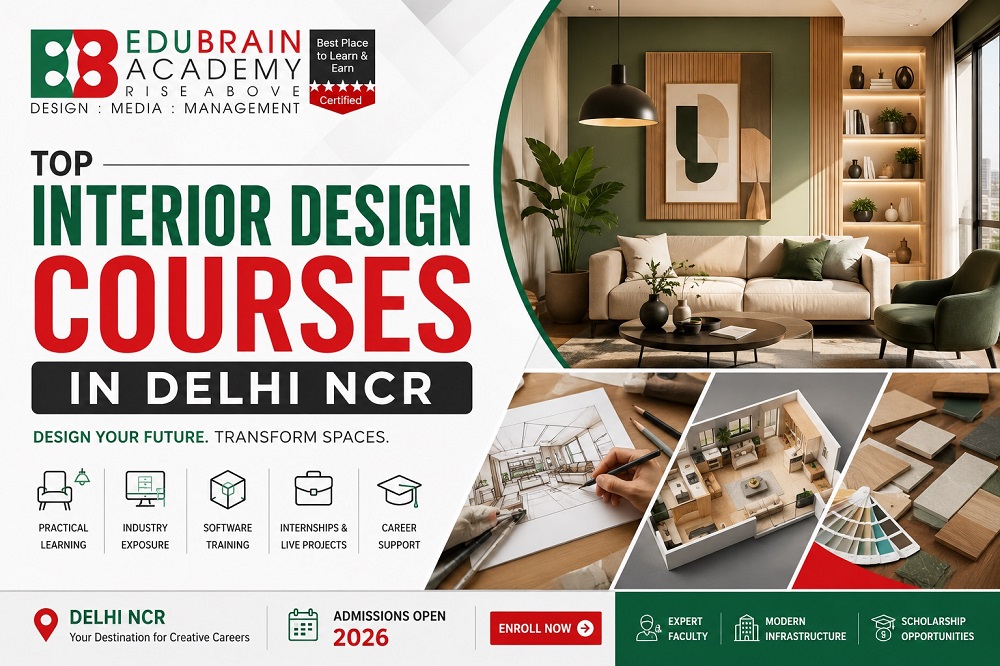
Interior Design has emerged as one of the fastest-growing creative professions in India. With increasing demand for well-designed homes, offices, retail spaces, hotels, and commercial environments, students are actively exploring professional education opportunities in this field. As a result, many aspiring designers search for the Top Interior Design Courses in Delhi NCR 2026 to gain industry-relevant skills, practical experience, and career-focused training.
Delhi NCR has become a preferred destination for Interior Design education because of its educational infrastructure, design industry exposure, growing real estate sector, and access to professional opportunities. Students can choose from certificate, diploma, advanced diploma, bachelor's, and specialized Interior Design programs based on their career goals.
This guide explains the top Interior Design courses, admission process, eligibility, career opportunities, and important factors students should consider before choosing a college or institute in Delhi NCR.
Quick Answer
Students looking for the Top Interior Design Courses in Delhi NCR should compare practical training, software learning, portfolio development, internships, scholarships, and industry exposure before selecting a college or institute.
Why Choose Interior Design as a Career?
Interior Design is a profession that combines creativity, technical knowledge, and practical problem-solving. Interior Designers create functional and visually appealing spaces that enhance the user experience.
Benefits of choosing Interior Design include:
-
Creative career opportunities
-
Growing industry demand
-
Entrepreneurship opportunities
-
Professional growth
-
Diverse specializations
-
Portfolio development
-
National and international career options
Students with creativity and an interest in architecture, design, and space planning often find Interior Design a rewarding profession.
Why Study Interior Design in Delhi NCR?
Delhi NCR is one of India's major educational and commercial hubs. Students benefit from exposure to professional design projects, architecture firms, construction companies, and interior design studios.
Advantages include:
-
Access to professional design institutions
-
Design exhibitions and workshops
-
Internship opportunities
-
Industry networking
-
Modern learning infrastructure
-
Exposure to commercial and residential projects
-
Growing real estate and construction sector
These advantages make Delhi NCR a preferred location for Interior Design education.
Students exploring professional education often compare different options before taking admission. A detailed Interior Designing Course in Delhi can help students understand practical training, software learning, portfolio development, and career opportunities available in the industry.
Why Delhi NCR is a Preferred Destination for Interior Design Education
Delhi NCR is one of India's largest educational and commercial regions, making it a popular destination for Interior Design students. The region offers access to architecture firms, interior design studios, residential and commercial projects, design exhibitions, workshops, and professional networking opportunities. Areas such as South Delhi, Noida, Gurugram, Faridabad, and Okhla provide exposure to modern design trends and real-world projects. Students studying Interior Design in Delhi NCR benefit from industry interaction, internship opportunities, and practical learning experiences that help them build professional skills and prepare for successful careers in the design industry.
Types of Interior Design Courses Available in Delhi NCR
Students can choose different courses depending on their educational background and professional goals.
Certificate Courses
Certificate programs provide a basic understanding of Interior Design concepts and are suitable for beginners.
Common learning areas include:
-
Interior Design fundamentals
-
Space planning basics
-
Color concepts
-
Furniture design
-
Design visualization
Duration
3 Months to 1 Year
Diploma in Interior Design
Diploma programs focus on practical and technical skills required in the industry.
Topics generally include:
-
Space planning
-
Interior materials
-
Design principles
-
Furniture concepts
-
AutoCAD basics
Duration
1 to 2 Years
Advanced Diploma in Interior Design
Advanced Diploma programs provide comprehensive industry-oriented training.
Students learn:
-
Residential Interior Design
-
Commercial Interior Design
-
Software training
-
3D visualization
-
Portfolio development
-
Live projects
Duration
1 to 3 Years
Bachelor's Degree in Interior Design
A Bachelor's Degree provides in-depth knowledge of Interior Design principles and professional practices.
Key subjects include:
-
Interior Architecture
-
Design Theory
-
Construction Techniques
-
Building Materials
-
AutoCAD
-
SketchUp
-
Revit
-
Project Management
Duration
3 to 4 Years
What Do Students Learn in Interior Design Courses?
Professional Interior Design programs generally cover:
-
Design Principles
-
Space Planning
-
Furniture Design
-
Color Theory
-
Material Studies
-
Lighting Design
-
Interior Styling
-
Construction Basics
-
AutoCAD
-
SketchUp
-
3D Modeling
-
Rendering Techniques
-
Portfolio Development
-
Project Presentation
These subjects help students develop both creative and technical expertise.
Eligibility for Interior Design Courses
Eligibility depends on the course level.
Certificate Courses
Open to students after Class 10th or Class 12th.
Diploma Programs
Generally require completion of Class 12th.
Bachelor's Degree
Students must complete Class 12th from a recognized board.
Advanced Programs
May require prior design education depending on the institution.
Before selecting a program, students should also compare Interior Design Course Fees to understand the investment required for certificate, diploma, advanced diploma, and degree-level education.
Interior Design Admission Process 2026
Admission procedures may vary between colleges and institutes.
Common admission steps include:
Step 1: Course Selection
Students choose the program based on their interests and career goals.
Step 2: Counselling
Academic counsellors provide course and career guidance.
Step 3: Application Submission
Students complete admission forms and submit required documents.
Step 4: Scholarship Evaluation
Some institutions provide scholarship opportunities based on eligibility.
Step 5: Admission Confirmation
Students complete fee formalities and enrollment procedures.
Skills Required for Interior Design Students
Successful Interior Designers often develop:
-
Creativity
-
Design thinking
-
Communication skills
-
Technical knowledge
-
Problem-solving abilities
-
Presentation skills
-
Project management
-
Attention to detail
-
Client interaction skills
Practical learning helps students strengthen these abilities.
Many aspiring professionals also explore How to Become an Interior Designer to understand educational pathways, skill development, software training, internships, and career opportunities in the design industry.
Importance of Software Training
Modern Interior Design relies heavily on technology.
Students should learn:
-
AutoCAD
-
SketchUp
-
Revit
-
Photoshop
-
3D Modeling Software
-
Rendering Tools
Software proficiency improves professional opportunities and project presentation skills.
Career Opportunities After Interior Design
Graduates can pursue various professional roles.
Interior Designer
Design residential and commercial interiors.
Space Planner
Develop efficient layouts and space utilization plans.
Furniture Designer
Create furniture concepts and product designs.
Interior Stylist
Improve the visual appeal of interiors.
Exhibition Designer
Design exhibition and event spaces.
Set Designer
Work in television, films, and entertainment industries.
Design Consultant
Provide professional advice for design projects.
Entrepreneur
Launch an independent Interior Design business.
How to Choose the Right Interior Design College
Students should evaluate:
-
Course curriculum
-
Faculty expertise
-
Practical learning
-
Software training
-
Infrastructure
-
Portfolio development
-
Workshops
-
Internship opportunities
-
Industry exposure
-
Career guidance
-
Placement assistance
-
Scholarship opportunities
Choosing the right educational environment significantly influences career growth.
Why Students Choose Edu Brain Academy
Students looking for Interior Design education often prefer institutions that combine practical learning with professional development.
Edu Brain Academy supports students through:
-
Industry-oriented curriculum
-
Practical projects
-
Software training
-
Portfolio development
-
Workshops and seminars
-
Internship opportunities
-
Industry exposure
-
Scholarship support through EDUSET
-
Career guidance
-
Placement assistance
The focus on hands-on learning helps students develop industry-relevant skills.
Future Scope of Interior Design
The Interior Design industry continues to grow because of:
-
Urban development
-
Smart homes
-
Sustainable design
-
Commercial expansion
-
Hospitality sector growth
-
Luxury interior projects
-
Modern workspace design
Interior Designers can explore opportunities across India and international markets.
Conclusion
Interior Design offers exciting opportunities for students who enjoy creativity, innovation, and problem-solving. Choosing the right course and institution helps students develop technical expertise, practical experience, and professional confidence required for long-term success.
Students searching for the Top Interior Design Courses in Delhi NCR 2026 should carefully evaluate course quality, practical training, software learning, internships, portfolio development, industry exposure, and career support before making a decision. A strong educational foundation can help aspiring designers build rewarding careers in the Interior Design industry.
Frequently Asked Questions (FAQs)
1. Which are some popular Interior Design courses in Delhi NCR?
Students can choose certificate, diploma, advanced diploma, bachelor's degree, and specialized Interior Design programs depending on their career goals.
2. What is the eligibility for Interior Design courses?
Most diploma and degree programs require students to complete Class 12th from a recognized board.
3. How long does an Interior Design course take?
Course duration ranges from a few months for certificate programs to three or four years for degree-level education.
4. What software do Interior Design students learn?
Students commonly learn AutoCAD, SketchUp, Revit, Photoshop, and various 3D modeling tools.
5. Are scholarships available for Interior Design students?
Many institutions offer scholarship opportunities based on eligibility criteria and scholarship assessments.
6. What career opportunities are available after Interior Design?
Students can become Interior Designers, Space Planners, Furniture Designers, Stylists, Consultants, and Entrepreneurs.
7. Why is portfolio development important in Interior Design?
A portfolio helps students showcase creativity, technical skills, and project experience.
8. Does practical learning help Interior Design students?
Yes. Practical learning improves confidence, technical knowledge, and industry readiness.
9. Can students pursue Interior Design after Class 12th?
Yes. Students from different educational backgrounds can pursue Interior Design courses after Class 12th.
10. Why is Delhi NCR considered a good location for Interior Design education?
Delhi NCR offers educational infrastructure, industry exposure, internships, networking opportunities, and professional learning environments.