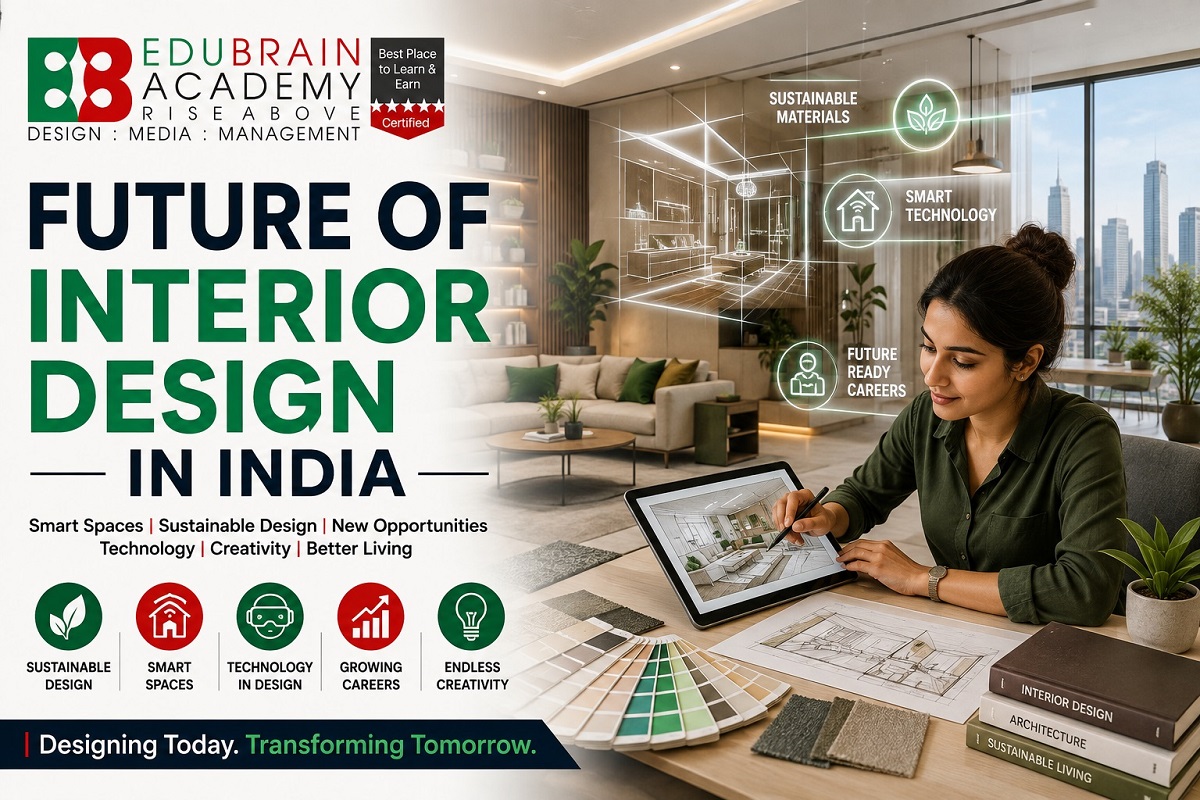
The Future of Interior Design in India is being shaped by changing lifestyles, urbanisation, real estate development, technology, sustainability, and increasing demand for functional and personalised spaces. Interior design is no longer limited to selecting colours, furniture, and decorative elements. Modern professionals work across space planning, materials, lighting, 2D and 3D visualisation, smart technology, sustainability, client management, and project execution.
Indian interiors are also evolving with the growing influence of technology and changing consumer expectations. Recent industry discussions highlight sustainable materials, smart homes, AI-assisted design, digital visualisation, flexible spaces, and culturally relevant design as important areas for the future.
For students considering interior design as a career, this changing environment creates opportunities across residential interiors, commercial spaces, hospitality, retail, real estate, furniture, workplace design, visualisation, and independent consultancy.
This guide explains the future scope of interior design in India, upcoming trends, technology, career opportunities, required skills, education options, and how aspiring designers can prepare for the changing industry.
Is Interior Design a Good Career in India?
Yes, interior design can be a promising career for students and creative professionals who combine creativity with technical knowledge, practical experience, communication skills, and an understanding of how spaces function.
Today's interior designers may work with architects, contractors, developers, furniture manufacturers, lighting specialists, technology providers, vendors, and clients. This multidisciplinary nature creates career opportunities across residential interiors, commercial spaces, hospitality, retail, workplace design, and independent consultancy.
Students interested in building these skills can explore a relevant Interior Design Course in Delhi to develop practical knowledge of space planning, technical drawing, design software, 3D visualisation, materials, and project development.
The profession is also becoming increasingly technology-driven. CAD, 3D modelling, rendering, BIM, virtual visualisation, and AI-assisted design tools are changing how concepts are developed, presented, and refined. This makes continuous learning and practical skill development increasingly important for future interior designers.
Why Is the Interior Design Industry Growing in India?
Several factors are contributing to the growth and transformation of the Indian interior design industry.
Urbanisation and Changing Lifestyles
As Indian cities grow, residential and commercial spaces are becoming more diverse. Apartments, compact homes, co-working spaces, offices, retail outlets, cafés, restaurants, hotels, and mixed-use developments all require thoughtful space planning.
Consumers are also looking for interiors that reflect their lifestyle, personality, culture, and functional requirements. This creates opportunities for designers who can balance aesthetics, comfort, functionality, sustainability, and budget.
Growth of Residential and Commercial Spaces
Residential development remains an important area for interior design professionals. At the same time, offices, retail stores, hospitality venues, restaurants, and other commercial environments require specialised design solutions.
This creates demand for professionals with knowledge of residential interior design, commercial interior design, workplace planning, hospitality design, retail interiors, furniture layouts, lighting, and material selection.
Increasing Interest in Sustainable Interiors
Sustainability is becoming an important consideration in modern interior projects. Designers are increasingly exploring responsible materials, energy-efficient lighting, natural ventilation, durable finishes, waste reduction, and healthier indoor environments.
Current Indian design education and industry discussions also highlight sustainable materials, local resources, climate-responsive design, and the relationship between traditional Indian design practices and modern interiors.
Future Trends in Interior Design in India
The future of interior design will be influenced by technology, environmental awareness, changing lifestyles, and demand for more personalised spaces.
1. Sustainable Interior Design
Sustainable interior design is likely to become increasingly important in residential and commercial projects.
Future designers may work more extensively with:
-
Recycled and reclaimed materials
-
Bamboo and natural materials
-
Energy-efficient lighting
-
Low-impact finishes
-
Durable furniture
-
Natural ventilation
-
Indoor plants
-
Waste-reduction strategies
-
Locally sourced materials
Sustainability is also creating opportunities for professionals who understand both aesthetics and environmental performance.
2. Smart Homes and Connected Interiors
Smart-home technology is changing the relationship between interior design and technology.
Modern spaces can incorporate:
-
Automated lighting
-
Smart climate control
-
Security systems
-
Connected appliances
-
Automated curtains
-
Energy monitoring
-
Voice-controlled systems
-
Home entertainment systems
The future interior designer may therefore need to understand how technology integrates with furniture, layouts, electrical planning, lighting, and user experience.
Research on AI-integrated interiors also points toward adaptive environments that combine AI, IoT, personalisation, energy optimisation, and human-centred design.
3. Artificial Intelligence in Interior Design
AI is becoming an important supporting technology in the design process.
AI-assisted tools can help designers with:
-
Concept generation
-
Mood boards
-
Style exploration
-
Space-planning ideas
-
Material combinations
-
Design visualisation
-
Presentation concepts
-
Layout experimentation
However, AI-generated concepts still require professional judgement. A designer must consider actual dimensions, materials, construction conditions, budgets, ergonomics, safety, client requirements, and cultural context.
Research on AI and Indian interior design specifically highlights the importance of adapting technology to India's regional climates, materials, lifestyles, and cultural requirements.
4. 3D Visualisation, AR and VR
3D visualisation is becoming an essential part of modern interior design.
Designers can use 3D modelling and rendering to show clients how a proposed space may look before execution. AR and VR can take this further by allowing clients to experience or explore spaces digitally.
These technologies can improve:
-
Client presentations
-
Design revisions
-
Material selection
-
Space planning
-
Project communication
-
Design decision-making
Technology-led workflows are expected to remain an important part of the future interior design profession.
5. Biophilic Interior Design
Biophilic design focuses on strengthening the connection between people and nature.
Future Indian interiors may increasingly incorporate:
-
Indoor plants
-
Natural light
-
Natural textures
-
Green walls
-
Courtyards
-
Natural materials
-
Outdoor-indoor connections
-
Improved ventilation
This approach can be particularly relevant to urban homes and workplaces where access to natural environments may be limited.
6. Multifunctional and Flexible Spaces
Limited urban space is encouraging designers to create interiors that serve multiple purposes.
Examples include:
-
Foldable furniture
-
Modular storage
-
Sliding partitions
-
Convertible workspaces
-
Multipurpose rooms
-
Built-in furniture
-
Flexible office layouts
Space optimisation and multifunctional design can become increasingly important as urban living patterns change.
7. Personalised Interior Design
Future clients are likely to expect increasingly personalised solutions.
Instead of following a standard design template, professionals may need to understand:
-
Client lifestyle
-
Family requirements
-
Work patterns
-
Budget
-
Cultural preferences
-
Personal aesthetics
-
Accessibility requirements
-
Future needs
This makes user-centred design and client consultation important skills for future professionals.
8. Indian and Regional Design Influences
The future of Indian interior design will not be defined only by international trends.
Designers can combine contemporary interiors with:
-
Indian crafts
-
Regional materials
-
Traditional furniture
-
Local textiles
-
Indigenous techniques
-
Regional colours
-
Vernacular design principles
This creates an opportunity to develop interiors that are modern while retaining cultural identity.
AI research in Indian interior design also highlights the importance of preserving regional materials, climate-responsive approaches, local lifestyles, and cultural context.
Future Scope of Interior Design in India
The scope of interior design in India extends across several industries.
Residential Interior Design
Residential designers work on apartments, villas, independent houses, kitchens, bedrooms, living rooms, renovation projects, and complete homes.
Commercial Interior Design
Commercial designers work on offices, co-working spaces, retail stores, restaurants, cafés, showrooms, and corporate environments.
Hospitality Interior Design
Hotels, resorts, restaurants, cafés, entertainment venues, and hospitality businesses require designers who understand guest experience, functionality, branding, lighting, materials, and circulation.
Workplace Design
Modern workplaces increasingly require flexible layouts, collaborative spaces, meeting areas, employee-focused environments, ergonomic furniture, acoustic planning, and technology integration.
Retail and Experiential Design
Retail design combines space planning, visual merchandising, customer experience, branding, lighting, and product presentation.
Real Estate and Property Development
Interior designers can work with developers on model apartments, sample homes, clubhouses, common areas, show apartments, and commercial properties.
Furniture and Product Design
Interior designers with knowledge of materials, ergonomics, proportions, and manufacturing can also explore furniture and product development.
Exhibition and Set Design
Design skills can also be applied to exhibitions, events, media sets, museums, installations, and temporary environments.
Interior Design Consultancy
Experienced professionals can establish independent consultancy practices and work directly with residential or commercial clients.
Career Opportunities in the Future of Interior Design
The evolving industry can create opportunities for professionals in roles such as:
-
Interior Designer
-
Junior Interior Designer
-
Senior Interior Designer
-
Interior Design Consultant
-
Space Planner
-
CAD Designer
-
3D Visualizer
-
BIM Designer
-
Sustainable Design Consultant
-
Workplace Designer
-
Hospitality Interior Designer
-
Retail Interior Designer
-
Furniture Designer
-
Lighting Design Specialist
-
Project Coordinator
-
Design Project Manager
-
Creative Director
-
Interior Design Entrepreneur
The future is likely to favour professionals who combine creative design skills with technology, sustainability, project management, and business knowledge.
Skills Interior Designers Will Need in the Future
Creativity alone may not be enough for the future interior design industry. Professionals will need a combination of design, technical, digital, and interpersonal skills.
Space Planning
Understanding dimensions, circulation, furniture placement, ergonomics, functionality, and spatial relationships remains fundamental.
Technical Drawing
Knowledge of floor plans, elevations, sections, construction drawings, and design documentation helps designers communicate ideas accurately.
Interior Design Software
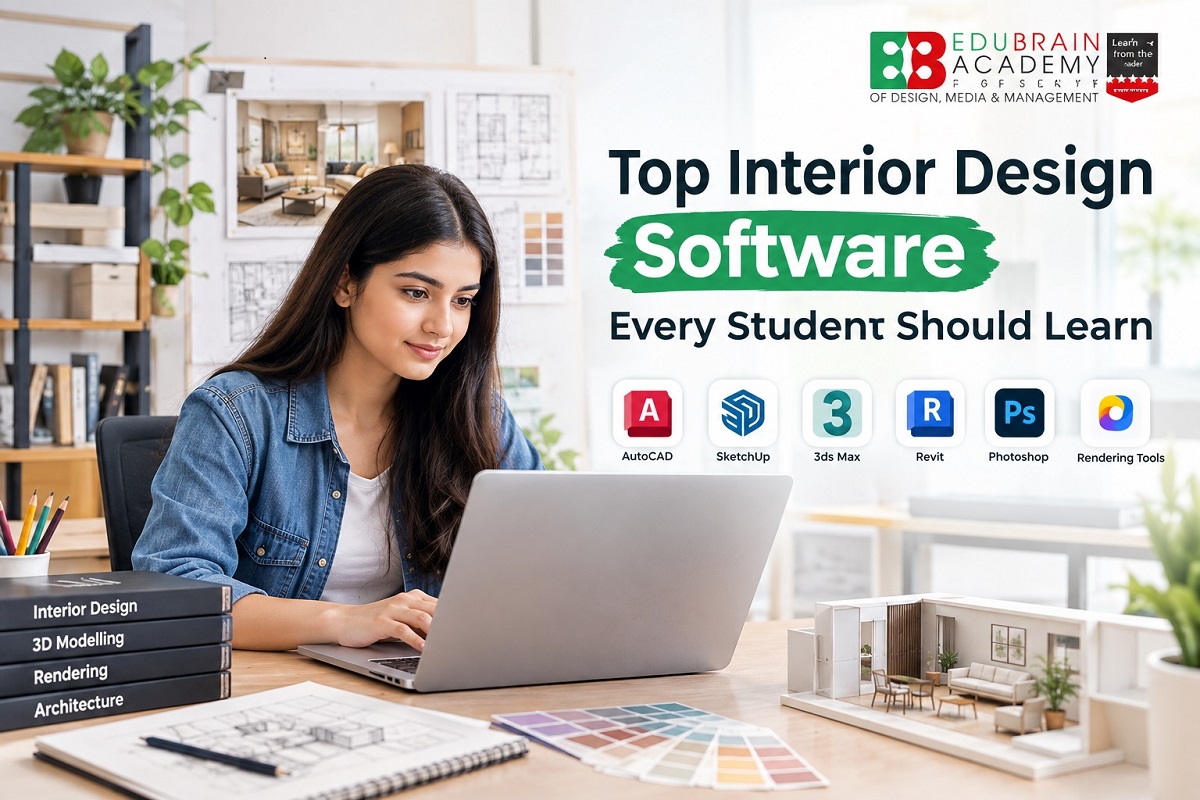
Professionals can benefit from learning tools such as AutoCAD, SketchUp, 3ds Max, Revit, V-Ray, Photoshop, and other visualisation platforms.
3D Visualisation
3D modelling and rendering skills can help designers communicate design concepts effectively.
AI and Digital Design Tools
Future designers should understand how AI can support concept development, visualisation, research, and repetitive workflows while maintaining human judgement.
Material Knowledge
Understanding materials, finishes, durability, maintenance, sustainability, cost, and applications is essential for practical design.
Sustainability
Knowledge of sustainable materials, energy efficiency, indoor environmental quality, waste reduction, and climate-responsive design can strengthen professional capabilities.
Communication and Client Management
Interior designers regularly communicate with clients, architects, contractors, vendors, manufacturers, and project teams.
Project Management
Budgeting, scheduling, vendor coordination, documentation, site supervision, and quality control become increasingly important as designers take responsibility for larger projects.
Portfolio Development
A strong portfolio should demonstrate:
-
Floor plans
-
Mood boards
-
Material boards
-
Technical drawings
-
3D renders
-
Furniture layouts
-
Concept development
-
Completed projects
Will AI Replace Interior Designers?
AI is likely to transform the interior design workflow rather than completely replace professional designers.
AI can generate ideas quickly, but it cannot independently take responsibility for every real-world design decision.
Interior designers still need to understand:
-
Site conditions
-
Client expectations
-
Budget limitations
-
Building requirements
-
Materials
-
Construction
-
Ergonomics
-
Safety
-
Vendor coordination
-
Project execution
The future professional will therefore need to know how to use AI as a design assistant while maintaining human creativity, judgement, cultural understanding, and responsibility. This human-technology balance is also emphasised in recent discussions about AI and Indian interior design.
Education and Training for the Future of Interior Design
Students planning a career in interior design should look for education that combines design fundamentals with practical and digital skills.
Depending on their education level and career goals, students can explore:
-
Diploma programmes
-
B.Des programmes
-
B.Sc. Interior Design programmes
-
Postgraduate programmes
-
Software certification courses
-
Short-term skill programmes
A strong programme should ideally provide exposure to space planning, technical drawing, materials, lighting, design software, 3D visualisation, project work, portfolio development, and practical assignments.
How Edu Brain Academy Can Help Students Prepare for the Future
The future of interior design requires professionals who can combine creative thinking with technical knowledge, software skills, practical project experience, and portfolio development.
Edu Brain Academy focuses on career-oriented interior design learning that can help aspiring designers develop industry-relevant capabilities in areas such as space planning, technical drawing, design software, 3D visualisation, materials, project work, and portfolio development.
Practical assignments can help students understand how design concepts move from initial ideas to drawings, visualisations, material selections, and project presentations.
A strong portfolio can also help students demonstrate their creativity, technical skills, design thinking, and project experience when applying for internships and entry-level opportunities.
However, completing an interior course does not guarantee a specific job or salary. Career outcomes depend on individual skills, portfolio quality, practical experience, communication, specialisation, location, employer, and continued professional development.
Future of Interior Design in Tier-2 and Tier-3 Cities
The future of interior design is not limited to major metropolitan cities.
As residential development, retail, hospitality, offices, and lifestyle businesses expand into emerging cities, designers can explore opportunities in Tier-2 and Tier-3 markets.
This creates opportunities for professionals who understand local consumer preferences while also applying contemporary design principles, technology, sustainability, and efficient space planning.
Designers who understand regional architecture, local materials, vernacular design, climate-responsive interiors, and modern digital tools may be particularly well positioned to serve these markets.
Challenges for Future Interior Designers
The changing industry also brings several challenges.
Increasing Competition
More students and professionals are entering design-related fields. A strong portfolio and specialised skills can therefore become important differentiators.
Rapid Technology Changes
AI, rendering platforms, CAD tools, BIM workflows, and other digital technologies continue to evolve. Professionals will need to keep upgrading their skills.
Changing Client Expectations
Clients increasingly expect realistic visualisations, faster communication, personalised solutions, transparent budgets, and efficient project execution.
Sustainability Requirements
Designers may increasingly need to understand environmental impact, responsible materials, energy efficiency, and indoor environmental quality.
Business Skills
Independent designers need more than creative ability. Marketing, client acquisition, budgeting, contracts, vendor management, and project coordination can also be important.
How to Prepare for a Career in the Future of Interior Design
Students can follow a practical pathway:
Complete Class 12 → Choose an Interior Design Programme → Learn Design Software → Develop Technical Skills → Complete Practical Projects → Build a Portfolio → Gain Internship Experience → Apply for Entry-Level Jobs → Develop a Specialisation → Progress into Senior or Independent Roles
Students should not focus only on obtaining a qualification. Continuous learning, practical exposure, software knowledge, portfolio development, communication, and awareness of industry trends can all contribute to long-term career growth.
What Will Interior Design Look Like in India in the Future?
The future of interior design in India is likely to be more technology-enabled, sustainable, personalised, flexible, and focused on human experience.
Future design projects may increasingly combine:
-
AI-assisted design
-
3D and immersive visualisation
-
Smart-home technology
-
Sustainable materials
-
Energy-efficient solutions
-
Flexible furniture
-
Wellness-focused spaces
-
Regional design influences
-
Digital client presentations
-
Data-informed space planning
Technology will continue to evolve, but the fundamental purpose of interior design will remain the same: creating spaces that are functional, comfortable, visually engaging, and appropriate for the people who use them. Read More: Interior Designer Salary in India
Conclusion
The Future of Interior Design in India offers diverse opportunities as residential, commercial, hospitality, retail, workplace, and lifestyle environments continue to evolve. Technology, artificial intelligence, sustainable design, smart homes, 3D visualisation, flexible spaces, wellness, and personalised interiors are changing the profession. At the same time, creativity, cultural understanding, communication, problem-solving, and professional judgement remain essential.
For aspiring designers, the future is not simply about learning how to decorate a space. Successful professionals will need to understand space planning, materials, technology, sustainability, digital visualisation, project management, client requirements, and real-world execution. Students who begin developing these skills early can prepare themselves for the changing industry. A strong education, practical experience, internship exposure, relevant software skills, and a professional portfolio can provide a solid foundation for a long-term career in interior design.