An Interior Designing Institute in West Delhi can help students develop the creative, technical and practical skills required to build a career in interior design. West Delhi and its surrounding areas, including Rajouri Garden, Ramesh Nagar, Maya Puri, Kirti Nagar, Moti Nagar, Punjabi Bagh, Paschim Vihar, Janakpuri, Tilak Nagar, Shadipur, Subhash Nagar, Tagore Garden, Vikaspuri, Uttam Nagar, Patel Nagar and Naraina, are well connected and accessible for students looking for interior design education.
Modern interior design goes beyond decorating rooms. Students learn about space planning, colour theory, materials, furniture, lighting, technical drawings, CAD software, 3D visualization, sustainable design and digital design tools. Practical projects and studio-based learning also help students understand how design concepts can be developed for residential, commercial, hospitality and retail spaces.
When exploring an interior design institute in West Delhi, students can compare important factors such as the curriculum, practical training, software education, faculty experience, project work, portfolio development, course duration, fees and career preparation. These factors can provide a clearer understanding of what an institute offers before admission.
This guide covers interior design courses, fees, eligibility, practical training, software skills, career opportunities and admission information to help students understand what they can expect from interior design education in West Delhi.
Quick Answer
A good interior designing institute in West Delhi should provide a combination of design fundamentals, space planning, technical drawing, materials, furniture, lighting, interior design software, 3D visualization, practical projects, and portfolio development.
Students should look for a curriculum that balances creative and technical education. Learning software such as AutoCAD, SketchUp, 3ds Max or Revit can help students develop digital design and visualization skills, while practical assignments and site-related activities can help them understand how design concepts work in real spaces.
Before enrolling, students should compare the institute's curriculum, faculty, course duration, practical exposure, software training, project work, portfolio development and career preparation.
Why Study Interior Design in West Delhi?
West Delhi provides students with convenient access to educational institutions as well as a wide range of residential and commercial environments. Areas such as Rajouri Garden, Ramesh Nagar, Kirti Nagar, Moti Nagar, Punjabi Bagh, Paschim Vihar, Janakpuri, Tilak Nagar, Subhash Nagar and Tagore Garden are connected to different parts of Delhi, making the region accessible for many learners.
Interior design students can benefit from studying in an urban environment where they can observe different types of residential, retail, office and hospitality spaces.
Access to Design Education
Students living in West Delhi can consider institutes located around major neighbourhoods and metro-connected areas. Convenient access can be particularly useful for courses involving regular studio sessions, practical assignments, workshops and project work.
Exposure to Different Types of Spaces
West Delhi includes established residential neighbourhoods, shopping areas, offices, restaurants, retail outlets and other commercial spaces. These environments can help students observe how different spaces are planned and designed for specific users.
Convenient Location for Students
Students from Vikaspuri, Uttam Nagar, Janakpuri, Patel Nagar, Naraina and nearby areas may also find West Delhi a practical location for pursuing design education.
However, location should not be the only deciding factor. Students should always compare the quality and relevance of the curriculum before selecting an institute.
What Does an Interior Designing Institute Teach?
Interior design education combines creative thinking with technical knowledge. Students learn how to analyse a space, understand user requirements, develop concepts, prepare drawings and communicate design ideas.
A well-structured Interior Designing course in West Delhi may include design principles, colour, space planning, materials, furniture, lighting, construction basics, computer-aided design, 3D visualization, and professional presentation.
Interior Design Fundamentals
Students first develop an understanding of the basic principles that influence interior spaces.
These may include:
-
Balance
-
Proportion
-
Scale
-
Rhythm
-
Harmony
-
Contrast
-
Emphasis
-
Colour
-
Texture
-
Form and composition
Understanding these principles allows students to create interiors that are both visually attractive and functional.
Space Planning and Design Development
Space planning is one of the most important skills in interior design. Students learn to analyse dimensions, circulation, furniture placement, functional zones and user requirements.
They also learn how to develop an initial concept into a more detailed interior design proposal.
Materials, Furniture and Finishes
Interior designers need practical knowledge of materials and finishes. Students may study wood, glass, metal, stone, tiles, laminates, fabrics, paints and other materials used in interior projects.
Furniture selection, furniture layouts and basic furniture design can also form part of the learning process.
Lighting and Colour
Lighting and colour strongly influence the atmosphere and functionality of a space. Students learn how natural and artificial lighting interact with colours, materials and furniture.
They may also develop colour palettes and lighting concepts for different types of interiors.
Interior Design Courses You Can Consider
The right course depends on your educational background, career goals and the level of expertise you want to develop.
Certificate Courses
Certificate programs are generally shorter and can be suitable for beginners or learners who want to develop skills in a particular area.
Specialized certificate programs may focus on subjects such as interior styling, design software, or other related areas.
Diploma and Professional Courses
Diploma and professional programs can provide focused training in interior design. Depending on the curriculum, students may study design fundamentals, space planning, materials, software, visualization, and practical projects.
These courses can be suitable for learners who want career-oriented education within a shorter timeframe than a traditional degree.
Bachelor’s Degree Programs
Bachelor's degree programs in fashion design in India generally provide broader and more detailed academic training in interior design.
Students may study design theory, interior architecture, technical subjects, materials, construction, visualization, and professional practice over a longer period.
Advanced and Master-Level Programs
Advanced programs can be suitable for students and professionals who want to develop deeper knowledge or specialize in particular areas of interior design, design management, visualization or related disciplines.
Students should check the eligibility requirements before selecting an advanced program.
What Will You Learn During an Interior Design Course?
A professional interior design curriculum should gradually develop creative, technical, and practical skills.
Design Principles and Visual Communication
Students learn how to communicate ideas through sketches, concept boards, mood boards, material boards, drawings and presentations.
Visual communication is important because designers must explain their concepts to clients, contractors, consultants and other professionals.
Space Planning and Interior Architecture
Students learn how to organise spaces according to function, movement, furniture requirements and user needs.
Depending on the program, students may also study basic interior architecture, building elements and construction concepts.
Technical Drawing and Documentation
Interior designers need to communicate ideas accurately through drawings.
Students may learn to prepare:
-
Floor plans
-
Furniture layouts
-
Elevations
-
Sections
-
Ceiling plans
-
Lighting layouts
-
Material details
-
Basic construction drawings
Materials and Construction Basics
Understanding construction and materials helps designers make practical decisions about durability, maintenance, cost, and appearance.
Students can develop an understanding of how materials are selected and applied in different interior environments.
Furniture and Interior Styling
Furniture contributes to both functionality and visual identity. Students learn about furniture proportions, placement, styles and materials. Interior styling also introduces the use of accessories, artwork, textiles, textures and decorative elements to create a cohesive environment.
Why Interior Design Software Skills Matter
Digital tools are now an important part of the interior design workflow. Software allows designers to prepare technical drawings, develop 3D models and present design concepts more effectively.
AutoCAD and Technical Drawings
AutoCAD is widely used for preparing accurate 2D drawings and technical documentation.
Students can learn to develop floor plans, furniture layouts, elevations and other drawings using computer-aided design tools.
3D Modelling and Visualization
3D visualization allows students and clients to understand how an interior concept may look before implementation.
Depending on the institute and curriculum, students may work with 3D modelling and rendering software such as 3ds Max.
SketchUp and Revit
SketchUp can be used for developing three-dimensional concepts and presentations, while Revit supports building information modelling and coordinated design workflows.
Students should check the specific software included in the course they are considering.
Digital and AI-Assisted Design
Artificial intelligence is increasingly influencing creative and design workflows. AI-based tools can assist with concept exploration, visual references, ideation and certain stages of the design process.
However, AI should complement rather than replace fundamental interior design skills such as space planning, technical drawing, material knowledge and design judgement.
How Practical Training Builds Professional Skills
Interior design is a practical profession, so students need opportunities to apply classroom knowledge to realistic design problems.
Studio Projects
Studio projects allow students to develop design concepts from an initial brief through planning, drawings, material selection and final presentation.
Projects may include residential rooms, apartments, offices, retail spaces, restaurants or other environments.
Site Visits and Measurements
Site visits can help students understand actual dimensions, existing conditions, materials and construction challenges.
Learning how to measure and document a space can become valuable when students begin working on real interior projects.
Material and Sample Studies
Material studies help students understand how different surfaces, colours, textures and finishes work together.
Students may create material boards and sample presentations to communicate their design decisions.
Project-Based Learning
Project-based learning allows students to work through a complete design process rather than studying individual topics separately.
It can help students understand the relationship between creativity, technical requirements, client expectations, budget and implementation.
Why Portfolio Development Is Important
A portfolio is one of the most important tools for an aspiring interior designer.
Employers, clients and design studios can use portfolios to understand a designer's creative approach, technical skills, design thinking and presentation ability.
What to Include in an Interior Design Portfolio
A student portfolio may include:
-
Concept development
-
Hand sketches
-
Mood boards
-
Space planning
-
Floor plans
-
Elevations
-
Material boards
-
Furniture concepts
-
Lighting concepts
-
3D visualizations
-
Completed academic projects
-
Design process documentation
Show the Design Process
A strong portfolio should not only show attractive final renders.
It should demonstrate how a project developed from the initial brief to research, concept development, planning, technical drawings, and final visualization.
This gives employers and clients a better understanding of the student's problem-solving and design abilities.
How to Choose the Right Interior Design Institute in West Delhi
When choosing an institute, students should look beyond promotional claims and compare important factors such as the curriculum, practical training, software education, faculty guidance, portfolio development, location, course duration, fees, and career support.
Check the Curriculum
A good interior design course should combine creative concepts with technical and practical knowledge. Students should look for subjects such as design principles, visual communication, space planning, interior architecture, materials and construction, furniture design, lighting, CAD, sustainable design, building services, and 3D visualization.
For example, the West Delhi campus curriculum of Edu Brain Academy of Design, Media & Management covers areas including space planning, material studies, CAD, furniture design, lighting and acoustics, sustainable interior design, building services, and 3D modeling and visualization.
Review Practical Training
Interior design is a hands-on profession, so students should check how much practical learning is included in the program.
Look for studio assignments, design projects, space-planning exercises, material studies, measurements, site-related activities, workshops, and project-based learning. Practical exposure can help students understand how design concepts are developed and applied to residential and commercial spaces.
Evaluate Software Training
Digital tools are an important part of modern interior design. Before enrolling, students should check whether the course includes practical training in relevant design software.
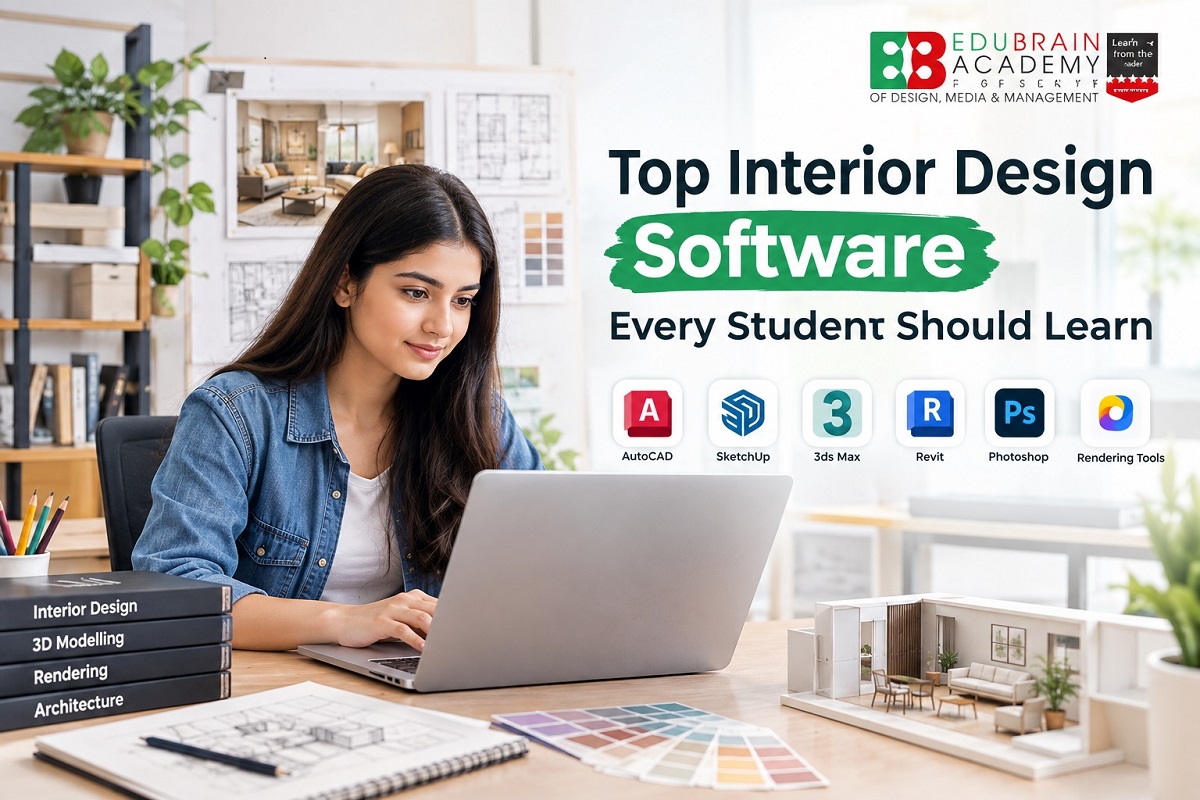
Depending on the selected program, software training may include AutoCAD, SketchUp, 3ds Max, Revit, and other tools used for drafting, 3D modeling, and visualization. More importantly, students should receive hands-on experience applying these tools to actual design projects.
Consider Faculty and Learning Environment
Students should evaluate the faculty, studio environment, classroom facilities, project guidance, and feedback provided during the course.
A supportive learning environment can help students develop both creative thinking and technical design skills while working on assignments and practical projects.
Ask About Portfolio Development
Portfolio development is an important factor when comparing an interior design institute.
Students should ask how the interior design institute in Delhi helps them develop and present their design projects. A professional portfolio can showcase concept development, space planning, technical drawings, software skills, 3D visualization, material selection, and completed projects for internships, employment, freelance opportunities, or further education.
Check Location and Metro Connectivity
Location can be particularly important for students attending regular studio classes, practical sessions, workshops, and project work.
For students from Ramesh Nagar, Rajouri Garden, Punjabi Bagh, Janakpuri, Patel Nagar, Kirti Nagar, Moti Nagar, Tilak Nagar, Subhash Nagar, and nearby West Delhi areas, convenient daily travel can make attending classes easier.
Edu Brain's West Delhi campus is located at C-134, Ramesh Nagar, near Metro Gate No. 3, New Delhi – 110015. The location is accessible from Ramesh Nagar Metro on the Blue Line, while Rajouri Garden Metro provides connectivity through the Blue and Pink Lines.
Compare Interior Design Course Fees and Duration
Course fees should be compared with the course duration, curriculum, practical training, software exposure, facilities, portfolio development and career support. Students should also check whether admission, examination, assessment or certification charges are included in the course fee.
Edu Brain Academy offers interior design programs at different levels and durations. The current course fees are as follows:
| Interior Design Course | Duration | Fee |
|---|---|---|
| Certificate Course in Interior Styling | 3 Months | ₹30,000 PA |
| Certificate Course in Vastu Shastra | 3 Months | ₹60,000 |
| Diploma in Interior Software | 6 Months | ₹90,000 PA |
| Professional Diploma in Interior Design & Vastu Shastra | 1 Year | ₹1,30,000 |
| Advance Diploma in Interior Design & Architecture | 2 Years | ₹1,30,000 PA |
| Master Diploma in Interior Design | 2 Years | ₹1,30,000 PA |
| Bachelor in Interior Design | 3 Years | ₹1,50,000 PA |
Students should confirm the applicable fee and payment schedule with Edu Brain Academy before enrolment.
The fee can vary depending on the program, curriculum, practical training and other academic components. Before admission, students should confirm the latest fee structure, payment schedule and any applicable admission, assessment, examination or certification charges with the admissions team.
Get Interior Design Course Details
Looking for an Interior Designing Institute in West Delhi? Get complete information about interior design courses, fees, eligibility, practical training and admission options.
Call/WhatsApp: 9319336333, Email: eduinfo@edubrain.in
Check Career Support and Industry Exposure
Students should also understand what type of career support is available during and after the course.
Ask about portfolio guidance, internship opportunities, industry interaction, interview preparation, career counselling, and placement assistance. These factors can help students transition from classroom learning toward professional opportunities.
Compare Before You Enrol
Before choosing an interior design training institute in West Delhi, students should visit the campus where possible, review the curriculum, understand the practical training, check the software included, examine student projects and portfolios, compare course duration and fees, and confirm the latest admission requirements.
The right institute should be selected based on the overall learning experience, practical exposure, technical training, portfolio development, accessibility, and value offered by the course, rather than fees or promotional claims alone.
Who Can Join an Interior Design Course?
Interior design programs can be suitable for learners from different educational backgrounds, depending on the eligibility requirements of each course.
Students After Class 12
Students who have completed Class 12 can explore certificate, diploma, and undergraduate programs according to their qualifications and career objectives.
Graduates and Career Changers
Graduates from other disciplines can consider interior design as a new career path. A structured program can help them develop foundational creative and technical skills.
Working Professionals
Working professionals may choose shorter certificate or specialized programs to develop additional skills or transition towards the design industry.
Always check the specific admission criteria of the course before applying.
Career Opportunities After Interior Design Courses
Interior design education can lead to several career paths. The role a student eventually chooses may depend on their specialization, software skills, portfolio, experience, and professional interests.
Interior Designer
Interior designers develop functional and aesthetically appropriate spaces according to client requirements and project objectives.
Residential Interior Designer
Residential designers work on homes, apartments, villas and other living environments.
Commercial Interior Designer
Commercial designers may work on offices, retail outlets, restaurants, studios and other business spaces.
Space Planner
Space planners focus on the efficient organisation of spaces, circulation, furniture and functional zones.
3D Visualizer
3D visualizers create digital representations of interior concepts to help clients understand proposed designs.
CAD Designer
CAD designers prepare technical drawings and documentation used during interior design projects.
Furniture Designer
Furniture designers develop or modify furniture concepts according to functional, aesthetic and spatial requirements.
Interior Stylist
Interior stylists focus on furniture, accessories, colours, textures and decorative elements to create a specific visual character.
Interior Design Consultant
Consultants provide specialised advice on areas such as space planning, materials, styling, furniture or design development.
Freelancer or Independent Designer
With sufficient skills, experience and a strong portfolio, designers can work independently and develop their own client base or consultancy.
Skills You Need to Build for a Successful Interior Design Career
Professional interior designers combine creative thinking with technical knowledge and interpersonal skills.
Creativity and Visual Thinking
Designers need to develop original ideas while understanding colour, proportion, texture, form, composition and visual balance.
Space Planning and Problem-Solving
Every interior project has different requirements and limitations. Designers need to develop practical solutions while considering dimensions, movement, functionality and user needs.
Technical and Digital Skills
Knowledge of CAD, 3D modelling, visualization and other digital tools can improve productivity and professional communication.
Material Knowledge
Understanding materials, finishes and construction basics helps designers make better decisions about appearance, durability, maintenance and budget.
Communication and Client Management
Designers need to understand client requirements and communicate their concepts clearly.
Strong communication can help reduce misunderstandings throughout a project.
Project Management
Interior projects may involve budgets, timelines, materials, contractors and multiple stakeholders. Basic project management skills can therefore be valuable.
Scope of Interior Design
The future of interior design is being influenced by changing lifestyles, urban development, technology, sustainability and evolving consumer expectations.
Designers are increasingly working with sustainable materials, smart-home technologies, AI-assisted workflows, 3D visualization, flexible spaces, biophilic concepts and personalised interiors.
Students interested in these developments can explore the Future of Interior Design in India to understand emerging trends and changing career opportunities.
Future opportunities can extend beyond traditional residential interiors into commercial design, hospitality, retail, workplace design, furniture, visualization, smart-home environments and specialised design consultancy.
Why Consider Edu Brain Academy for Interior Design?
Edu Brain Academy provides interior design education through its West Delhi campus, with programs covering areas such as design fundamentals, space planning, technical skills, software, visualization and practical project development.
Students can compare available programs according to their educational background, preferred duration and career objectives.
For students considering an Interior Designing Institute in West Delhi, it is important to review the current curriculum, course structure, practical learning opportunities and eligibility requirements before making an admission decision.
Student Checklist Before Choosing an Institute
Before enrolling in an interior design program, students can use this checklist to compare institutes.
Check the Curriculum
Make sure the program covers design principles, space planning, materials, technical drawing, and digital design tools.
Review Practical Learning
Find out whether students work on studio projects, site-related exercises, measurements, material studies and realistic design briefs.
Check Software Training
Confirm which software programs are included and whether students receive hands-on training.
Review Portfolio Opportunities
Ask how many projects students are expected to complete and how those projects can contribute to a professional portfolio.
Compare Duration and Fees
Compare course duration and total fees with the subjects, facilities and practical opportunities provided.
Understand Career Preparation
Ask about professional communication, presentation skills, portfolio guidance, industry interaction and other forms of career preparation.
Conclusion
Choosing the right interior designing institute in West Delhi is an important step for students who want to develop a professional career in the design industry. A strong program should combine creative education with technical knowledge, practical training, software skills, project development and portfolio building.
For students in West Delhi and nearby areas such as Rajouri Garden, Ramesh Nagar, Punjabi Bagh, Paschim Vihar, Janakpuri, Tilak Nagar, Subhash Nagar, Kirti Nagar, Tagore Garden, Vikaspuri, Uttam Nagar, Patel Nagar and Naraina, accessibility can make regular learning more convenient. However, the quality and relevance of the course should remain the most important consideration.
Before enrolling, compare the curriculum, course duration, practical exposure, software training, faculty, portfolio opportunities and career preparation. With consistent practice, relevant technical skills and a strong portfolio, aspiring designers can prepare for opportunities across residential, commercial, hospitality, retail, workplace and other areas of interior design.
Frequently Asked Questions (FAQs)
Which is the best Interior Designing Institute in West Delhi?
Edu Brain Academy is a leading choice for students looking for an Interior Designing Institute. Its Ramesh Nagar campus offers industry-oriented interior design education with practical projects, software training, portfolio development, and career guidance.
Which interior design courses are available in West Delhi?
Depending on the institute, students may find certificate, diploma, professional, bachelor’s and advanced programs in interior design and related specializations.
Can I join an interior design course after Class 12?
Yes. Students who have completed Class 12 can explore suitable certificate, diploma or undergraduate programs, subject to the eligibility requirements of the selected course.
How long does an interior design course take?
The duration depends on the type of program. Certificate courses may take a few months, while diploma, professional, bachelor's and advanced programs may take one or more years.
What software is taught in interior design courses?
Depending on the course, students may learn software such as AutoCAD, SketchUp, 3ds Max, Revit and other digital tools used for technical drawings, 3D modelling and visualization.
Is practical training important for interior design students?
Yes. Studio projects, site visits, measurements, material studies and practical assignments help students understand how design concepts are applied to real spaces.
What career opportunities are available after studying interior design?
Students can explore roles such as interior designer, residential designer, commercial designer, space planner, CAD designer, 3D visualizer, furniture designer, interior stylist, consultant or freelancer.
How do I choose the best interior design institute?
Compare the curriculum, faculty, practical training, software education, course duration, fees, portfolio development, facilities, and career preparation before making a decision.